Category: camping

  • Best Tents for Extended Base Camps: 12 Top Options

    Choosing the best tents for extended base camps is less about finding the lightest shelter and more about balancing livable space, weather protection, setup effort, and packed size. A tent used for long-term camping needs to handle repeated pitching, wet gear, changing weather, and daily life inside the base camp. Some options favor standing height and family comfort, while others use canvas construction or faster hub-style setup for overlanding and car camping.

    Below, you’ll find practical comparisons of 12 camping tents, including large family shelters, canvas models, and more portable designs. You’ll also learn which features matter most, where each tent fits, and when a rooftop tent or a smaller backpacking shelter may make more sense.

    What Matters in a Base Camp Tent

    An extended-stay shelter should feel usable after the novelty of the first night wears off. Space for changing clothes, storing equipment, cooking under cover, and waiting out rain can matter as much as sleeping capacity. A tent labeled for six people may sleep six closely packed campers, but it may not provide enough room for a comfortable base camp.

    • Interior volume: Near-vertical walls, generous peak height, and a practical floor plan make longer stays easier.
    • Weather protection: Look for a full-coverage rainfly, protected seams, sturdy poles, and a bathtub-style floor where appropriate.
    • Ventilation: Mesh panels, windows, roof vents, and adjustable doors help limit condensation.
    • Storage: Vestibules, gear lofts, pockets, and awnings keep wet or dirty equipment away from sleeping areas.
    • Setup: Large tents often require two people, especially in wind or when the fly is bulky.
    • Portability: A large cabin or canvas tent may be excellent at a drive-in base camp but unsuitable for backpacking.

    🛠️ Practical Tip

    Measure the packed gear you expect to keep inside the shelter before choosing a capacity. A tent that fits six sleeping bags may feel crowded once coolers, duffels, boots, and camp furniture are added.

    Comparison of the Best Tents for Extended Base Camps

    Product Best For Design Capacity Main Advantage Main Drawback
    The North Face Wawona 6 Families and gear-heavy camps Large vestibule tent Up to 6 Useful covered living and storage space Bulky for remote carrying
    NEMO Aurora Highrise 6 Comfort-focused family camping Freestanding dome Up to 6 High walls and livable interior Large packed size
    REI Co-op Wonderland 6 Drive-in base camps Roomy family tent Up to 6 Open interior layout Not intended for lightweight travel
    Big Agnes Bunk House 6 Frequent car campers Freestanding family tent Up to 6 Convenient room and storage design Heavy compared with backpacking tents
    MSR Habitude 6 Active families and groups Standing-height tent Up to 6 Durable, practical camp layout Setup is easier with two people
    Marmot Limestone 6 Three-season base camps Freestanding dome Up to 6 Balanced space and weather features Less spacious than cabin-style tents
    Kodiak Canvas Flex-Bow Deluxe Comfortable seasonal camps Canvas cabin-style tent Up to 6 Strong fabric and tall interior Heavy and slower to dry
    Springbar Classic Jack 140 Canvas camp setups Simple wall-tent design Varies by layout Open floor and uncomplicated structure Limited portability
    White Duck Outdoors Prota Deluxe Large family base camps Canvas cabin tent Varies by model Generous space and standing height Bulky packed load
    TETON Sports Mesa Large drive-in camps Cabin-style tent Varies by model Roomy vertical-wall interior Needs a substantial campsite
    Gazelle T4 Plus Fast setup and overlanding Hub-style tent with screen room Multiple occupants Rapid pitching and flexible living space Wide, heavy packed shape
    Eureka Copper Canyon LX 6 Family base camps Cabin tent Up to 6 Excellent usable headroom Large profile in strong wind

    💡 Tip

    Treat capacity labels as a starting point, not a comfort rating. For an extended base camp, subtract one or two sleeping places if the tent will also hold clothing, equipment, or a small table.

    Family and Comfort-Focused Base Camp Tents

    1. The North Face Wawona 6

    The North Face Wawona 6 is built around a particularly useful feature: a large front vestibule that can function as covered gear storage and a sheltered sitting area. Its roomy floor and tall interior make it more practical for families or groups staying at one campsite for several nights. The vestibule is the main reason to consider it over a conventional dome tent.

    Based on its layout, the Wawona 6 suits car camping, family base camps, and overland trips where packed size is less important than usable living space. It isn’t a sensible choice for carrying deep into the backcountry, and buyers should pay close attention to fly orientation and setup because large shelters can be awkward in wind.

    Pros

    • Large vestibule adds covered storage and living space.
    • Comfortable floor plan for families and gear-heavy trips.
    • Designed for repeated three-season camping use.

    Cons

    • Bulky compared with backpacking shelters.
    • More manageable with two people during setup.
    • Large fabric surfaces need careful tensioning in poor weather.

    💡 Tip

    Use the vestibule as a clean-to-dirty transition zone: leave boots and damp outer layers near the entrance, while keeping sleeping gear deeper inside the main tent.

    2. NEMO Aurora Highrise 6

    The NEMO Aurora Highrise 6 focuses on interior comfort through tall walls, generous peak height, and a design that feels closer to a small room than a low backpacking tent. Its structure is attractive to campers who want to stand, change clothes, and organize equipment without constantly crouching. Large windows and mesh areas also support airflow and visibility in fair weather.

    This camping tent works best at established sites where car access makes its packed size and weight manageable. The high profile provides livable space, but it also means campsite selection and proper staking matter more than they would with a low dome.

    Pros

    • High ceiling improves changing and organizing inside.
    • Roomy design is comfortable for family camping.
    • Ventilation areas help balance privacy and airflow.

    Cons

    • Not a lightweight option for long carries.
    • Tall walls can catch more wind than a low-profile shelter.
    • Large components may take practice to pack neatly.

    ✨ Style Tip

    Place a low folding shelf or soft-sided organizer along one wall rather than in the center. That keeps the main walkway clear and preserves the tent’s open feel.

    3. REI Co-op Wonderland 6

    The REI Co-op Wonderland 6 is aimed at campers who prioritize a spacious interior over compact packing. Its near-vertical walls create more usable floor area than a sharply sloped dome, which can make a noticeable difference during rainy days or longer family stays. The open design is particularly useful when occupants need to sit up, sort clothing, or move around indoors.

    It belongs at a drive-in campsite rather than on a backpacking route. Buyers should check which vestibule, mud-room, or footprint accessories are included with the specific package, because optional additions can change the shelter’s practical storage capacity.

    Pros

    • Vertical walls make the floor easier to use.
    • Comfortable choice for family base camps.
    • Works well with camp furniture and organized storage.

    Cons

    • Packed size limits transport options.
    • Accessories may vary by package.
    • Less suited to exposed, remote sites than a lower shelter.

    🛠️ Practical Tip

    Before buying, check the exact floor plan and accessory list. A footprint protects the floor, while a mud-room or vestibule changes how much living space remains inside.

    4. Big Agnes Bunk House 6

    The Big Agnes Bunk House 6 is a freestanding family tent with a focus on convenient everyday use. The interior is designed for standing room and organized storage, while the vestibule helps keep wet equipment outside the sleeping area. It offers a middle ground between a low dome and a very large cabin shelter.

    That balance makes it appealing to frequent car campers who want comfort without moving all the way to a heavy canvas tent. Its value depends on how often it will be used and whether the owner needs a smaller packed load for travel between camps.

    Pros

    • Useful combination of headroom and weather coverage.
    • Freestanding structure simplifies campsite placement.
    • Good fit for repeated family and group camping.

    Cons

    • Still too heavy for most backpacking trips.
    • Large vestibule fabric needs careful drying after wet trips.
    • May be more shelter than a small group needs.

    💡 Tip

    Practice fitting the fly and poles at home before a trip. Familiarity reduces setup time and makes it easier to pitch the tent before evening weather arrives.

    Freestanding Tents for Repeated Three-Season Use

    5. MSR Habitude 6

    The MSR Habitude 6 uses a tall, practical design intended for campers who want more interior comfort than a traditional backpacking tent provides. Its standing-height layout, storage features, and broad entry make it suitable for families, youth groups, and base camps where occupants will spend time inside during poor weather.

    It is a sensible choice for buyers who value construction and organization but do not need a canvas wall tent. The shelter is still a substantial load, so it belongs in a vehicle-supported camp rather than an overland route where every kilogram matters.

    Pros

    • Standing-height interior supports longer stays.
    • Useful storage and entry design for active camps.
    • Freestanding format is convenient on established ground.

    Cons

    • Weight and packed size limit portability.
    • Two-person setup is often more practical.
    • Not designed as a winter mountaineering shelter.

    🛠️ Practical Tip

    Stake the corners before extending the full structure. This gives the floor a stable shape and reduces the chance of twisting poles while the tent is being raised.

    6. Marmot Limestone 6

    The Marmot Limestone 6 is a conventional three-season dome-style shelter that balances sleeping capacity, ventilation, and weather coverage. Compared with a cabin tent, its sloped walls provide less standing space, but the lower profile can be easier to manage in exposed conditions. A freestanding structure also offers flexibility when the campsite surface is imperfect.

    This tent is best for campers who want a dependable all-rounder rather than maximum indoor living space. It can suit a base camp that moves between sites, especially when a family wants more protection and organization than a basic camping tent provides.

    Pros

    • Balanced design for family and group camping.
    • Lower profile than many cabin tents.
    • Good match for three-season travel between camps.

    Cons

    • Less standing room than high-wall shelters.
    • Interior can feel compact with a full group and gear.
    • Not intended for severe winter expeditions.

    💡 Tip

    For longer stays, use the vestibule for footwear and frequently accessed gear, but keep food sealed elsewhere. This preserves sleeping space and limits odors inside the tent.

    7. Eureka Copper Canyon LX 6

    The Eureka Copper Canyon LX 6 is a cabin-style shelter with near-vertical walls and a high ceiling. That shape gives families more usable floor area than a sloped dome and makes it easier to use cots, chairs, or a small table. It is especially attractive for a base camp where the tent will remain pitched for several days.

    The trade-off is a larger wind profile and a less compact packed form. Campers should use all suitable guylines and choose a sheltered site rather than treating the tall walls like a mountain tent.

    Pros

    • Excellent usable headroom for a family tent.
    • Cabin shape accommodates furniture more easily.
    • Comfortable for stationary drive-in camps.

    Cons

    • High walls require careful staking and guying.
    • Large packed size limits transport flexibility.
    • Not the right design for high-exposure alpine conditions.

    🛠️ Practical Tip

    Pitch a tall cabin tent with the narrowest side facing prevailing wind when possible. Add guylines before the weather turns rather than waiting until the walls start moving.

    Canvas Tents for Stationary Base Camps

    8. Kodiak Canvas Flex-Bow Deluxe

    The Kodiak Canvas Flex-Bow Deluxe is designed for campers who want a substantial, home-like shelter rather than a lightweight nylon tent. Canvas can offer a quieter, more solid-feeling interior, and the tall structure provides useful space for changing and organizing equipment. It is well suited to hunting camps, work camps, and long weekends at a drive-in site.

    Its limitations are significant for mobile travel. Canvas is heavy, and it should be thoroughly dried before storage after rain. This is a comfort-focused base camp tent, not a choice for backpackers or anyone moving camp every day.

    Pros

    • Comfortable standing-height interior.
    • Durable-feeling canvas construction for stationary camps.
    • Practical choice for repeated seasonal use when transport is vehicle-based.

    Cons

    • Heavy compared with synthetic camping tents.
    • Wet canvas needs careful drying before storage.
    • Longer setup and breakdown than a small dome.

    🛠️ Practical Tip

    Never pack canvas away damp for convenience. If weather prevents complete drying at camp, unpack it at home and let the fabric dry fully before long-term storage.

    9. Springbar Classic Jack 140

    The Springbar Classic Jack 140 uses a simple wall-tent concept with a broad, open interior. Its straightforward structure appeals to campers who prefer fewer complicated pole intersections and want a comfortable shelter for a fixed camp. The design can work well with cots, camp beds, and organized storage.

    As with other canvas tents, portability is the main compromise. It is more appropriate for overland travel with generous vehicle storage than for a lightweight trip where the shelter must be carried.

    Pros

    • Open interior is easy to arrange.
    • Canvas construction suits stationary camps.
    • Simple layout can be approachable for regular campers.

    Cons

    • Heavy packed load.
    • Needs drying and careful storage.
    • Large footprint may not suit small campsites.

    ✨ Style Tip

    Plan the interior before pitching it. Decide where beds, bins, and a central walkway will go so the large floor does not become a pile of loose equipment.

    10. White Duck Outdoors Prota Deluxe

    The White Duck Outdoors Prota Deluxe range is aimed at campers who want a larger canvas shelter with room for family living, beds, and extended gear storage. Depending on the selected size, these tents can provide the spacious feel associated with a traditional base camp or overland setup. Their appeal lies in comfort and interior volume rather than a small packed footprint.

    Exact dimensions, included poles, windows, and accessories vary by model, so buyers should compare the specific version rather than relying on the range name alone. The design makes the most sense for established camps and buyers prepared to manage canvas maintenance.

    Pros

    • Large layouts can support extended stays.
    • Canvas walls create a substantial camp shelter.
    • Suitable for beds, furniture, and organized equipment.

    Cons

    • Model specifications vary and require close checking.
    • Heavy and demanding to transport.
    • Canvas maintenance is part of ownership.

    💡 Tip

    Compare usable floor dimensions, not just sleeping capacity. A wide floor with clear walking space is more valuable for long-term camping than a high occupant number alone.

    11. TETON Sports Mesa

    The TETON Sports Mesa is a large cabin-style tent designed for campers who want standing room and a spacious interior at a vehicle-supported campsite. Its vertical-wall format can make it easier to arrange sleeping areas and camp furniture, which is useful when a base camp becomes a temporary living space.

    Because Mesa models differ in size and features, prospective buyers should verify the exact capacity, door arrangement, rainfly coverage, and pole system. The larger versions need a broad, reasonably level pitch and are better for car camping than remote travel.

    Pros

    • Cabin geometry creates practical headroom.
    • Useful for families and gear-heavy camps.
    • Large models can accommodate organized furniture.

    Cons

    • Exact specifications vary by model.
    • Large walls need secure staking in wind.
    • Not suitable for carrying far from a vehicle.

    🛠️ Practical Tip

    Check the campsite’s maximum tent dimensions before choosing a large Mesa model. Include guyline clearance, not just the floor measurement, when estimating the space required.

    Fast-Setup and Overlanding-Friendly Options

    12. Gazelle T4 Plus

    The Gazelle T4 Plus uses a hub-style frame intended to make setup faster than assembling a conventional pole tent. Its extra room can function as a screen room, gear area, or sheltered sitting space, giving it a flexible role in overlanding and drive-in base camps. This is useful for campers who move between locations but still want more than a basic sleeping shelter.

    The wide packed shape and overall weight limit its usefulness for hiking. It also has a large surface area, so it should be anchored carefully whenever wind is forecast. For easy repeated setup at vehicle-accessible camps, however, the hub design is a strong practical feature.

    Pros

    • Hub structure can simplify repeated setup.
    • Additional room provides flexible living or storage space.
    • Well suited to overland and car-camping use.

    Cons

    • Bulky packed shape.
    • Heavy for human-powered transport.
    • Large walls require secure anchoring in changing weather.

    ⚡ Quick Tip

    A fast frame does not remove the need for site preparation. Clear sharp stones, identify the wind direction, and stake the shelter before arranging furniture inside.

    How to Choose Between Nylon, Polyester, and Canvas

    Fabric choice affects the entire camping routine. Synthetic tents generally pack smaller and dry faster, which favors travelers who move often. Canvas can feel more substantial and comfortable for long stays, but its weight and drying requirements make it better suited to a permanent or semi-permanent base camp.

    • Synthetic dome or cabin tent: A practical balance for most three-season family camps.
    • Canvas wall tent: Best when interior comfort, durability, and stationary use matter more than portability.
    • Hub-style shelter: Useful for overlanding when fast setup is valued.
    • Lightweight backpacking tent: Better when the base camp requires a long approach on foot.

    Fabric alone doesn’t determine weather resistance. Pole strength, fly coverage, seam construction, floor design, ventilation, and correct staking all play a role. For general safety planning, consult the National Weather Service wind safety guidance before choosing an exposed campsite or leaving a large shelter unattended.

    💡 Tip

    If a synthetic tent will be stored wet after a rainy departure, choose a model that is manageable to dry at home. A lighter tent is not automatically easier to own if its fly and floor remain damp for days.

    Which Tent Fits Your Camping Style?

    For families wanting maximum comfort

    The NEMO Aurora Highrise 6, REI Wonderland 6, Eureka Copper Canyon LX 6, and The North Face Wawona 6 emphasize headroom and livable space. The Wawona stands out when covered gear storage matters, while the cabin-style options are better for furniture and open interior movement.

    ✨ Style Tip

    Families should count storage as part of capacity. If everyone brings separate duffels, select a vestibule or roomier floor plan instead of relying on the advertised sleeping number.

    For canvas camp comfort

    The Kodiak, Springbar, White Duck, and TETON options suit campers who drive close to the site and expect to stay put. They offer a more permanent base camp feel, but buyers need room in the vehicle and a plan for drying and storing the shelter.

    🛠️ Practical Tip

    Canvas buyers should also budget campsite time for maintenance. Keep a dry storage area available and inspect poles, zippers, seams, and guy points before every longer trip.

    For overlanding and frequent moves

    The Gazelle T4 Plus and The North Face Wawona 6 make sense when gear is transported by vehicle and the shelter must serve as more than a sleeping room. A rooftop tent is another option for travelers who move daily, though it provides less ground-level living space and requires a compatible vehicle and rack system.

    ⚡ Quick Tip

    For a moving camp, compare packed shape as well as packed weight. A long narrow bag may fit a vehicle better than a shorter but bulky hub package.

    Setup, Ventilation, and Weather Checks

    Large tents are easier to live in, but they also expose more fabric and need more attention during setup. Place the door away from the strongest usual wind, tension the fly evenly, and use the available guylines. Keep vents open when conditions allow; condensation can make an otherwise capable shelter feel damp.

    1. Choose level ground away from drainage channels and dead branches.
    2. Lay out the floor and identify doors, vents, and the wind-facing side.
    3. Assemble or extend the poles and attach the main body without forcing connections.
    4. Add the rainfly, vestibules, and guylines before moving gear inside.
    5. Check that doors open freely and that water will drain away from the floor.
    6. Recheck stakes and tension after the first weather change.

    🛠️ Practical Tip

    Don’t seal every vent during light rain unless conditions demand it. A little airflow often helps reduce condensation more effectively than simply adding extra interior space.

    Frequently Asked Questions

    What is the best tent for a base camp?

    The best choice depends on how the camp is reached and how long it stays in place. Large family tents suit vehicle-accessible camps, while canvas shelters favor stationary setups and lightweight tents work better when equipment must be carried.

    What are the best tents for long-term camping?

    Canvas models are often appealing for long-term camping because they provide substantial living space and a durable-feeling structure. A large synthetic cabin or dome tent may be easier to transport and dry, especially for trips that move between sites.

    Are large cabin tents good in wind?

    They can be suitable in moderate conditions when correctly pitched, but tall walls catch more wind than low-profile designs. Use all appropriate stakes and guylines, and avoid exposed locations when strong weather is expected.

    What tents are used at Everest Base Camp?

    Expedition base camps use specialized shelters selected for altitude, cold, snow, wind, and logistical demands. Those tents are not the same as family camping tents and should not be treated as interchangeable.

    Is a rooftop tent better than a ground tent for overlanding?

    A rooftop tent can provide quick sleeping access and keeps occupants off the ground, but it adds vehicle weight and offers less ground-level living space. A ground tent is usually more flexible for families, pets, cooking, and extended stays.

    Final Verdict

    The best tents for extended base camps depend on the kind of camp you’re building. The North Face Wawona 6 and NEMO Aurora Highrise 6 favor family comfort, while dome-style models such as the Marmot Limestone 6 offer a more balanced moving-camp design.

    Canvas options from Kodiak, Springbar, White Duck, and TETON make more sense when space and stationary comfort outweigh packed weight. For frequent vehicle-based moves, the Gazelle T4 Plus adds useful setup convenience.

    Before buying, check the actual floor plan, packed dimensions, fly coverage, ventilation, and weather limits rather than relying only on the capacity label. Match the shelter to your transport, campsite size, and expected conditions; that decision matters more than choosing the most expensive or largest model.
  • Best Camping Lanterns for Large Tents: 12 Top Picks

    Best Camping Lanterns for Large Tents: 12 Top Picks

    A large tent needs more than a small reading light. The best camping lanterns for large tents spread usable brightness across a wide interior, run long enough for the evening, and remain easy to move, hang, or recharge. A lantern that looks bright at the campsite may still leave corners dark inside a family tent, while a high-output model can drain batteries quickly.

    This roundup compares lanterns for car camping, family trips, emergency use, and portable lighting. You’ll see how Goal Zero, BioLite, Black Diamond, LuminAID, and other options differ in output, power sources, portability, controls, and runtime so you can choose based on your tent size and camping style.

    How to Choose the Best Camping Lanterns for Large Tents

    Large tents usually benefit from a broad light source rather than a narrow beam. Look for a lantern with adjustable brightness, a stable base, a hanging hook or loop, and enough output to illuminate the central living area without creating harsh glare.

    • Brightness: Higher lumen output is useful for big interiors, but adjustable modes help conserve battery power.
    • Power source: Rechargeable batteries reduce disposable waste, while replaceable batteries can be easier to manage on longer trips.
    • Runtime: Check the stated run time at different brightness settings, not only the maximum figure.
    • Hanging options: A lantern suspended from the tent ceiling usually spreads light more evenly than one placed on the floor.
    • Weather resistance: A water-resistant design is helpful around damp ground, condensation, and sudden showers.
    • Portability: Car campers can carry larger lanterns, while backpackers may prefer compact solar or USB models.
    • Extra functions: USB charging, a power bank, red light, or a built-in flashlight can add useful flexibility.

    For guidance on safe battery handling and portable power equipment, consult the National Fire Protection Association’s lithium-ion battery safety information.

    Quick Comparison of Lanterns for Large Tents

    Product Best For Power Type Notable Feature Main Drawback
    Goal Zero Lighthouse 600 Bright central tent lighting Rechargeable USB and hand crank High output with multiple charging options Larger and heavier than compact lanterns
    BioLite AlpenGlow 500 Comfortable ambient lighting Rechargeable USB Warm and cool light modes Not the smallest option for backpacking
    Black Diamond Apollo Compact car camping Rechargeable battery with backup options Adjustable brightness and hanging design Moderate rather than maximum output
    LuminAID PackLite Max 2-in-1 Solar backup and travel Solar and USB Flat-pack design with phone charging Solar charging depends on sunlight
    MPOWERD Luci Outdoor 2.0 Lightweight supplemental lighting Solar Inflatable, compact construction Lower output than large powered lanterns
    Coleman Classic Recharge 1000L Large family tents Rechargeable battery High maximum brightness Bulkier for carrying long distances

    High-Output Lanterns for Large Family Tents

    1. Goal Zero Lighthouse 600

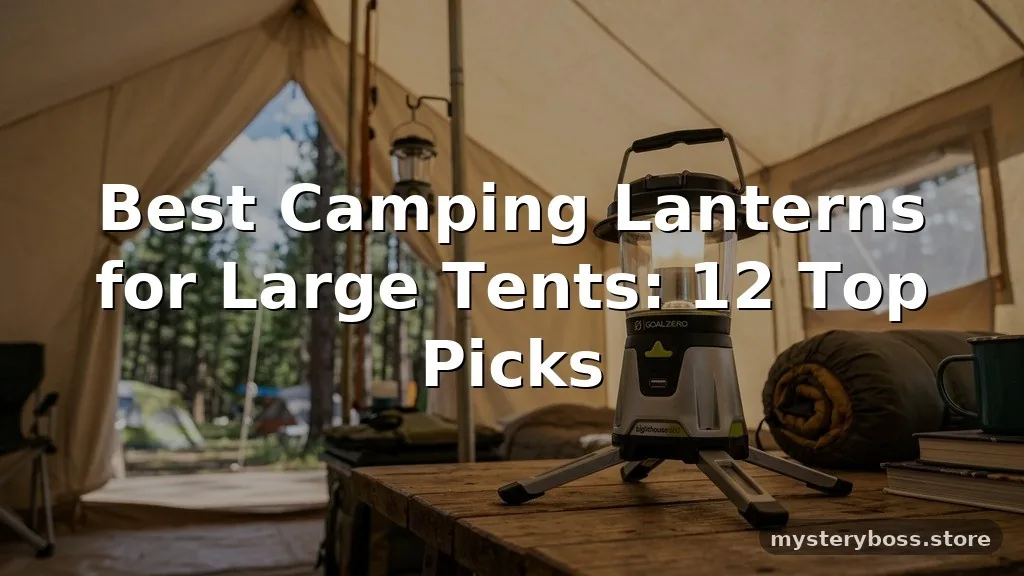
    Goal Zero Lighthouse 600 - Best Camping Lanterns for Large Tents

    The Goal Zero Lighthouse 600 is designed for campers who want strong general lighting from one main lantern. Its adjustable output, directional lighting options, USB charging, and hand-crank backup make it especially practical for family camping and emergency kits. The design is more substantial than a small backpacking lantern, but that extra size supports a higher lighting capacity and a stable presence inside a large tent.

    Pros

    • High maximum output for illuminating a broad tent interior.
    • Multiple ways to recharge, including USB and hand-crank power.
    • Useful as a central lantern or an emergency light.

    Cons

    • Its larger body takes up more packing space.
    • Maximum brightness will reduce run time more quickly than low modes.

    💡 Practical Tip

    Hang the Lighthouse near the tent’s highest central point and use a lower setting for meals or conversation. This reduces shadows without wasting the battery on full power all evening.

    2. Coleman Classic Recharge 1000L

    The Coleman Classic Recharge 1000L is aimed at campers who prioritise maximum brightness over compact packing. Its high-output setting can suit a large family tent, screened shelter, or campsite table, while lower modes are more appropriate for reading and relaxing. Because it is a bigger lantern, it makes more sense for car camping than for long backpacking trips.

    Pros

    • Very bright maximum setting for spacious tents and outdoor areas.
    • Rechargeable design avoids relying solely on disposable batteries.
    • Useful as a primary campsite light.

    Cons

    • Bulk and weight limit its appeal for lightweight travel.
    • High output can shorten the usable run time between charges.

    ✨ Style Tip

    Use a bright lantern outside the tent for cooking or packing, then reduce it indoors. A lower setting is usually more comfortable against light-coloured tent walls.

    3. UST 700 Lumen W-946 Lantern

    The UST 700 Lumen W-946 Lantern offers the kind of output that can work well in a larger tent without moving into the most specialised emergency-light category. Its broad lantern format suits table use, while adjustable settings help balance brightness and battery consumption. It is a sensible option for campers who want a straightforward high-output light rather than a lantern filled with extra functions.

    Pros

    • Strong output for a family tent or outdoor cooking area.
    • Adjustable modes provide more control over power use.
    • Traditional lantern shape is easy to position on a table.

    Cons

    • May be less convenient to carry than a compact rechargeable model.
    • Buyers should verify the current battery configuration before purchase.

    🛠️ Practical Tip

    Before a trip, check whether the selected version uses rechargeable or replaceable batteries. Packing a spare power source matters more with a lantern that serves as your campsite’s main light.

    4. Energizer LED Camping Lantern

    An Energizer LED camping lantern can be a practical choice for buyers who prefer familiar battery-powered equipment and simple controls. Depending on the model, output and features vary, so check the exact lumen rating, battery type, water resistance, and runtime before ordering. Larger models can provide useful general lighting for a tent, while smaller versions work better as secondary lights.

    Pros

    • Simple operation suits beginners and occasional campers.
    • Replaceable batteries can be useful away from mains power.
    • Often available in several sizes and output levels.

    Cons

    • Exact performance depends heavily on the model number.
    • Disposable batteries add weight and ongoing replacement costs.

    💡 Tip

    Don’t choose an Energizer lantern by brand name alone. Compare the exact lumen output and battery runtime because compact and full-size versions can serve very different tent-lighting needs.

    Rechargeable Lanterns for Comfortable Tent Lighting

    5. BioLite AlpenGlow 500

    The BioLite AlpenGlow 500 is a strong fit for campers who want useful brightness with a more comfortable atmosphere. It offers adjustable white light, warmer tones, colour options, and a candle-flicker-style mode, making it less harsh than a permanently bright utility lantern. USB charging and a built-in battery make it convenient for car camping, base camps, and family trips.

    Pros

    • Up to 500 lumens provides substantial light for many large tents.
    • Warm and cool modes make it flexible for different activities.
    • Rechargeable battery reduces dependence on disposable cells.

    Cons

    • Its feature set may be unnecessary for campers who only need basic white light.
    • Recharge planning is important on longer trips without vehicle access.

    ✨ Style Tip

    Use warm light after dark and reserve the cooler, brighter setting for cooking, organising gear, or finding items. It creates a more relaxed tent interior without giving up maximum output when you need it.

    6. Black Diamond Apollo

    The Black Diamond Apollo is a compact rechargeable lantern with a useful balance of portability and output. Its dimmable light, fold-out legs, and hanging capability make it easy to place on a table or suspend inside a tent. It may not flood a very large shelter like a 1,000-lumen model, but it is a versatile middle-ground option for couples, small families, and car campers who value manageable gear.

    Pros

    • Compact design is easier to pack than many high-output lanterns.
    • Fold-out legs improve stability on uneven campsite surfaces.
    • Adjustable brightness helps preserve battery power.

    Cons

    • Moderate output may leave distant corners dim in a very large tent.
    • It is not the lightest option for minimalist backpacking.

    🛠️ Practical Tip

    For a larger shelter, pair the Apollo with a small headlamp or secondary light rather than running it at maximum brightness all night. That gives you task lighting without making the central lantern do everything.

    7. Black Diamond Moji+

    Black Diamond Moji+ - Best Camping Lanterns for Large Tents

    The Black Diamond Moji+ is better suited to ambient and personal lighting than to illuminating a very large tent on its own. Its compact body and colour or dimming features make it useful on a sleeping shelf, table, or beside a camp chair. Think of it as a flexible supplemental lantern, or as a primary light for a smaller shelter.

    Pros

    • Small footprint works well in crowded tents.
    • Adjustable light can support reading and relaxed evening use.
    • Easy to carry as a secondary campsite light.

    Cons

    • Limited output makes it less suitable as the only light in a large tent.
    • Compact size means less broad illumination than full-size lanterns.

    💡 Tip

    Place the Moji+ near a doorway or sleeping area where its lower output is useful. For a large tent, combine it with a brighter hanging lantern rather than expecting it to light the entire interior.

    8. Goal Zero Lighthouse Micro Charge

    The Goal Zero Lighthouse Micro Charge is a small rechargeable light with a built-in USB charging function. It is easy to pack and useful as a personal lantern, backup light, or bedside source inside a tent. Its size limits its role in a large shelter, but that is also its advantage: it can provide close-range illumination without taking up meaningful storage space.

    Pros

    • Very portable for travel, emergency kits, and backpacking.
    • USB charging adds value when a phone or power bank is available.
    • Useful as a personal light alongside a brighter lantern.

    Cons

    • Not designed to replace a high-output central lantern.
    • Small controls and battery capacity may feel limited for group use.

    ✨ Style Tip

    Keep a micro lantern near the tent entrance or in an organiser pocket. It can be found quickly during a nighttime bathroom trip without switching on the main light.

    Solar and Lightweight Lanterns for Backup Lighting

    9. LuminAID PackLite Max 2-in-1 Phone Charger

    The LuminAID PackLite Max 2-in-1 Phone Charger combines an inflatable lantern format with solar charging and USB power-bank functionality. Its flat-packed shape is convenient for travel, and the built-in handle makes it easy to hang or carry. It is not the brightest option in this roundup, but it offers useful independence when sunlight is available and works well as a backup for a larger lantern.

    Pros

    • Solar charging can reduce reliance on wall outlets.
    • Folds flat for easy storage in a travel bag.
    • Phone-charging capability adds emergency usefulness.

    Cons

    • Solar charging speed depends on weather and direct sunlight.
    • Output may be modest for illuminating a large tent by itself.

    🛠️ Practical Tip

    Start charging the PackLite early in the day rather than waiting until evening. Place it where the solar panel has clear exposure, then use its lowest useful mode after dark to preserve stored power.

    10. MPOWERD Luci Outdoor 2.0

    The MPOWERD Luci Outdoor 2.0 is a compact inflatable solar lantern designed for lightweight outdoor lighting. Its collapsible body takes little room in a pack, and the solar charging system can be handy for multi-day trips with reliable daylight. For a large tent, it works best as a secondary lamp, reading light, or entrance marker rather than the main source of illumination.

    Pros

    • Lightweight and easy to store.
    • Solar charging is convenient away from electrical outlets.
    • Inflatable construction is well suited to travel and casual camping.

    Cons

    • Lower output is not ideal for a spacious family tent.
    • Cloudy weather can limit charging opportunities.

    💡 Tip

    Use the Luci as a distributed light source. One near the entrance and another beside a sleeping area can be more useful than placing a single low-output lantern in the middle of a big tent.

    11. BioLite AlpenGlow 250

    The BioLite AlpenGlow 250 provides the same general style of ambient lighting as its larger sibling in a more compact format. Its output is better suited to small and medium tents, but it can still work in a large shelter when paired with a second lamp. Warm settings and adjustable modes make it pleasant for evenings when maximum brightness is not necessary.

    Pros

    • Compact alternative for campers who like adjustable ambient light.
    • Rechargeable operation simplifies repeated weekend trips.
    • Useful as a personal or secondary tent lantern.

    Cons

    • May not provide enough coverage as the only lamp in a large tent.
    • Lower output requires more careful placement.

    ✨ Style Tip

    Use the AlpenGlow 250 at the sleeping end of a large tent and place a brighter lantern near the centre. This two-light arrangement reduces the need for an uncomfortable, high-intensity setting.

    12. Black Diamond Volt Lantern

    The Black Diamond Volt Lantern is a rechargeable camping lantern with a compact design and enough flexibility for general campsite duties. It can serve as a table light, tent light, or backup power source depending on the version and feature set. Its practical size suits campers who want one lantern that packs easily but still offers more functionality than a basic personal light.

    Pros

    • Rechargeable design is convenient for regular camping.
    • Compact enough for car camping and shorter travel.
    • Useful as part of a layered lighting setup.

    Cons

    • Check the current specifications because features can vary by model revision.
    • May need support from a second lantern in a very large tent.

    🛠️ Practical Tip

    Check whether the version you’re considering includes the charging and power-bank features you need. Product names can cover related models with different controls, outputs, and battery arrangements.

    Which Lantern Setup Works Best for a Large Tent?

    A single bright lantern is convenient, but two smaller lights can create more even coverage. The right arrangement depends on whether you need task lighting, soft evening illumination, or a backup if the main battery runs out.

    • For a family tent: Choose a high-output central lantern such as the Goal Zero Lighthouse 600 or Coleman Classic Recharge 1000L.
    • For relaxed evenings: The BioLite AlpenGlow 500 offers more control over colour temperature and brightness.
    • For backup power: Consider a LuminAID PackLite Max or another solar-and-USB model.
    • For backpacking: A compact lantern such as the Luci Outdoor 2.0 or Goal Zero Micro Charge reduces packed weight.
    • For mixed use: Pair one bright central lamp with a small Moji+, AlpenGlow 250, or personal light.

    What Brightness Do Large Tents Need?

    There is no single lumen number that suits every shelter. A small two-person tent can be comfortable with far less light than a tall family tent with separate sleeping and living areas. For general guidance, a lantern with adjustable output is more useful than one with a high maximum rating but no low mode.

    Higher lumens help with cooking, sorting equipment, and group activities. Lower modes are better for reading, conversation, and preserving battery life. Reflective tent fabric also makes a lantern appear brighter, so positioning matters almost as much as raw output.

    Frequently Asked Questions

    What is the most powerful camping lantern?

    High-output models such as the Coleman Classic Recharge 1000L are designed for strong general illumination, while the Goal Zero Lighthouse 600 offers a useful balance of brightness and charging flexibility. Check the exact maximum output and runtime for the current version.

    How many lumens should a lantern have for a large tent?

    Large tents generally benefit from a moderate-to-high output lantern with adjustable settings. The ideal level depends on the tent’s layout, fabric, and intended use, but a dimmable model is usually more practical than one fixed at maximum brightness.

    Are rechargeable lanterns better than battery lanterns?

    Rechargeable lanterns are convenient for regular camping and reduce disposable battery use. Replaceable-battery models can be easier to keep running on longer trips where USB charging or sunlight is unreliable.

    Are solar lanterns bright enough for large tents?

    Solar lanterns can provide useful ambient or backup lighting, but many compact models have lower output than large rechargeable lanterns. For a spacious shelter, use one as a secondary light or combine several strategically.

    Should a camping lantern be hung or placed on the floor?

    Hanging a lantern high usually spreads light more evenly and reduces shadows. A floor or table position is useful for close-range tasks, but it may leave the upper and far sides of a large tent darker.

    Final Verdict

    The best camping lanterns for large tents depend on the balance you want between brightness, runtime, portability, and charging options. Goal Zero Lighthouse 600 and Coleman’s high-output model suit campers who need one strong central light, while BioLite AlpenGlow 500 is better for adjustable, comfortable evening illumination. LuminAID and Luci models make useful solar backups, and compact Black Diamond lanterns work well in a layered lighting setup.

    Before buying, check the current lumen rating, power source, run time at usable settings, hanging options, and packed size. A bright lantern is helpful, but two well-placed lights may provide better coverage and flexibility than one oversized unit.

  • Best Camping Pillows for Stomach Sleepers: 10 Top Picks

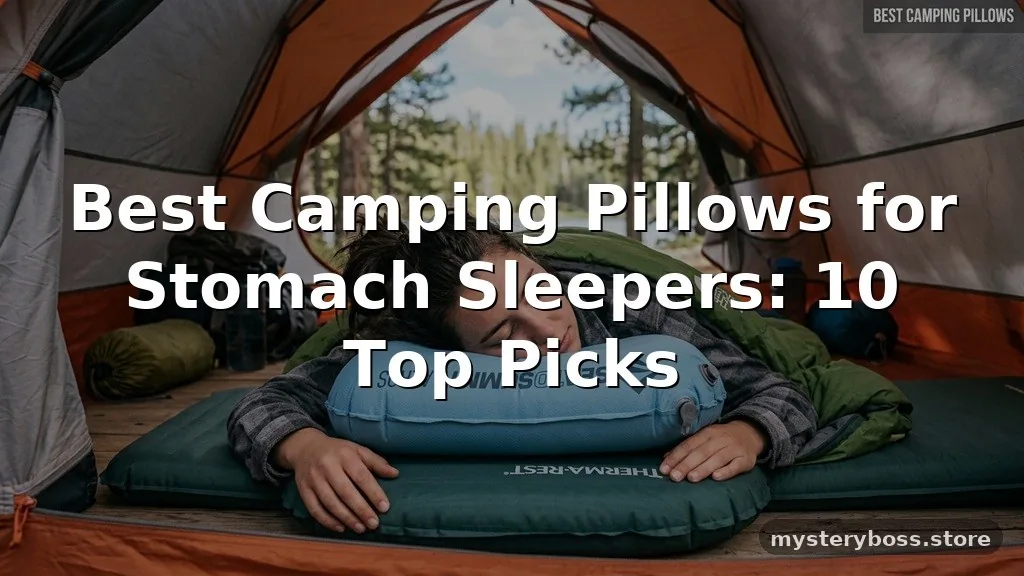
    Best Camping Pillows for Stomach Sleepers: 10 Top Picks

    Finding the best camping pillows for stomach sleepers is less about maximum loft and more about keeping your neck in a neutral position. A thick, tall pillow can feel comfortable at home but awkward in a sleeping bag, especially when you’re lying face down or turning between your stomach and side. The right camping pillow should offer controlled height, stable support, manageable weight, and a packed size that suits your trip.

    Below, you’ll find inflatable, compressible, stuffable, and hybrid options, along with practical buying advice for backpacking and car camping. You’ll also see which models make the most sense for side-and-tummy sleepers, comfort-focused campers, and anyone trying to reduce bulk.

    How to Choose a Camping Pillow for Stomach Sleeping

    Stomach sleepers generally need less height than back or side sleepers. A low-profile pillow helps prevent the head from being pushed upward, which can leave the neck twisted during the night.

    However, “low” doesn’t mean completely flat. Some cushioning and shape control are still useful, particularly on firm sleeping pads.

    Before choosing a camping pillow, compare the following factors:

    • Loft: Look for a low or adjustable profile rather than a permanently tall cushion.
    • Width: A wider surface makes it easier to stay supported when you shift position.
    • Stability: A pillow that slides across a sleeping pad can be more frustrating than one with slightly less cushioning.
    • Weight and packed size: Backpackers may prefer an inflatable pillow, while car campers can carry a larger compressible design.
    • Surface fabric: A quiet, soft cover is more comfortable against the face than slick, noisy plastic.
    • Adjustability: Adjustable air volume lets you fine-tune the pillow for stomach, back, or side sleeping.
    • Cleaning: A removable or washable cover is helpful when the pillow is used in warm weather.
    • Durability: Check the valve, seams, outer fabric, and repair options before taking an inflatable pillow into remote areas.

    🛠️ Practical Tip

    Inflate a pillow only partway at first, then add air in small increments. Stomach sleepers often get better alignment from a softer, partially inflated pillow than from a firm one.

    Quick Comparison: Camping Pillows for Tummy Sleepers

    The table below compares the main designs and their typical strengths. Exact weight, dimensions, and materials can vary by version, so confirm the current specifications before buying.

    Product Best For Design Weight or Packability Main Drawback
    Sea to Summit Aeros Pillow Adjustable backpacking comfort Inflatable with shaped support Compact; model-dependent weight Can feel slippery or bouncy at high inflation
    Exped Air Pillow UL Ultralight trips Inflatable air pillow Very compact; version-dependent weight Less plush than a compressible pillow
    NEMO Fillo Campers wanting cushioning Hybrid inflatable and compressible More packable than a home pillow Bulkier than a minimalist air pillow
    Klymit Luxe Pillow Comfort-focused camping Large inflatable pillow Less suited to ultralight packing May provide too much surface or loft for some stomach sleepers
    HEST Camp Pillow Car camping and plush comfort Foam-filled camp pillow Bulky compared with inflatable designs Not the first choice for long-distance backpacking
    Therm-a-Rest Compressible Pillow Soft, familiar pillow feel Compressible foam Rolls down but remains larger than an air pillow Loft may be difficult to reduce enough for some users
    Rumpl Stuffable Pillowcase Lightweight flexible packing Stuffable pillowcase Very adaptable; fill is user-supplied Comfort depends on what you put inside
    Sea to Summit Aeros Down Pillow Low-bulk softness Inflatable with down insulation Compact; model-dependent weight Premium construction may not suit every budget
    Trekology Aluft 2.0 Budget-conscious campers Inflatable pillow Compact and easy to pack Long-term durability and fit can vary by user
    Coop Sleep Goods Travel and Camping Pillow Adjustable-feel comfort Compressible fill More substantial than ultralight options Not ideal when every gram matters

    Inflatable Camping Pillows for Stomach Sleepers

    Inflatable pillows are usually the easiest option for backpackers because they collapse into a small sack. They also allow you to adjust firmness and height, which matters when your sleeping position changes. The trade-off is that air-filled designs can feel less natural than foam and may move around unless the pillow has a grippy underside or a shaped profile.

    1. Sea to Summit Aeros Pillow

    Sea to Summit Aeros Pillow - Best Camping Pillows for Stomach Sleepers

    The Sea to Summit Aeros Pillow is a versatile inflatable option for campers who want to control the amount of support. Its adjustable air chamber makes it possible to keep the pillow relatively flat for stomach sleeping, then add height when rolling onto your side. The Aeros range includes different versions and sizes, so the exact surface, weight, and packed dimensions should be checked before purchase.

    A shaped design can help keep the head from sliding off the edge, while the compact pack size suits backpacking and travel. For a stomach sleeper, the main advantage is adjustability rather than maximum cushion. Fully inflating it may create more lift than you need.

    Pros

    • Adjustable inflation supports different sleeping positions.
    • Packs down far smaller than most foam pillows.
    • Available in versions aimed at different comfort and weight priorities.

    Cons

    • An overinflated pillow can feel tall for face-down sleeping.
    • Air-filled surfaces may feel less soft than foam without a cover.
    • Multiple versions make it important to compare specifications carefully.

    💡 Tip

    Use the pillow’s adjustment range as a feature, not a reason to fill it completely. A small amount of air can reduce neck extension while still keeping your face off the sleeping pad.

    2. Exped Air Pillow UL

    The Exped Air Pillow UL is designed around low weight and compact packing, making it a strong match for hikers who count every item in their sleep system. Its air-filled construction can be adjusted for a lower profile, and the compact shape is convenient when space inside a backpack is limited.

    It is more functional than plush. That can be a benefit for stomach sleepers who dislike thick pillows, but anyone seeking a soft, bed-like feel may prefer the Exped Mega Pillow or a foam-filled alternative. The surface and dimensions vary by version, so check whether the selected model gives enough width for frequent movement.

    Pros

    • Ultralight design fits weight-conscious backpacking kits.
    • Inflatable construction allows height adjustment.
    • Small packed size leaves room for other sleep gear.

    Cons

    • Less cushioned than hybrid and compressible pillows.
    • Some stomach sleepers may want more width.
    • Requires careful inflation and deflation for the best feel.

    ✨ Style Tip

    If the pillow feels too narrow, place it across the top section of your sleeping pad rather than lengthwise. This can create a broader target for your head without carrying a larger pillow.

    3. Klymit Luxe Pillow

    The Klymit Luxe Pillow takes a more comfort-oriented approach than the smallest ultralight air pillows. Its larger surface and cushioned construction can appeal to car campers, weekend backpackers, and people who move between stomach and side sleeping during the night.

    That extra room is useful, but it may not suit every stomach sleeper. A larger pillow can be harder to position inside a narrow sleeping bag, and a fuller inflation level may raise the head too far. The Klymit design makes more sense for campers who value surface area over the smallest possible packed size.

    Pros

    • More generous comfort than minimalist inflatable models.
    • Useful for mixed-position sleepers who sometimes turn onto their side.
    • Inflatable construction keeps it more portable than a conventional bed pillow.

    Cons

    • May be too lofty or large for strict stomach sleeping.
    • Less attractive to ultralight hikers than a smaller air pillow.
    • Large designs can shift more if the underside lacks enough grip.

    🛠️ Practical Tip

    Before a trip, place the inflated pillow on your sleeping pad and lie in your normal position for several minutes. This reveals whether its width is helpful or whether its extra size gets in the way.

    4. Trekology Aluft 2.0

    The Trekology Aluft 2.0 is an inflatable camping pillow aimed at people who want a compact option without moving straight to a premium sleep system. Its adjustable air volume and travel-friendly shape make it suitable for camping, hostels, road trips, and occasional backpacking.

    For stomach sleepers, the ability to reduce inflation is more important than the product’s headline size. The pillow may work well for someone who needs a little cushioning but does not want to carry foam. As with any inflatable model, inspect the valve and seams periodically, and carry a small repair solution on longer trips if the manufacturer supports one.

    Pros

    • Compact format works well for travel and weekend camping.
    • Adjustable firmness can accommodate a lower sleeping position.
    • More approachable for buyers who do not need an ultralight specialist model.

    Cons

    • May feel less refined than higher-end pillows.
    • Support and comfort depend heavily on inflation level.
    • Check the current version for exact materials and included accessories.

    💡 Tip

    Keep the storage sack separate from sharp tent stakes and stove equipment. A small tear in an inflatable pillow can turn a comfortable night into a flat one.

    Compressible and Hybrid Options

    Compressible pillows use foam, synthetic fill, or a blend of materials rather than relying entirely on air. They typically feel warmer and more familiar against the face, but they take up more room in a backpack. Hybrid pillows sit between the two categories, combining an inflatable core with a padded or insulated top layer.

    5. NEMO Fillo

    The NEMO Fillo is a hybrid camping pillow built for people who want the packability of air with more cushioning than a basic inflatable. Its adjustable structure can provide a softer landing for the face, while the compressible portion adds a less plastic-like feel.

    For stomach sleepers, the Fillo is most appealing when used at a lower inflation level. It may also suit campers who rotate between positions and want enough support for occasional side sleeping. Compared with a stripped-down backpacking pillow, it takes up more space, but that trade-off can be worthwhile for comfort-focused trips.

    Pros

    • Blends adjustable air support with a softer surface.
    • Better suited to mixed-position sleepers than very flat minimalist pillows.
    • Useful for camping and travel where comfort matters more than absolute weight.

    Cons

    • Bulkier than a basic inflatable pillow.
    • May still feel too high when fully inflated for stomach sleeping.
    • More components can mean more parts to inspect and maintain.

    ✨ Style Tip

    Use a thin shirt or lightweight clothing as a soft barrier between your face and the pillow cover if the fabric feels cool or slick. Avoid bulky clothing, which can create uneven pressure under your neck.

    6. Sea to Summit Aeros Down Pillow

    The Sea to Summit Aeros Down Pillow adds a softer, warmer top layer to an inflatable foundation. That combination can be attractive to campers who like a low packed volume but do not enjoy the bare feel of an air pillow. The inflatable core still allows the height to be reduced for stomach sleeping.

    Its main strength is the balance between softness and portability. The down or insulated layer may also make the pillow more comfortable in cool conditions, although care instructions and exact construction should be checked for the specific version. This is a better fit for comfort-focused backpackers than for people seeking the simplest, least expensive sleep accessory.

    Pros

    • Offers a softer surface than many basic inflatable pillows.
    • Adjustable air support can work for stomach and side sleeping.
    • Packs smaller than a conventional down or foam pillow.

    Cons

    Cons - Best Camping Pillows for Stomach Sleepers
    • More complex construction requires attention to care and storage.
    • May cost more than a plain inflatable design, depending on current pricing.
    • Not every stomach sleeper needs the added insulation or plushness.

    🛠️ Practical Tip

    Store an insulated pillow dry and loosely packed when possible. Compressible sleep gear generally benefits from being allowed to regain its shape between trips.

    7. HEST Camp Pillow

    The HEST Camp Pillow is designed for campers who want a more substantial, bed-like cushion. Its foam-based construction and larger feel make it especially suitable for car camping, basecamp use, and short trips where packed size is less important than comfort.

    Stomach sleepers should pay close attention to the pillow’s loft and firmness. A plush, tall cushion can feel luxurious in a seated position but may put the neck at an uncomfortable angle overnight. The HEST Camp Pillow is best considered by people who alternate positions or prefer a broad, stable cushion rather than a minimalist backpacking pillow.

    Pros

    • More substantial and familiar than an inflatable pillow.
    • Well suited to car camping and comfort-focused setups.
    • Stable foam construction can reduce the bouncy feel associated with air chambers.

    Cons

    • Less portable for long hikes and lightweight backpacking.
    • May be too thick for dedicated stomach sleepers.
    • Needs more room in a vehicle or camp storage system.

    💡 Tip

    If a foam camp pillow feels too tall, place part of it over the edge of the sleeping pad rather than keeping the entire cushion underneath your head. This can reduce the effective height.

    8. Therm-a-Rest Compressible Pillow

    The Therm-a-Rest Compressible Pillow uses compressible foam to deliver a softer feel than an inflatable pillow. It is a practical choice for campers who dislike air chambers, want a quiet surface, or are packing for car camping and travel rather than a demanding ultralight route.

    The roll-down design helps with storage, but a compressible pillow will still occupy more space than a pillow inflated only when needed. Stomach sleepers should compare the available size and loft carefully, since foam can retain more height than expected after unpacking. A smaller version may be more suitable than a large one for face-down sleeping.

    Pros

    • Quiet, soft feel without an air valve.
    • Compressible construction is straightforward to use.
    • Good fit for car campers, families, and weekend trips.

    Cons

    • Bulkier than most inflatable backpacking pillows.
    • Foam loft may be difficult to adjust precisely.
    • Can take time to regain its full shape after storage.

    🛠️ Practical Tip

    Unpack a compressible pillow well before bedtime on the first night. Giving the foam time to expand makes it easier to judge the real loft and decide whether extra clothing is needed underneath.

    9. Rumpl Stuffable Pillowcase

    The Rumpl Stuffable Pillowcase takes a flexible approach: instead of carrying a fixed pillow, you fill the case with clothing, a jacket, or other soft gear. This keeps the packed load low and lets you control the shape based on what you already brought.

    For stomach sleepers, the design can work well because the fill amount is adjustable. You can create a thin, broad cushion instead of accepting the fixed height of a conventional camping pillow. The result depends heavily on the clothing used, so it is less predictable than a dedicated foam or inflatable model.

    Pros

    • Uses clothing and soft gear already in your pack.
    • Adjustable fill allows a lower profile for stomach sleeping.
    • Reduces the need to carry a separate bulky pillow.

    Cons

    • Comfort changes depending on the available fill.
    • Uneven clothing can create lumps or empty spots.
    • Less consistent than a purpose-built pillow.

    ✨ Style Tip

    Put smooth, soft garments closest to your face and use denser items around the edges to create structure. A fleece layer often works better than a crumpled rain shell as the top surface.

    10. Coop Sleep Goods Travel and Camping Pillow

    The Coop Sleep Goods Travel and Camping Pillow is aimed at people who want an adjustable, cushioned feel rather than the smallest possible packed size. Its compressible fill can offer a more conventional pillow experience for travel, car camping, and casual outdoor use.

    Its adjustability is useful for stomach sleepers who need to remove or redistribute fill. Buyers should confirm the current product configuration, cover materials, and care instructions because travel pillows can change between versions. This option makes more sense for comfort-focused campers than for hikers who are trying to keep their pack extremely light.

    Pros

    • Adjustable fill can be tailored to a lower stomach-sleeping profile.
    • More familiar feel than a bare inflatable pillow.
    • Useful across camping, travel, and guest-room situations.

    Cons

    • More substantial than an ultralight backpacking pillow.
    • Requires extra time to adjust the fill evenly.
    • May be unnecessary for short trips where clothing can serve as a pillow.

    💡 Tip

    Remove or move fill gradually rather than emptying the entire pillow at once. Small changes are easier to judge, especially if you switch between stomach and side sleeping.

    Which Pillow Type Fits Your Camping Style?

    Best for ultralight backpacking

    A compact inflatable pillow such as the Exped Air Pillow UL or a smaller Sea to Summit Aeros version is usually the most practical direction. These designs occupy little space and let you lower the height for stomach sleeping. The compromise is a less plush feel and more dependence on correct inflation.

    Best for comfort-focused car camping

    The HEST Camp Pillow, Therm-a-Rest Compressible Pillow, or a larger hybrid such as the NEMO Fillo can make more sense when vehicle space is available. They provide a softer, steadier surface, but their packed size is harder to justify on a long backpacking route.

    Best for mixed stomach-and-side sleepers

    Adjustable hybrid and inflatable pillows are the most flexible. The Sea to Summit Aeros, NEMO Fillo, and Sea to Summit Aeros Down Pillow can be kept lower when you’re face down and raised slightly when you roll onto your side.

    Best for using existing gear

    The Rumpl Stuffable Pillowcase is a useful choice if you dislike carrying single-purpose equipment. It can turn a fleece, spare shirt, or lightweight jacket into a pillow, although the final comfort depends on how evenly you pack the fill.

    🛠️ Practical Tip

    Match the pillow to your sleeping pad. A thick, soft pad may let you use a thinner pillow, while a firm, low pad can require a little more cushioning to keep your face comfortable.

    How to Set Up a Camping Pillow for Stomach Sleeping

    1. Place the pillow near the top edge of the sleeping pad, leaving enough room for your shoulders.
    2. Start with low inflation or a modest amount of fill.
    3. Lie in your normal stomach-sleeping position rather than testing the pillow while sitting.
    4. Check whether your chin is being pushed toward your chest or your neck is bending backward.
    5. Shift the pillow slightly sideways if you turn your head in one direction.
    6. Add or remove a small amount of air or fill until your neck feels neutral.
    7. Secure the pillow with a pad attachment, grip surface, or sleeping-bag hood if the product provides one.

    Good alignment is more important than a specific brand. If you wake with pressure in the front or back of your neck, the pillow may be too tall, too firm, or positioned too far under your shoulders.

    💡 Tip

    If you sleep with your head turned sharply to one side, choose a wider pillow rather than simply adding height. Extra width can support movement without forcing the neck upward.

    Care, Storage, and Durability Considerations

    Inflatable pillows should be protected from sharp objects, rough ground, and excessive heat. Keep them away from open flames and inspect the valve before each trip. If the pillow includes a repair patch or manufacturer-approved repair method, store it with the sleep kit rather than leaving it at home.

    Compressible pillows need ventilation after use, especially if they have absorbed moisture from condensation, sweat, or damp clothing. Follow the care instructions for removable covers and avoid storing foam tightly compressed for longer than necessary unless the manufacturer specifically permits it.

    For any design, a clean pillowcase or washable cover improves hygiene. This matters even more for stomach sleepers because the face remains in close contact with the surface for hours.

    🛠️ Practical Tip

    Let a damp pillow dry completely before putting it in its sack. Moisture trapped in packed fabric or foam can create odors and may shorten the useful life of the materials.

    Frequently Asked Questions

    What is the best camping pillow for stomach sleepers?

    The best choice is usually a low-profile inflatable or adjustable hybrid pillow. Sea to Summit Aeros, Exped Air Pillow UL, and NEMO Fillo are useful starting points because their height can be reduced. The right option depends on your preferred softness, pack weight, and sleeping position.

    What type of pillow should a stomach sleeper use?

    A stomach sleeper generally benefits from a thin, adjustable pillow that keeps the neck close to neutral. A pillow with too much loft can force the head upward and create uncomfortable neck extension.

    Is an inflatable camping pillow comfortable for face-down sleeping?

    It can be, especially when partially inflated and covered with a soft fabric layer. Air pillows are less forgiving when overinflated, so adjustment is important.

    Should side-and-tummy sleepers choose a taller pillow?

    Not necessarily. An adjustable pillow is usually more useful because it can stay low for stomach sleeping and gain a little height when you roll onto your side.

    Are compressible pillows better than inflatable pillows for camping?

    Compressible pillows often feel softer and more stable, while inflatable pillows usually save more space and weight. Backpackers commonly favor air designs; car campers may prefer foam or hybrid construction.

    Can clothing replace a camping pillow?

    Yes. A stuffable pillowcase or a soft clothing bundle can work well, particularly for short trips. The result may be less consistent than a dedicated pillow, and uneven fill can create pressure points.

    Final Verdict

    The best camping pillows for stomach sleepers should stay low, allow some adjustment, and remain stable on the sleeping pad. Ultralight inflatable models such as the Exped Air Pillow UL and Sea to Summit Aeros suit backpackers who value small packed size. Hybrid options such as the NEMO Fillo or Aeros Down Pillow add softness, while foam-based choices like the HEST Camp Pillow and Therm-a-Rest Compressible Pillow favor car camping comfort.

    Before buying, check the pillow’s loft, width, packed size, adjustment range, and care requirements. If you move between stomach and side sleeping, prioritize adjustability over maximum thickness. A modestly padded pillow that stays in place may serve you better than a larger cushion that looks comfortable but pushes your neck out of position.

  • Best Camping Tents with Ventilation Panels: 2026 Picks

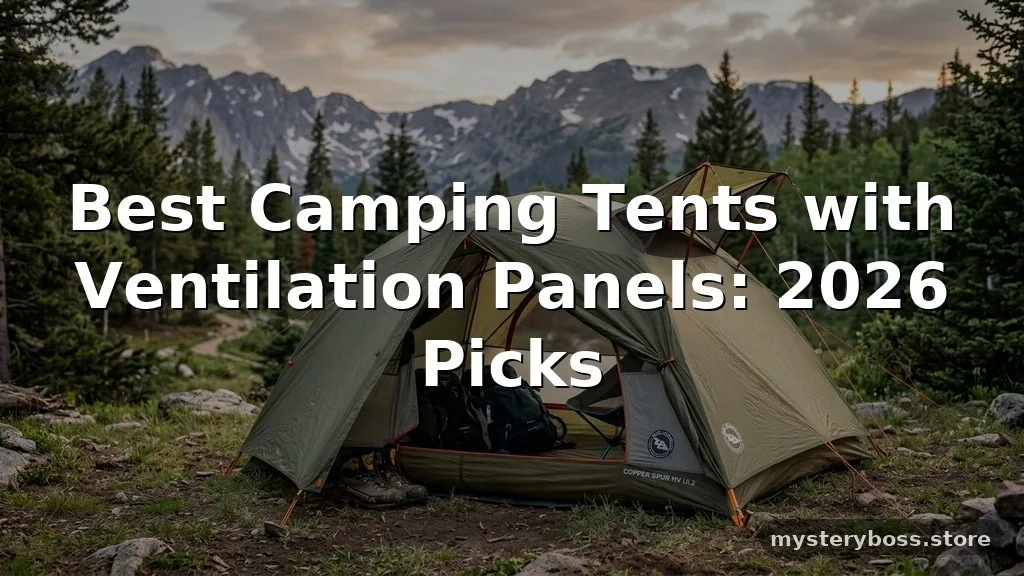
    Best Camping Tents with Ventilation Panels: 2026 Picks

    Warm, damp air can turn a comfortable night in a camping tent into a clammy one, especially when rain forces every door and window shut. The best camping tents with ventilation panels use mesh, roof vents, adjustable windows, and carefully placed openings to improve airflow while still protecting occupants from weather.

    This matters for solo backpackers, couples, and families alike because better ventilation can reduce condensation and make the interior feel less stuffy. Below, you’ll find practical options for lightweight trips, family camping, and larger base camp setups, followed by buying advice that explains how capacity, rainfly coverage, vestibule design, peak height, and packed weight affect your choice.

    How Ventilation Panels Improve a Camping Tent

    Ventilation panels are openings designed to move air through the tent without leaving the entire interior exposed. They may appear as mesh doors, roof vents, low wall vents, zippered windows, or panels built into the rainfly. A good design encourages air to enter low and escape higher up, creating useful airflow even when the weather is unsettled.

    Ventilation doesn’t make a tent immune to condensation. Moisture from breathing, wet clothing, damp ground, and humid weather can still collect on the rainfly or inner walls. The National Park Service’s camping tent condensation advice explains why airflow and site selection matter, particularly during cool nights.

    • Mesh areas: Allow air movement and provide visibility while keeping insects out.
    • High vents: Help warm, damp air escape near the roof.
    • Low openings: Bring in cooler air when conditions allow.
    • Adjustable windows: Let campers balance airflow and rain protection.
    • Rainfly clearance: Creates an air gap between the inner tent and outer shell.

    💡 Tip

    Pitch the tent where air can move around it, rather than in a low hollow where cool, damp air settles. Keep wet jackets and shoes in a vestibule whenever possible.

    Quick Comparison of Ventilated Camping Tents

    Product Best For Ventilation Design Capacity Main Drawback
    Big Agnes Copper Spur HV UL2 Lightweight backpacking Large mesh body and adjustable fly vents 2 people Limited living space for extended stays
    NEMO Dragonfly OSMO 2P Two-person backpacking Mesh canopy and fly ventilation 2 people Less spacious than family tents
    MSR Hubba Hubba 2 Reliable two-person trips Mesh inner and fly vents 2 people Not designed for large groups
    NEMO Aurora Highrise 4 Couples and small families Large mesh panels, windows, and high walls 4 people Bulkier than backpacking shelters
    The North Face Wawona 6 Family car camping Mesh doors, windows, and ventilated vestibule 6 people Large packed size
    MSR Habitude 4 Frequent family camping High-low venting and mesh openings 4 people Heavier than compact tents
    REI Co-op Base Camp 4 Cooler, changeable weather Multiple vents and mesh sections 4 people More shelter than casual campers may need
    Marmot Limestone 6 Roomy family camping Mesh roof, windows, and adjustable vents 6 people Requires more campsite space
    Eureka Copper Canyon LX 6 Standing-height comfort Large windows and mesh roof panels 6 people Best suited to drive-in camping

    🛠️ Practical Tip

    Comparison tables can hide important differences between tent versions. Check the exact capacity, packed dimensions, season rating, and included poles before ordering because product names often cover several configurations.

    Lightweight Tents for Backpacking

    1. Big Agnes Copper Spur HV UL2

    Big Agnes Copper Spur HV UL2 - Best Camping Tents with Ventilation Panels

    The Big Agnes Copper Spur HV UL2 is a strong fit for backpackers who want a low-weight shelter without giving up useful airflow. Its inner canopy uses extensive mesh, while the rainfly includes adjustable venting and two vestibules for storing packs and wet footwear. The near-vertical sidewalls create more usable sitting space than a sharply sloped tunnel design.

    Because the shelter prioritizes packed weight, it isn’t intended to feel like a family room. Two campers can sleep comfortably, but bulky gear belongs in the vestibules. The airy interior works well in warm conditions, while careful fly adjustment becomes more important during rain or colder nights.

    Pros

    • Lightweight design suits multi-day backpacking.
    • Generous mesh improves airflow in dry weather.
    • Two vestibules make gear organization easier.

    Cons

    • Interior width may feel tight for larger sleepers.
    • Ultralight materials require sensible campsite selection.
    • Less convenient for car campers who value standing room.

    💡 Tip

    Use the vestibules for packs instead of blocking the inner mesh with equipment. Keeping the canopy clear helps preserve the cross-breeze that makes this style of tent feel cooler.

    2. NEMO Dragonfly OSMO 2P

    The NEMO Dragonfly OSMO 2P combines a backpacking-friendly structure with a roomy interior and broad mesh sections. Its two-door, two-vestibule layout makes it easier for both occupants to enter, exit, and adjust airflow without climbing over one another. The fly can be configured to balance coverage and ventilation.

    This tent suits hikers who want more livability than a minimal shelter provides. It still has the practical limits of a two-person backpacking tent: storage is external, peak height is designed for sitting rather than standing, and adding winter-grade gear may make the interior feel crowded.

    Pros

    • Dual doors reduce disturbance during nighttime exits.
    • Mesh canopy supports airflow and views.
    • Two vestibules provide separate storage zones.

    Cons

    • Not a substitute for a spacious base camp tent.
    • Two adults with large packs may need disciplined organization.
    • More structure can mean more setup steps than a very simple shelter.

    ✨ Style Tip

    For humid trips, pitch both vestibule doors so their openings face different directions when the site permits. Opposing openings can make natural airflow more useful than a single open door.

    3. MSR Hubba Hubba 2

    The MSR Hubba Hubba 2 remains a practical option for two-person camping because its freestanding layout, dual entrances, and mesh-heavy inner tent are straightforward to live with. Fly vents provide additional control when the rainfly is installed, and the rectangular floor is easier to divide between two sleepers than some tapered designs.

    Its appeal is simplicity rather than family-sized comfort. The Hubba Hubba 2 works for weekend backpacking, hut approaches, and lightweight travel, but campers who carry lots of camera equipment or winter layers may prefer a longer or wider shelter.

    Pros

    • Freestanding setup is convenient on varied ground.
    • Two doors and vestibules improve access and storage.
    • Mesh inner tent supports airflow in warm weather.

    Cons

    • Limited capacity for more than two people.
    • Vestibules are useful but not a replacement for interior storage.
    • Backpackers should compare packed weight across current versions.

    🛠️ Practical Tip

    When comparing two-person tents, look at the floor shape as well as the stated capacity. A rectangular layout usually makes it easier to place sleeping pads without leaving awkward unused corners.

    Family Tents with Adjustable Airflow

    4. NEMO Aurora Highrise 4

    The NEMO Aurora Highrise 4 is aimed at campers who want family-tent comfort without moving into a very large six-person shelter. Its high walls and steep side geometry create a more open interior, while mesh panels, doors, and windows offer several ways to regulate air. The design is particularly useful for couples who want room for bags or a small family that values headroom.

    It is not a backpacking tent. The larger poles, fabric area, and roomier floor make it better for car camping, weekend sites, and trips where comfort matters more than packed weight. As with any high-profile tent, a good pitch and secure staking are important in exposed weather.

    Pros

    • High peak height makes changing clothes and organizing gear easier.
    • Large mesh sections help prevent a closed-in feel.
    • Useful middle ground between a compact two-person shelter and a large family tent.

    Cons

    • Too bulky for most backpacking trips.
    • High walls need careful staking in windy conditions.
    • Four-person capacity can feel full with substantial luggage.

    💡 Tip

    If you’re choosing the Aurora Highrise for four people, plan to keep most bags in the vehicle or under the rainfly. Preserving floor space makes the high-wall interior feel considerably more comfortable.

    5. The North Face Wawona 6

    The North Face Wawona 6 stands out for its large front vestibule, which functions as a sheltered transition area for shoes, packs, cooking equipment, or rainy-day sitting. Mesh doors and windows support airflow, while the generous floor and tall profile make it a natural choice for family car camping.

    The vestibule is the major reason to consider this model over a basic six-person dome. It adds usable covered space, but that advantage also means a larger packed bundle and a campsite footprint that needs planning. Families should confirm the latest model’s pole and fly details because designs can change between product generations.

    Pros

    • Large vestibule offers more than simple gear storage.
    • Roomy interior suits family camping and longer stays.
    • Multiple mesh openings help air move through the shelter.

    Cons

    • Large packed size is inconvenient for small vehicles.
    • Setup takes more room than a compact dome tent.
    • Its height and surface area call for solid anchoring.

    ✨ Style Tip

    Treat the Wawona vestibule as a flexible room, not just a porch. A small mat near the inner door can separate muddy footwear from sleeping gear and reduce moisture tracked inside.

    6. MSR Habitude 4

    The MSR Habitude 4 focuses on family-friendly organization, with a tall interior, a broad entry, and ventilation openings intended to keep the shelter from feeling sealed. Its design makes sense for frequent weekend campers who want easier movement than a low dome provides but don’t need a six-person layout.

    Capacity depends on how the space will be used. Four sleeping pads may fit according to the stated design, but a group carrying coolers, duffels, and children’s gear will appreciate a more conservative occupancy plan. The Habitude is best transported by vehicle rather than carried any distance.

    Pros

    Pros - Best Camping Tents with Ventilation Panels
    • Tall shape improves changing and dressing comfort.
    • Ventilation openings can be adjusted for changing weather.
    • Family-oriented entry and storage details simplify campsite routines.

    Cons

    • Heavier and bulkier than backpacking shelters.
    • Four people plus personal gear may use most of the available floor space.
    • Premium construction can make it a larger investment than entry-level tents.

    🛠️ Practical Tip

    Before leaving home, identify every vent and window adjustment. A family tent is easier to manage at night when everyone knows which openings can stay cracked during light rain.

    Roomy Tents for Base Camp and Changeable Weather

    7. REI Co-op Base Camp 4

    The REI Co-op Base Camp 4 is designed for campers who need a more substantial shelter than a typical three-season weekend tent. Its structure includes multiple ventilation points and a combination of solid and mesh areas, giving occupants more control in cool, damp, or changeable conditions.

    This model may suit shoulder-season car camping and trips where wind or unsettled weather is a concern. It is not the lightest option for casual summer use, and its more protective design can feel excessive if your normal campsites are warm, sheltered, and close to the vehicle.

    Pros

    • More protective structure for variable conditions.
    • Vent placement supports airflow without relying only on open doors.
    • Four-person format is manageable for small groups.

    Cons

    • More weight and bulk than a basic summer tent.
    • Smaller interior than six-person family shelters.
    • Campers should confirm the current version’s season rating and included components.

    💡 Tip

    A protective tent still needs ventilation in cold weather. Keep high vents open when safe, then manage warmth with sleeping bags and clothing instead of sealing every opening.

    8. Marmot Limestone 6

    The Marmot Limestone 6 gives families a broad floor, tall living space, and several mesh and window areas for airflow. Its size is useful for groups that want to sleep six people or sleep fewer campers with room for luggage. The rainfly and vestibule arrangement also provide a place to keep wet items away from the main sleeping area.

    The trade-off is straightforward: a large tent needs a large, reasonably level campsite. It also takes more effort to carry from the vehicle and more attention during setup. For family trips where the tent serves as a primary living space, that extra room can be more valuable than a smaller packed footprint.

    Pros

    • Spacious floor and generous peak height improve livability.
    • Mesh and windows help manage warm-weather airflow.
    • Suitable for families who bring substantial camping equipment.

    Cons

    • Requires more ground space than a four-person tent.
    • Not practical for backpacking or long carries.
    • Large fabric panels can make setup more involved.

    🛠️ Practical Tip

    Mark out the floor area at home with tape or use the listed dimensions to check your campsite plan. Large tents can fit the site on paper but leave little room for guy lines, a table, or a fire-safe cooking area.

    9. Eureka Copper Canyon LX 6

    The Eureka Copper Canyon LX 6 is a cabin-style camping tent aimed at people who value standing room and large windows. Its tall walls and mesh roof sections encourage airflow, while the broad vertical layout makes the interior feel more like a temporary room than a low sleeping shelter.

    This design works best at established campgrounds and drive-in sites. The tall profile is comfortable, but it increases the importance of selecting a sheltered pitch and staking the tent correctly. Buyers should also confirm the exact model generation, since accessories and ventilation details may vary.

    Pros

    • Standing-height interior is useful for families and longer stays.
    • Large windows provide light and cross-ventilation.
    • Cabin shape creates practical wall-to-wall living space.

    Cons

    • Large packed size limits portability.
    • Tall walls are less suited to exposed, windy locations.
    • Not designed for backpacking or compact travel.

    ✨ Style Tip

    Use the windows strategically rather than opening every panel at once. Opening opposite sides creates a cross-breeze, while leaving the windward side more closed can make the interior calmer in gusty weather.

    What to Check Before Buying

    Capacity and usable space

    Tent capacity is based primarily on sleeping space, not the amount of equipment a group owns. A family of four may prefer a six-person tent if it needs room for duffels, children’s gear, or indoor shelter during rain. Solo campers and couples can often choose between a compact backpacking model and a larger comfort-focused tent depending on transport and trip length.

    Mesh, vents, and rainfly coverage

    Look beyond the phrase “ventilation panel.” A tent with mesh across the inner canopy may feel airy in dry weather, but the rainfly needs well-positioned vents for damp conditions. Adjustable openings are more useful than fixed mesh alone because they let you respond to wind, rain, temperature, and privacy needs.

    Weight and packed size

    Backpackers should compare packed weight, pole length, and the number of components. Car campers can give more attention to interior comfort, vestibule space, and setup convenience. A large camping tent may be easy to transport in a vehicle but frustrating if the walk from the parking area is long.

    Weather protection and season rating

    Most ventilated family and backpacking tents are intended for three-season use, though construction varies. A rainfly should cover vulnerable mesh areas, seams should be appropriately protected, and the floor should keep ordinary ground moisture out when correctly pitched. No ventilation system eliminates the need for site selection, staking, and sensible rain management.

    Setup and storage

    Freestanding designs can be easier to position, but they still need stakes and guylines in wind. Tall family shelters may require more people during setup. Interior pockets, vestibules, gear lofts, and wide doors make a bigger difference on extended trips than they do during a single overnight stop.

    💡 Tip

    Set up any new tent before a trip and identify the fly vents, door zippers, pole sleeves, and guyline points. That short practice session can prevent rushed setup when rain arrives at camp.

    How to Reduce Condensation Inside a Tent

    Condensation usually forms when warm, moist air meets a cooler tent surface. It can happen even in a high-quality shelter, especially when the ground is damp, the night is still, or occupants keep every opening closed.

    1. Choose a site with natural airflow rather than a hollow or wet depression.
    2. Keep the rainfly separated from the inner canopy where the design allows.
    3. Open high vents and opposing doors slightly when rain and wind conditions permit.
    4. Dry wet clothing outside the sleeping area or in a vestibule.
    5. Wipe moisture from the fly carefully in the morning and allow the tent to dry before storage.

    🛠️ Practical Tip

    Don’t pack a wet tent tightly for longer than necessary. At home, spread the fly and inner tent out until fully dry to reduce lingering moisture and unpleasant odors.

    Which Tent Type Fits Your Camping Style?

    Backpackers: The Copper Spur HV UL2, Dragonfly OSMO 2P, and Hubba Hubba 2 focus on low carry weight, mesh airflow, and efficient two-person layouts.

    Couples and small families: The Aurora Highrise 4 offers more headroom and livability without the footprint of a very large shelter. The Habitude 4 is another sensible direction for campers who value a taller, organized interior.

    Families and car campers: The Wawona 6, Limestone 6, and Copper Canyon LX 6 provide more room for people and equipment. Their larger structures are most practical when the vehicle is close to the campsite.

    Cooler or unsettled conditions: The Base Camp 4 is worth considering when ventilation needs to work alongside a more protective structure. Check the current specifications before purchase, particularly if you plan to camp outside mild summer conditions.

    💡 Tip

    Choose capacity based on your real packing habits, not just the number of sleepers. One extra person of stated capacity can make a major difference when the tent also needs to hold clothing, electronics, and bedding.

    Frequently Asked Questions

    Which tents have the best ventilation?

    The strongest options usually combine a mesh inner canopy, adjustable high vents, opposing doors or windows, and a rainfly that leaves room for airflow. Backpacking models such as the Copper Spur HV UL2 and family designs such as the Wawona 6 use different approaches for different spaces.

    Do tents need ventilation?

    Yes. Ventilation helps reduce stuffiness and can limit condensation, although it cannot remove all moisture in humid or cold conditions. Keeping vents open when weather permits is generally more useful than sealing the tent completely.

    How can I increase airflow in a tent during rain?

    Use the rainfly vents, open covered windows slightly, and position the tent so air can move around it. Avoid touching the inner canopy to the wet fly, and keep damp clothing outside the sleeping area.

    Are family tents with ventilation panels difficult to set up?

    Not necessarily, but larger tents have more poles, fabric, and guyline points than compact backpacking shelters. Practicing at home and having two people share the setup usually makes the process easier.

    Is a two-person tent suitable for solo camping?

    It can be a good choice for solo campers who carry bulky gear or want extra room. The trade-off is additional packed weight compared with a one-person shelter.

    Final Verdict

    The best camping tents with ventilation panels aren’t all built for the same trip. Lightweight backpacking tents prioritize mesh, low weight, and compact storage, while family models trade portability for standing room, vestibules, and easier living during long stays. A more protective option can suit cooler or changeable conditions, but it may feel unnecessary for warm, short summer trips.

    Start with your actual capacity, transport method, campsite exposure, and tolerance for condensation. Then compare the placement of mesh, fly vents, doors, windows, and vestibules rather than relying on a marketing label alone. Choosing a tent that matches those details will make airflow easier to manage and campsite routines more comfortable.

  • Best Camping Footrests for Relaxation: 12 Comfortable Picks

    Best Camping Footrests for Relaxation: 12 Comfortable Picks

    Long hours in a camp chair can leave your legs dangling, your knees tight, and your feet sitting on uneven ground. Choosing among the best camping footrests for relaxation makes a noticeable difference around the fire, beside the tent, or during a quiet afternoon at the campsite. The right option depends on more than padding: packed size, weight, stability, setup, and compatibility with your chair all matter.

    This roundup compares practical footstools, chair attachments, hammocks, and lounger-style designs so you can match the support to your camping style. You’ll also find buying advice, clear trade-offs, and answers to common questions about portable foot rests.

    How to Choose a Camping Footrest

    A camping footrest should support your legs without becoming an awkward extra item to carry. Car campers can usually prioritise padding, height, and a wider platform, while backpackers and hiking or fishing campers need a lighter design that packs efficiently.

    • Portability: Check the packed shape, carry bag, and how easily it fits with the rest of your camp setup.
    • Stability: Wide feet, a firm frame, or a secure chair connection can reduce wobbling on grass or soil.
    • Height: A footrest should let your knees and ankles relax rather than forcing your legs sharply upward.
    • Materials: Padded fabric is comfortable, while metal or reinforced plastic frames generally provide more structure.
    • Weather handling: Outdoor use calls for quick-drying, wipe-clean, or reasonably weather-resistant materials.
    • Compatibility: Chair-mounted rests need suitable straps, loops, or attachment points on the camp chair.
    • Storage: Folding designs are easier to store in a vehicle, tent vestibule, or gear box.

    For general information about safe outdoor recreation and campsite planning, the National Park Service camping guidance is a useful reference.

    Best Folding Camping Footrests

    1. Compact Folding Camping Stool

    Compact Folding Camping Stool - Best Camping Footrests for Relaxation

    A compact folding camping stool is one of the simplest ways to create a raised foot rest. It works independently of your chair, so you can position it exactly where your legs feel most comfortable. Many designs fold into a narrow profile and may include a carry bag, making them practical for car camping, beach trips, sporting events, and patio use.

    The main advantage is versatility. You can use the stool as a footrest, spare seat, small table, or gear stand. The limitation is that a stool designed primarily for sitting may be taller or firmer than a dedicated footrest, so check the height and top surface before buying.

    Pros

    • Useful for more than one camping task.
    • Usually easy to fold and store.
    • Works with almost any camping chair.

    Cons

    • May be less padded than a purpose-built footrest.
    • Some models can feel bulky beside lightweight backpacking gear.

    💡 Tip

    Measure the distance between your chair and the ground before choosing a stool. A low platform is usually more comfortable than a tall seat used as a footrest.

    2. Padded Folding Footstool

    A padded folding footstool focuses more directly on relaxation. Its cushioned top gives your heels and ankles a softer surface than a basic camp stool, which can be helpful during long evenings outside. The folding frame keeps setup simple, while the upholstery can make the footrest feel more like indoor furniture.

    This style suits car campers and family campsites particularly well. It may not be the best fit for wet environments if the padding absorbs moisture, and the added cushioning can increase both packed size and weight.

    Pros

    • Comfortable for extended sitting.
    • Often has a stable, broad top.
    • Suitable for use in a tent, camper, or outdoor living area.

    Cons

    • Padding may take longer to dry.
    • Usually less suitable for ultralight packing.

    ✨ Style Tip

    Look for removable or wipe-clean covers if the footstool will stay near cooking areas, muddy shoes, or a sandy beach blanket.

    3. Folding Ottoman Footrest

    A folding ottoman gives a campsite a more relaxed, lounge-like feel. It normally has a wider top than a narrow folding stool, allowing both feet to rest naturally instead of balancing on a small surface. Some versions also provide internal storage, which can be useful for books, clothing, or small camp accessories.

    The broad shape makes this a strong choice for a reclining camp chair or a low outdoor seat. It is less appealing for people who need to carry everything in a pack because an ottoman’s frame and upholstery can take up meaningful space.

    Pros

    • Wide surface supports both feet comfortably.
    • Can add storage to a camp setup.
    • Pairs well with lounge chairs and recliners.

    Cons

    • Often larger when packed.
    • May be unnecessary for short stops or minimalist trips.

    🛠️ Practical Tip

    Use the storage compartment for lightweight items only. Keeping heavy gear inside can make the ottoman harder to move and may stress the folding frame.

    Best Chair-Attached Footrests

    4. Clip-On Camp Chair Footrest

    A clip-on camp chair footrest attaches directly to the front of a camping chair. This keeps the support aligned with the seat and avoids carrying a separate stool. It is especially convenient for people who want a compact chair footrest for reading, relaxing, or watching a campfire.

    Attachment design matters more than appearance. Clips or hooks should connect securely to the chair’s frame, while the fabric should support the lower legs without pulling the seat forward. Compatibility is not universal, so confirm the chair style and attachment method before ordering.

    Pros

    • Keeps the footrest connected to the chair.
    • Can pack with the chair rather than as a separate item.
    • Useful for reclining and leg elevation.

    Cons

    • May not fit every camp chair.
    • Can be uncomfortable if the support angle is fixed.

    💡 Tip

    Check whether the attachment points sit on the chair frame or fabric. A footrest that relies on unsupported fabric may sag more than one anchored to the frame.

    5. Adjustable Chair Footrest

    An adjustable chair footrest gives you more control over leg position than a fixed strap or rigid platform. You can change the extension to suit your height, chair angle, and preferred sitting position. That flexibility is useful when several people share one camp chair.

    This design can be a good middle ground between a separate footstool and a full recliner. Its added adjustment hardware may increase weight and setup time, though, and loose straps can become frustrating if they are difficult to secure in low light.

    Pros

    • Allows a more personalised leg position.
    • Can work with different sitting angles.
    • Reduces the need for a separate footrest.

    Cons

    • More adjustment points mean more parts to manage.
    • Fit depends on the chair’s frame and seat design.

    ✨ Style Tip

    Before leaving for camp, mark your preferred strap setting with a small piece of removable tape. It makes repeat setup quicker without permanently altering the chair.

    6. Reclining Camping Chair With Footrest

    A reclining camping chair with an integrated footrest combines the seat and leg support in one product. This is often the simplest choice for someone who wants a coordinated setup without matching a separate chair footrest. The integrated design can feel stable and tidy, especially on a campsite where loose accessories are easy to misplace.

    The trade-off is portability. A reclining chair with a footrest is usually more substantial than a basic folding chair, and the recline mechanism adds another component that should be checked for smooth operation and secure locking.

    Pros

    • Provides a unified chair-and-footrest setup.
    • Good for reading, resting, and longer sitting sessions.
    • Usually easier to position than a separate stool.

    Cons

    • Can be heavier and bulkier to transport.
    • Less flexible if the footrest angle does not suit you.

    🛠️ Practical Tip

    Test the folded dimensions against your vehicle’s storage space. Reclining chairs can occupy more room than their upright appearance suggests.

    Best Lightweight and Portable Footrests

    7. Hanging Footrest Hammock

    A hanging footrest hammock uses fabric straps to support your feet or lower legs from a suitable anchor point. It can be attached beneath some chairs, to a travel setup, or to another secure structure, depending on the design. The fabric folds down very small, making it attractive for backpackers, travellers, and anyone keeping pack weight low.

    Hammock-style support feels different from a firm stool. It lets the feet move slightly and may suit people who prefer a softer, suspended position. It is not appropriate for unstable attachment points, and it may not provide the firm platform some users need to change position easily.

    Pros

    • Very portable and easy to pack.
    • Uses little storage space.
    • Light fabric can dry quickly when designed for outdoor use.

    Cons

    Cons - Best Camping Footrests for Relaxation
    • Requires a secure anchor or compatible chair.
    • Provides less rigid support than a stool.

    💡 Tip

    Inspect the anchor point before settling in. Avoid attaching a hanging rest to a thin tent pole, loose branch, or any structure not intended to bear that load.

    8. Ultralight Inflatable Footrest

    An ultralight inflatable footrest is designed for people who want cushioned support without carrying a rigid frame. It can often be deflated and folded into a small pack, making it useful for backpacking, travel, and compact sleeping or lounging systems. The air-filled surface can also provide a softer feel on uneven ground.

    Inflatable designs require more care than metal or plastic footrests. Sharp stones, thorns, and rough campsite surfaces can cause damage, and the firmness may change with temperature. A repair patch or compatible repair method is useful for trips away from shops.

    Pros

    • Small packed size and low carrying burden.
    • Soft support for feet and ankles.
    • Can serve as a cushion or leg support in different settings.

    Cons

    • Vulnerable to punctures.
    • Needs inflation and deflation.

    🛠️ Practical Tip

    Place an inflatable footrest on a groundsheet, chair seat, or smooth blanket instead of directly on abrasive soil. That small layer can reduce unnecessary wear.

    9. Lightweight Folding Footrest

    A lightweight folding footrest offers more structure than an inflatable model while remaining easier to carry than a padded ottoman. It may use a simple fabric panel, compact frame, or folding legs. This makes it suitable for weekend camping, fishing trips, and portable outdoor seating where a full-size stool feels excessive.

    Pay attention to the balance between low weight and support. Very thin frames can be convenient in a pack but may feel less stable on soft ground. A model with broad contact points can perform better than one with narrow feet, even if both appear similarly portable.

    Pros

    • Good compromise between support and portability.
    • Usually faster to set up than an inflatable design.
    • Works well for short trips and flexible camp layouts.

    Cons

    • May offer limited cushioning.
    • Small frames can sink into mud or sand.

    ✨ Style Tip

    For sandy or soft campsites, carry a small flat mat to place beneath the feet. It can improve stability without adding the bulk of a larger folding stool.

    Best Comfort-Focused Camping Footrests

    10. Wide Padded Camp Ottoman

    A wide padded camp ottoman is built for people who value a generous resting surface over minimum packed weight. Its larger top lets you shift your feet or rest both lower legs without carefully aiming for a narrow platform. This format fits naturally beside a deep camp chair, outdoor sofa, or shaded campsite lounge.

    The extra comfort comes with practical compromises. A broad cushion needs more room in storage, and fabric upholstery can collect dirt or moisture. It is best suited to car camping, glamping-style setups, and longer stays where the footrest remains in one place.

    Pros

    • Comfortable for changing foot position.
    • Pairs well with larger padded chairs.
    • Can make an outdoor seating area feel more finished.

    Cons

    • Not ideal for backpacking.
    • Requires care around rain, mud, and damp ground.

    💡 Tip

    Keep a waterproof ground layer under a padded ottoman overnight. Even when rain doesn’t reach the top, ground moisture can affect the underside and legs.

    11. Rocking Camp Footrest

    A rocking camp footrest adds gentle movement to a conventional footrest. The curved base can feel relaxing for people who like to shift their ankles while reading or sitting near a fire. It is most suitable on level ground and with a chair that already offers stable back support.

    Rocking movement is not useful for everyone. If you want a fixed platform for standing up, changing position, or placing gear, a stationary footstool will be easier to manage. The rocking base also deserves attention on uneven or sloping campsites.

    Pros

    • Allows gentle ankle and foot movement.
    • Can complement a rocking or reclining chair.
    • Offers a distinctive relaxation-focused design.

    Cons

    • Less stable on uneven ground.
    • Not the best surface for placing equipment.

    🛠️ Practical Tip

    Position a rocking footrest on a firm, level patch rather than loose gravel. If it shifts under light pressure, choose a stationary platform instead.

    12. Leg-Support Camping Lounger

    A leg-support camping lounger extends beyond a simple foot rest by supporting more of the calves and lower legs. It can be a comfortable option for people who spend long days at camp and prefer a semi-reclined position. Some designs fold like a chair, while others use a connected chaise-style frame.

    This type is closer to a lounge chair than a small accessory, so portability depends heavily on the frame and fabric construction. It may be too large for a short hike to a remote site, but it can be worthwhile for car campers who want a dedicated relaxation seat.

    Pros

    • Supports more of the legs than a small footstool.
    • Well suited to extended outdoor lounging.
    • Can provide a complete seat-and-leg-support arrangement.

    Cons

    • Usually takes more room to transport and store.
    • May be excessive for quick breaks or minimalist trips.

    ✨ Style Tip

    Choose a lounger only if your campsite layout has room for it to recline fully. Measure the available space between the chair, tent, fire area, and walking paths.

    Quick Comparison

    Option Best For Portability Main Strength Main Drawback
    Compact folding camping stool General car camping Good Versatile use May lack padding
    Padded folding footstool Comfort-focused campers Moderate Soft top surface Can retain moisture
    Folding ottoman Lounge-style campsites Moderate to low Wide support and storage Bulky when packed
    Clip-on chair footrest Existing camp chairs Good Integrated positioning Compatibility varies
    Reclining chair with footrest Dedicated relaxation Moderate All-in-one design Heavier than a basic chair
    Hanging footrest hammock Travel and light packing Very good Small packed size Needs a secure anchor
    Inflatable footrest Backpacking and travel Very good Low pack volume Puncture risk
    Leg-support camping lounger Long car-camping stays Low Extended leg support Needs more storage space

    Which Camping Footrest Is Right for You?

    For car campers

    Car campers have more freedom to choose a padded folding footstool, ottoman, or reclining camping chair with footrest. Prioritise comfort, stability, and easy cleaning rather than chasing the lowest possible weight. A wider platform is useful when you want to stretch out beside a camp chair.

    For backpackers and hikers

    A hanging hammock or inflatable footrest is usually easier to pack than a rigid folding stool. Weight and packed volume matter more here, but so do reliability and repairability. A lightweight folding footrest may be a sensible compromise when you need firmer support.

    For families

    A separate folding camping stool can be shared between adults and children and may serve as an extra seat or small table. Choose a stable base and a surface that is easy to wipe clean. A chair-attached rest is less flexible if multiple people use the same chair.

    For fishing and beach trips

    Look for wipe-clean materials, corrosion-resistant hardware where specified, and feet that won’t sink immediately into sand or soft soil. A simple folding stool or lightweight platform is often easier to reposition than a large padded ottoman.

    For comfort-focused buyers

    A padded ottoman, reclining chair, or leg-support lounger offers the most furniture-like experience. Check the packed dimensions first, especially if the rest must share a small vehicle boot with tents, sleeping bags, and cooking equipment.

    Setup, Care, and Storage Tips

    Most folding footrests require little assembly, but the first setup is still worth doing at home. Confirm that hinges open fully, straps sit flat, and the frame locks or holds its position as intended.

    1. Choose level ground away from sharp stones, roots, and standing water.
    2. Open the frame or attach the footrest according to its design.
    3. Place both feet on the support and shift your weight gradually.
    4. Check that the base does not sink, twist, or slide.
    5. Brush away dirt before folding the item back into its carry bag.
    6. Allow damp fabric to dry before long-term storage.

    For inflatable products, inspect for leaks and avoid dragging them across rough ground. For padded models, follow the care instructions for the cover and keep them protected from prolonged rain. Small parts, straps, and carry bags are easy to lose, so storing them together helps keep the product ready for the next trip.

    Frequently Asked Questions

    Which camping chair with a footrest is most comfortable?

    Comfort depends on the chair’s seat angle, padding, back support, and footrest length. A reclining chair with an integrated rest can feel more coordinated, while an adjustable chair footrest offers greater flexibility if you already own a comfortable camp chair.

    What is the most comfortable camping lounger?

    A lounge-style chair or leg-support lounger with padded fabric and a suitable recline angle is generally more comfortable for extended sitting than a small stool. The extra comfort usually comes with greater packed size and weight.

    What makes a good camping footrest?

    A good camping footrest is stable, appropriately sized, easy to set up, and suited to the ground and chair you use. For remote trips, low weight and a compact packed shape become especially important.

    Is a folding footrest better than a camping stool?

    A folding footrest is usually more focused on leg support, while a camping stool may also work as a seat or side table. Choose the footrest for dedicated relaxation and the stool for greater general-purpose utility.

    Can a footrest be used inside a tent?

    Yes, provided the floor has enough space and the base won’t damage the tent fabric. Keep rigid or sharp-edged designs on a groundsheet or mat, and avoid placing heavy pressure near delicate seams.

    Final Verdict

    The best camping footrests for relaxation depend on how you travel and how much comfort you want to carry. A folding camping stool is the most versatile option, a chair-mounted rest keeps the setup compact, and an inflatable or hammock design suits backpackers who count every item in the pack. Padded ottomans and reclining loungers provide a more relaxed camp, but they need more storage room.

    Before buying, compare the footrest’s height, base stability, packed dimensions, materials, and compatibility with your camping chair. If you camp from a vehicle, prioritise comfort and width; if you hike or travel light, choose a portable design with dependable setup and manageable weight. Pick the format that fits your actual campsite rather than the most elaborate option.

  • Best Camping Tables for Uneven Ground: 9 Stable Options

    Best Camping Tables for Uneven Ground: 9 Stable Options

    A camping table that works on a smooth patio can wobble badly on gravel, roots, or sloping ground. The best camping tables for uneven ground address that problem with adjustable legs, broad feet, flexible frames, or a low center of gravity rather than relying on a flat surface. This roundup compares portable camp tables for cooking, dining, gear storage, and longer base-camp stays.

    You’ll see where adjustable-height designs outperform simple folding tables, why roll-top models pack well, and which compromises come with lightweight construction. Before buying, consider the terrain you usually visit, the table’s packed size, its weight capacity, and whether you need a large work surface or a compact table for one person.

    How to Choose a Camping Table for Uneven Ground

    Uneven terrain changes the buying decision. A lightweight aluminum table may be easy to carry, but narrow feet can sink into soft soil. A large camp table offers more room for a stove and cookware, yet its bigger footprint can be harder to position on a slope.

    Look for a design that lets you make small corrections at camp. Adjustable height is useful, but independent leg adjustment is more valuable than a single telescoping column because it lets you level each corner.

    • Leg adjustment: Independent legs or multiple height settings help compensate for rocks, roots, and sloping ground.
    • Foot design: Wide feet are less likely to sink into loose soil than thin metal ends.
    • Frame material: Aluminum keeps weight down, while steel and reinforced frames may offer a more planted feel.
    • Surface style: A solid top is easier for cooking and cleaning; a roll-up top usually packs smaller.
    • Weight capacity: Check the stated limit if you plan to use a stove, cast-iron cookware, water containers, or a cooler.
    • Packed size: A portable table needs to fit your vehicle, storage area, or backpacking loadout.
    • Stability features: Cross-bracing, locking joints, and broad contact points matter more than a low listed weight.

    For campsite impact, place the table on an already durable surface rather than clearing vegetation or moving stones. The Leave No Trace principles offer useful guidance for choosing and using established campsites responsibly.

    Best Camping Tables for Uneven Ground: Compared

    Product Best For Key Feature Surface Style Main Drawback
    REI Co-op Camp Prep Table Cooking and organized camp kitchens Prep-focused layout Solid work surface May be more than a minimalist camper needs
    Lifetime Adjustable Folding Table Maximum height flexibility Adjustable-height legs Solid folding top Bulkier than backpacking tables
    GCI Outdoor Master Cook Station Camp cooking and storage Integrated cooking and storage areas Mixed solid and mesh surfaces Less suited to very compact packing
    KingCamp Bamboo Roll Top Table Comfortable base camps Roll-top bamboo surface Slatted roll-up top Wood adds weight compared with basic aluminum
    Mountain Summit Gear Roll Top Table Car camping and group meals Roll-top camp-table format Roll-up surface Not the lightest option for long carries
    ALPS Mountaineering Dining Table Simple campsite dining Dedicated dining-table layout Solid or slatted depending on model Less specialized than a kitchen station
    Helinox Table One Hard Top Lightweight portable use Compact folding frame Hard-top panel design Small surface and limited load flexibility
    NEMO Moonlander Table Compact premium camp setups Low, stable profile Hard surface Low height is not ideal for standing cooking
    Coleman Pack-Away Table Budget-conscious car campers Familiar folding format Solid tabletop Basic leg design may need careful positioning

    Adjustable and Kitchen-Focused Camping Tables

    1. REI Co-op Camp Prep Table

    REI Co-op Camp Prep Table - Best Camping Tables for Uneven Ground

    The REI Co-op Camp Prep Table is aimed at campers who want a dedicated outdoor work area rather than a small side table. Its prep-oriented layout makes sense for meal preparation, stove placement, and keeping cookware off the ground. A table like this is most useful at a vehicle-accessible campsite where organization matters more than the lightest possible pack weight.

    Its main advantage on uneven ground is the ability to position the cooking area carefully instead of balancing equipment on a low, narrow surface. Still, check the current model’s leg-adjustment system and packed dimensions before buying, since those details determine how well it handles a sloped pitch.

    Pros

    • Useful layout for cooking and food preparation.
    • More organized than a basic folding table.
    • Suitable for family camps and longer base-camp stays.

    Cons

    • May be excessive for solo campers who only need a place for a mug and stove.
    • Prep-table features can increase packed bulk.

    🛠️ Practical Tip

    Place the table so the stove side faces the most stable patch of ground, then use the remaining surface for lighter items such as utensils and plates.

    2. Lifetime Adjustable Folding Table

    A Lifetime adjustable folding table is a practical choice when height control matters more than compactness. These tables typically use a solid folding top and legs with multiple height positions, making them useful for cooking, serving, or sitting around with camp chairs. The broad top can also handle bulky items that do not fit comfortably on a small roll-up table.

    Its strength is versatility. You can keep it low on a slope or raise it for standing prep, but the trade-off is clear: this style belongs in a car-camping setup, not a backpacking loadout. Confirm the exact model’s weight and folded dimensions because Lifetime produces several table formats.

    Pros

    • Multiple height settings provide useful positioning flexibility.
    • Solid top is convenient for cooking and cleaning.
    • Large work area suits families and group camps.

    Cons

    • Usually too bulky for hiking into camp.
    • Large panels can be awkward to carry over uneven trails.

    💡 Tip

    Keep the lowest practical height when using the table on a slope. A lower center of gravity can make a heavily loaded tabletop feel steadier.

    3. GCI Outdoor Master Cook Station

    The GCI Outdoor Master Cook Station is designed around camp cooking rather than simple dining. It combines a cooking surface with additional areas for cookware, a stove, or supplies, which reduces the need to scatter gear across the ground. That arrangement is valuable on uneven sites because fewer separate items need to be balanced or placed on small rocks.

    This is a car-camping solution with a strong organization angle. It may not be the right option for someone seeking a plain, lightweight folding table, and its multi-part design deserves careful setup on sloping ground. Keep heavier cookware centered and avoid loading side shelves unevenly.

    Pros

    • Built around cooking and campsite organization.
    • Provides dedicated areas for different pieces of gear.
    • Useful for frequent cooks and family camps.

    Cons

    • Less versatile as a simple dining table.
    • More components mean more setup and storage considerations.

    🔥 Quick Tip

    Use a small level or simply check that the stove sits flat before lighting it. Organizers and shelves are helpful, but cooking equipment should always be positioned deliberately.

    Roll-Top and Bamboo Camping Tables

    4. KingCamp Bamboo Roll Top Table

    The KingCamp bamboo table suits campers who want a more furniture-like base-camp setup. Its roll-top bamboo surface offers a warmer appearance than plain aluminum, while the folding structure keeps it more portable than a conventional household table. The slatted top is practical for dining, serving, and light food preparation.

    Bamboo can make a table feel substantial, but it generally isn’t the first choice for hikers counting every gram. On uneven ground, focus on the leg layout and place the table so the frame bears weight evenly. This type of table is best for car camping, family trips, and camps where comfort matters more than minimum packed weight.

    Pros

    • Attractive bamboo surface works well for comfortable base camps.
    • Roll-top construction helps with storage and transport.
    • Suitable for meals, drinks, and general campsite use.

    Cons

    • Likely heavier than a basic aluminum folding table.
    • Wood components need sensible storage and drying after wet trips.

    ✨ Style Tip

    Use the bamboo top for dining and serving, but put a heat-resistant mat beneath hot cookware unless the manufacturer specifically approves direct heat exposure.

    5. Mountain Summit Gear Roll Top Table

    The Mountain Summit Gear Roll Top Table follows the classic roll-up camp-table format: a slatted top, folding frame, and a packed shape suited to vehicle camping. It provides more usable dining space than many compact backpacking tables without taking the footprint of a full-size folding table.

    Roll-top tables can work well on rough ground because their separate frame and top do not require a large rigid panel to sit perfectly flat. They still need thoughtful placement, especially if the legs have limited adjustment. This is a sensible middle ground for campers who want portability without giving up a useful surface.

    Pros

    • Good balance between tabletop area and storage size.
    • Useful for meals, camp kitchens, and gear organization.
    • Roll-up format is easier to transport than a rigid panel.

    Cons

    • Slatted tops may be less convenient for small spills and tiny items.
    • Not necessarily light enough for extended backpacking.

    🧭 Practical Tip

    Before loading a roll-top table, press down lightly at each corner. If one leg shifts, reposition that foot before adding cookware or a full water container.

    6. ALPS Mountaineering Dining Table

    ALPS Mountaineering Dining Table - Best Camping Tables for Uneven Ground

    The ALPS Mountaineering Dining Table is intended for straightforward campsite meals and general outdoor use. It avoids the extra shelves and cooking modules found on kitchen stations, which can appeal to campers who want a cleaner setup. The format is appropriate for plates, cups, a lantern, and light meal preparation.

    Its suitability for uneven ground depends on the specific model’s feet and leg system, so verify those details before purchase. As a general dining table, it may be easier to position than a large kitchen station, but it won’t offer the same dedicated storage areas.

    Pros

    • Simple design is easy to understand and use.
    • Useful for dining and everyday camp organization.
    • Less specialized than a cooking station.

    Cons

    • May lack the independent adjustment some steep sites require.
    • Offers fewer built-in storage features than kitchen-focused designs.

    💡 Tip

    If the tabletop is level but a foot sits on loose gravel, move the whole table a few inches rather than packing stones underneath it. A stable natural position is usually simpler and safer.

    Compact Tables for Lightweight Camping

    7. Helinox Table One Hard Top

    The Helinox Table One Hard Top is aimed at campers who value low carry weight and a compact packed form. Its hard-top format is more convenient for small items than a fabric-only camping table, and the folding frame makes it useful beside a chair or at a compact campsite.

    This is not a large camp kitchen table. Its appeal lies in portability, making it a candidate for solo campers, travel equipment kits, and lightweight car-camping setups. On uneven ground, keep the load modest and place the feet carefully; a compact table cannot provide the same planted feel as a broad, heavy frame.

    Pros

    • Portable format suits lightweight camping.
    • Hard surface supports small dishes and personal gear.
    • Compact design works well for one person.

    Cons

    • Limited surface area for group cooking.
    • Not intended for the same loads as a large folding table.

    🎒 Quick Tip

    Pack the table where it can be reached without unpacking your entire vehicle or backpack. Compact tables are most useful when they remain easy to deploy for quick stops.

    8. NEMO Moonlander Table

    The NEMO Moonlander Table has a low, compact profile that suits relaxed seating and lightweight camp setups. Its hard surface is helpful for drinks, snacks, books, and small cooking tasks, while the low stance can feel more stable than a tall, narrow table on irregular ground.

    Low height is also its main limitation. It won’t replace a standing-height cooking station, and people who prefer to work upright may find it restrictive. Choose it for personal use, short meals, and compact outdoor living rather than as the main table for a large group.

    Pros

    • Low profile can suit uneven campsites.
    • Hard top is easy to use for small items.
    • Compact choice for solo campers and travel.

    Cons

    • Low height is unsuitable for standing prep.
    • Small surface limits group use.

    🪑 Practical Tip

    Pair a low table with a compatible camp chair height. The setup feels more natural when the table is used beside a seat rather than treated like a standing workbench.

    9. Coleman Pack-Away Table

    The Coleman Pack-Away Table is a familiar option for campers who want a straightforward folding table without a specialized kitchen layout. Its solid surface can handle meals, lanterns, and general camp supplies, while the folding format is convenient for car camping and weekend trips.

    On uneven ground, this type of table rewards careful positioning. Basic folding legs may not offer the same fine control as an adjustable-leg model, so it is better suited to mildly irregular surfaces than steep or deeply rutted terrain. It remains a practical option for budget-conscious buyers who don’t need advanced leveling features.

    Pros

    • Simple folding-table format is familiar and easy to use.
    • Solid top works well for dining and general storage.
    • Suitable for casual car camping.

    Cons

    • May have less leg adjustment than specialist uneven-ground tables.
    • Can be less compact than a roll-top or backpacking table.

    🛠️ Setup Tip

    Open every locking joint fully before placing items on the tabletop. If the campsite slopes sharply, rotate the table so its shorter side faces downhill when that improves stability.

    Which Camping Table Style Fits Your Trip?

    For cooking and food preparation

    Choose a prep table or cooking station if you regularly bring a stove, cookware, ingredients, and serving supplies. The REI Co-op Camp Prep Table and GCI Outdoor Master Cook Station are more purpose-built than a simple folding table.

    For family car camping

    A large folding table, bamboo roll-top table, or full-size dining table gives several people room to eat. Weight and packed size matter less when the table travels in a vehicle, but verify the legs lock securely before loading it with food.

    For solo campers and lightweight travel

    Compact options such as the Helinox Table One Hard Top and NEMO Moonlander Table are easier to carry and store. Their smaller surfaces mean you’ll need to keep cooking and storage more selective.

    For seriously uneven terrain

    Prioritize independent leg adjustment, broad feet, and a stable frame. A table with a smaller surface but better leveling control can be more useful than a large model that rocks whenever the ground changes.

    Frequently Asked Questions

    Which camping table is most stable on uneven ground?

    A table with independently adjustable legs, broad feet, and a low center of gravity is usually the most adaptable. Stability also depends on placing it on firm ground and keeping heavy items centered.

    Are aluminum camping tables good for uneven ground?

    They can be, especially when the aluminum frame includes locking joints and adjustable feet. Lightweight aluminum alone does not guarantee stability, so inspect the leg design and foot size.

    Is a roll-top table better than a folding table?

    A roll-top table usually packs smaller and can be easier to carry, while a rigid folding table often offers a flatter, more continuous work surface. The better choice depends on transport space and how you use the table.

    What size camping table is best for cooking?

    Choose enough surface for the stove, fuel, cookware, ingredients, and a safe area for hot items. A dedicated kitchen station may be more practical than simply choosing the largest tabletop.

    Can a camping table hold a cooler?

    Only if its stated weight capacity and frame design support that load. Keep heavy coolers centered and avoid placing them on a small portable table intended for personal items.

    Final Verdict

    The best camping tables for uneven ground are defined less by appearance than by how precisely they can be positioned. Adjustable-leg models are the strongest choice for sloping or irregular sites, while roll-top tables offer a useful balance of packability and surface area. Solid folding tables work well for car campers who want a broad work surface, and compact low tables suit solo trips where portability matters most.

    Before buying, match the table to your terrain, cooking habits, carrying distance, and expected load. Check the current specifications for weight capacity, packed size, leg adjustment, and materials, since models can change. A modest table that sits securely is more useful than a larger one that wobbles.

  • Best Camping Loungers for Beach Trips: 12 Top Picks

    Best Camping Loungers for Beach Trips: 12 Top Picks

    Finding the best camping loungers for beach trips means balancing comfort with the realities of sand, salt, wind, and limited car space. A chair that feels excellent at a campsite may sink on a low beach, weigh too much for a long walk, or lack a useful carry bag. The right design should fold easily, stay stable on uneven ground, and give you enough back support for reading, relaxing, or watching the water.

    Below, you’ll find portable beach chairs and reclining camping models grouped by their strongest use case, from lightweight backpacking seats to roomy family loungers. You’ll also learn which features matter most before packing one for beach camping.

    How to Choose a Camping Lounger for the Beach

    Beach conditions place different demands on outdoor seating than a flat campsite. Wide feet or a broad base help reduce sinking in soft sand, while breathable fabric and mesh panels can make a noticeable difference in hot, humid weather. A compact folding frame is useful for travel, but extremely small chairs may sacrifice arm support, seat height, or reclining comfort.

    • Sand stability: Look for broad feet, a stable base, or a frame designed to distribute weight.
    • Portability: Check the packed size, carry bag, shoulder straps, and total weight before buying.
    • Comfort: Consider seat depth, back height, recline positions, armrests, and padding.
    • Ventilation: Mesh beach panels can help reduce heat buildup during sunny afternoons.
    • Durability: Aluminum or steel frames and tightly woven outdoor fabric are common choices, but construction quality varies.
    • Maintenance: Salt and sand can wear hardware, so a chair should be easy to shake out, rinse, and dry.

    🛠️ Practical Tip

    Before a beach trip, measure your vehicle’s storage area and compare it with the lounger’s packed dimensions. A chair that fits inside a carry bag may still be awkward if its frame is long and rigid.

    Quick Comparison of the Best Camping Loungers for Beach Trips

    Product Best For Key Feature Portability Main Drawback
    Helinox Beach Chair Soft-sand seating Beach-oriented feet High Less cushioned than a full-size lounger
    YETI Trailhead Camp Chair Frequent car campers Supportive, durable construction Moderate Not the lightest option
    Tommy Bahama Backpack Beach Chair Classic beach comfort Backpack carry system Moderate More beach-focused than backpacking-focused
    NEMO Stargaze Reclining Camp Chair Reclining comfort Swinging recline design Moderate Bulky compared with compact chairs
    GCI Outdoor SunShade Rocker Shade and rocking Integrated sun canopy Moderate Large packed profile
    ALPS Mountaineering King Kong Chair Roomy seating Wide seat and storage Low to moderate Heavy for beach walks
    TREKOLOGY YIZI LITE Light travel Compact folding frame High Less lounge-like than larger chairs
    Kijaro Dual Lock Portable Chair Budget-conscious camping Locking frame Moderate Can be cumbersome in deep sand
    REI Co-op Skyward Chair Campground relaxation Comfortable upright design Moderate Not intended for long carry distances
    Kelty Low Loveseat Two-person sitting Shared seat Low Large and heavy for solo beach trips
    Coleman Utopia Breeze Chair Casual beach use Low-profile seating Moderate Low height may be difficult to exit
    Shibumi Shade Chair Shade-focused beach days Lightweight beach setup High Limited support compared with a full camping chair

    Specifications, included accessories, and current designs can change, so confirm the manufacturer’s latest details before ordering. The products below are best understood as different solutions rather than identical alternatives.

    Lightweight Beach Chairs for Easy Carrying

    1. Helinox Beach Chair

    Helinox Beach Chair - Best Camping Loungers for Beach Trips

    The Helinox Beach Chair is built specifically around soft-sand use, making it one of the more obvious choices for a portable beach chair. Its broad feet are designed to help prevent the frame from sinking as quickly as narrow-legged camping chairs, while the compact folding design suits travelers who need to carry gear from a car park or campsite.

    The seat sits relatively low, which improves stability but may not suit people who prefer a high-back, upright position. It is a strong fit for solo campers and beachgoers who value packability over plush padding.

    💡 Tip

    Place the chair on firmer sand near the high-tide line rather than loose dry sand. Even beach-specific feet work better when the surface is lightly compacted.

    2. TREKOLOGY YIZI LITE

    The TREKOLOGY YIZI LITE is aimed at buyers who want a chair compact enough for travel, hiking, or public transport. Its folding frame and small packed profile make it easier to fit beside a tent, daypack, or other beach equipment.

    This type of seat is more supportive than sitting directly on a towel, but it is not designed to feel like a padded recliner. The compact format makes sense for backpackers, festival visitors, and anyone walking a significant distance over sand.

    ✨ Style Tip

    Pair a compact chair with a separate beach towel or thin sit pad. The extra layer can improve comfort without forcing you to carry a heavier lounge chair.

    3. Shibumi Shade Chair

    The Shibumi Shade Chair is designed for beach days where shade is as important as seating. Its lightweight approach makes it easier to transport than many full-size camping chairs, and the shade-focused design can help create a more comfortable place to sit during bright conditions.

    It may not offer the deep seat, large armrests, or multiple recline positions found on traditional loungers. Choose it when a simple, portable setup matters more than maximum cushioning.

    ☀️ Practical Tip

    Check the shade angle during the time you expect to use it. A structure that shades your seat in the morning may need repositioning as the sun moves.

    4. Coleman Utopia Breeze Chair

    The Coleman Utopia Breeze Chair uses a low beach-style profile that can be comfortable for stretching out near the shoreline. Its design is more relaxed than a conventional upright camping chair, making it useful for reading, sunbathing, or watching children play.

    Low seating can be harder to get in and out of, especially on soft sand, and the exact carry features should be checked before purchase. It suits casual weekend campers who want a familiar folding beach chair rather than a technical backpacking seat.

    💡 Tip

    If you have knee or hip mobility concerns, compare the seat height with your current favorite chair before choosing a low beach design.

    Comfortable Camp Loungers for Long Beach Days

    5. YETI Trailhead Camp Chair

    The YETI Trailhead Camp Chair is built for people who want a supportive camping chair that can move between beach trips, tailgates, and campsites. Its construction emphasizes a stable sitting platform and durable outdoor materials rather than the smallest possible packed size.

    That makes it more comfortable for extended sitting, but less attractive for backpackers carrying gear over a long beach path. The chair is best suited to car campers and frequent users who prefer a sturdy seat with a more refined feel.

    🛠️ Practical Tip

    Keep a small brush or soft cloth in the vehicle to remove sand from hinges and joints before folding the chair. This helps reduce grit-related wear.

    6. NEMO Stargaze Reclining Camp Chair

    The NEMO Stargaze Reclining Camp Chair is aimed at buyers who want more than a basic seat. Its suspended design allows a relaxed recline and gentle movement, creating a lounge-like experience around camp or on a calm beach.

    The trade-off is a larger packed shape and a more involved setup than a simple folding chair. It is a better match for car camping, glamping, and beach access points close to parking than for long-distance carrying.

    💡 Tip

    Use a reclining lounger on a level patch above the active tide area. Its moving design needs a stable footprint and should not be left where waves or shifting sand can reach it.

    7. REI Co-op Skyward Chair

    The REI Co-op Skyward Chair offers a comfortable, upright camp-seat format for people who want support without moving all the way to a floor-level beach chair. Its broader structure and elevated sitting position can make conversations, meals, and getting up easier.

    However, a taller frame may feel less stable on loose sand than a low beach design, and it may occupy more space in a packed vehicle. It is a practical option for established campgrounds, picnic areas, and beaches with firm access zones.

    ✨ Style Tip

    A high-back chair works well beside a small camp table, but check that the armrests slide under or around the table before packing both items together.

    8. GCI Outdoor SunShade Rocker

    The GCI Outdoor SunShade Rocker combines a rocking base with an integrated shade canopy, giving it a distinct place among camping loungers. The canopy can be useful during long afternoons, while the rocking motion adds comfort on firm ground.

    This feature-rich design is less streamlined than a basic beach chair, and its larger frame may be awkward to carry across deep sand. It fits car campers who want shade, an upright seat, and a relaxing rocking motion in one item.

    ☀️ Practical Tip

    Avoid placing a rocking chair on a steep slope or near a drop-off. The rocking base is intended for controlled movement, not uneven terrain.

    Roomy Camping Chairs for Families and Car Campers

    9. ALPS Mountaineering King Kong Chair

    ALPS Mountaineering King Kong Chair - Best Camping Loungers for Beach Trips

    The ALPS Mountaineering King Kong Chair is built around a wide seat and substantial frame, which can be appealing to larger users or anyone who dislikes narrow camping chairs. Its storage options also make it useful for keeping a phone, drink, book, or sunscreen close at hand.

    That roomy construction comes with a portability penalty: it is more suitable for car camping than for a long walk to a remote beach. Families and comfort-focused buyers may appreciate the space, while backpackers will likely prefer a lighter chair.

    🛠️ Practical Tip

    For soft sand, carry the chair to the sitting area rather than dragging it. Dragging can push sand into the frame joints and place unnecessary strain on the fabric.

    10. Kelty Low Loveseat

    The Kelty Low Loveseat is designed for sharing, giving two people a single camp seating solution. Its low design feels relaxed around a fire or beside the water, and a shared seat can simplify group packing compared with carrying two separate chairs.

    The drawback is obvious on long walks: a loveseat is wider and heavier than a solo camping chair. It works best for couples, families, and car campers who value shared comfort over individual portability.

    💡 Tip

    Confirm the combined weight capacity and seating width before sharing the chair. A loveseat should suit both users comfortably rather than simply fit two bodies on paper.

    11. Kijaro Dual Lock Portable Chair

    The Kijaro Dual Lock Portable Chair uses a locking frame intended to create a firm, upright sitting position. That can be useful for meals, games, and conversations around a campsite, while the portable format makes it easier to store in a vehicle.

    It is not a specialist sand chair, so narrow feet may sink more readily on a soft beach. Choose it for mixed campground use when beach visits happen on firm sand, boardwalks, or picnic areas.

    🛠️ Practical Tip

    Lock the frame fully before sitting down, and release the lock before folding. Rushing this step can make setup awkward and may put stress on the folding mechanism.

    12. Tommy Bahama Backpack Beach Chair

    The Tommy Bahama Backpack Beach Chair combines a familiar folding beach-chair design with backpack-style shoulder straps. That carrying system is especially useful when your hands are already full of towels, a cooler, or beach toys.

    Many versions also focus on low seating and built-in convenience features, although exact details can differ by model. It is a sensible choice for family beach days and casual beach camping, but less suitable for hikers who need a minimal, lightweight pack.

    💡 Tip

    Use the backpack straps for short transfers and keep the frame balanced against your back. For longer walks, distribute cooler and towel weight evenly so the chair does not pull to one side.

    Which Beach Lounger Type Fits Your Trip?

    The right camping lounger depends less on brand preference than on how far you will carry it and how you plan to sit. A low beach chair can be excellent for relaxing near the water but frustrating for anyone who needs easy standing. A high-back camp chair offers better posture and easier access, yet its feet may perform poorly in loose sand.

    Best for backpackers and public transport

    Choose a compact chair such as the Helinox Beach Chair or TREKOLOGY YIZI LITE. These models prioritize a small pack and manageable carry weight. You give up some padding and storage, but the trade-off is worthwhile when every item has to fit in a backpack or suitcase.

    Best for car campers

    The YETI Trailhead, NEMO Stargaze, REI Skyward, and GCI SunShade Rocker make more sense when the beach is close to parking. Their comfort-oriented designs are useful for long sessions, but their larger packed profiles are not ideal for a long walk over sand.

    Best for families and shared seating

    The Kelty Low Loveseat and Tommy Bahama Backpack Beach Chair are practical for family outings. The loveseat provides shared seating, while the backpack-style beach chair is easier to carry alongside other equipment. Check the exact model’s storage features and capacity before buying.

    Best for soft sand

    A beach-specific design with wider feet is usually safer than a standard camping chair with narrow legs. The Helinox Beach Chair is particularly relevant here, while low-profile beach chairs can also work well when positioned on compacted sand.

    🛠️ Practical Tip

    If your destination has soft sand, bring a small ground mat or compact board to create a firmer standing and seating area. It can also help keep chair feet cleaner.

    Care Tips for Beach and Camping Loungers

    Sand and salt are the two biggest maintenance concerns. Salt can affect metal hardware over time, while trapped sand may work into hinges, locks, and fabric seams. A few simple habits can keep a folding chair easier to operate.

    1. Shake loose sand from the fabric before folding the chair.
    2. Brush grit away from hinges and locking mechanisms.
    3. Rinse salt or sand residue with fresh water when the manufacturer permits it.
    4. Allow the chair to dry completely before storing it in a carry bag.
    5. Keep the folded frame away from standing water and damp camping gear.
    6. Inspect webbing, feet, stitching, and frame joints before the next trip.

    For broader guidance on reducing campsite and beach impact, consult the Leave No Trace principles for responsible outdoor recreation. They cover practical ways to protect natural areas while camping and relaxing outdoors.

    🛠️ Practical Tip

    Never store a damp lounger zipped inside its carry bag for several days. Air circulation matters, especially after saltwater exposure or a humid beach trip.

    Frequently Asked Questions

    What is the best portable beach lounger?

    The best portable option depends on your walking distance and comfort needs. A beach-specific chair such as the Helinox Beach Chair suits soft sand, while a compact folding seat such as the TREKOLOGY YIZI LITE is better for lightweight travel.

    What beach chairs are less likely to sink in sand?

    Chairs with broad feet, a wide base, or a low beach-oriented frame generally distribute weight better than narrow-legged camping chairs. Even then, compacted sand is usually more stable than loose dry sand.

    Can a camping chair be used on the beach?

    Yes, but standard camping chairs may sink, collect sand in their hinges, or become uncomfortable in hot weather. Look for stable feet, breathable fabric, and a design that can be rinsed and dried easily.

    Are reclining loungers practical for beach camping?

    They can be, especially when the beach is close to parking. Reclining models are usually heavier and bulkier, so they are less practical for backpacking or long walks across the sand.

    What should I look for in a beach chair that fits in a suitcase?

    Focus on the packed length, folded width, carry bag shape, and total weight rather than the open dimensions alone. A compact frame with a removable or slim carry bag is usually easier to pack.

    Final Verdict

    The best camping loungers for beach trips are not all designed for the same kind of day. The Helinox Beach Chair and compact travel seats favor portability and soft-sand practicality, while the YETI Trailhead, NEMO Stargaze, and REI Skyward emphasize longer-term comfort near a vehicle. Families may prefer a Tommy Bahama backpack chair or Kelty loveseat, whereas shade seekers should consider a canopy-equipped design.

    Before purchasing, compare the packed size, weight, seat height, sand stability, and cleaning requirements with your actual trip plans. A lightweight chair is usually the better choice for a long walk, while a larger lounge design makes more sense for car camping and extended relaxation. Think about the surface first, then choose the comfort features you’ll genuinely use.

  • Best Camping Water Dispensers with Spout: 8 Top Picks

    Choosing the best camping water dispensers with spout comes down to more than finding a container that holds water. The right water jug should pour cleanly, stay stable on uneven ground, fit your vehicle or campsite storage, and make hand washing, cooking, and drinking less awkward. Some campers need a tough polyethylene water carrier for repeated car camping, while others prefer a collapsible design that saves space on the trip home.

    This roundup compares practical camping water containers with taps or spigots, explains the trade-offs between rigid and foldable models, and highlights what to check before buying. You’ll also find advice for families, solo campers, picnic setups, and emergency water storage.

    How to Choose a Camping Water Dispenser with Spout

    A water dispenser for camping needs to balance capacity, portability, and controlled flow. A larger gallon camping container reduces refills, but it also becomes heavier once filled. A smaller water jug is easier to carry and may be more suitable for hiking from the car to a remote campsite.

    Pay close attention to the tap design. A container spigot should open smoothly, close securely, and sit high enough to let you place a cup or wash basin underneath. If the spout is low, a small stand or camp table may be necessary.

    • Capacity: Choose based on group size, trip length, and access to a safe water source.
    • Material: Food-contact plastic, polyethylene, and BPA-free construction are useful details to verify in the product listing.
    • Portability: Look for a strong handle, manageable empty weight, and a shape that fits your car or storage box.
    • Spout quality: Check whether the tap is included, replaceable, protected during transport, or prone to dripping.
    • Cleaning: A wide opening makes it easier to rinse, dry, and inspect the inside.
    • Storage: Collapsible water containers save space, while rigid models generally stack and stand more securely.
    • Water safety: Use a clean container intended for potable water and follow current public-health advice, such as the guidance from the CDC on safe drinking water.

    🛠️ Practical Tip

    Before filling a large container, check where its spout will sit at camp. A dispenser that needs to be lifted may work poorly on a low table, while a short stand can improve access and reduce bending.

    Quick Comparison of Camping Water Dispensers

    Product Best For Format Notable Feature Main Limitation
    Reliance Aqua-Tainer Car camping and base camps Rigid water container Large capacity options and integrated spigot design Bulky when full
    Reliance Rhino-Pak Frequent outdoor use Rigid water carrier Heavy-duty style construction Less compact than a soft carrier
    Scepter Military Water Container Rugged transport Rigid jerry-can style Protective, portable shape Tap configuration may vary
    Coghlan’s Water Container Budget-minded camping Rigid or semi-rigid container Simple campsite water storage Basic dispensing hardware
    WaterStorageCube Emergency and household storage Stackable rigid container Cube profile uses shelf space efficiently Not as comfortable to carry long distances
    Reliance Aqua-Pak Short trips and compact storage Portable water container Designed around manageable handling Smaller capacity than large jugs
    Coghlan’s Collapsible Water Container Picnics and occasional camping Collapsible carrier Folds down when empty Needs support while dispensing
    WaterBrick Water Storage Container Organized long-term storage Stackable rigid container Brick-like shape for efficient storage More storage-focused than trail-focused

    💡 Tip

    Treat the table as a starting point, not a substitute for checking the current listing. Capacity, included spouts, accessory kits, and material details can differ between sizes or regional versions.

    Rigid Camping Water Dispensers

    1. Reliance Aqua-Tainer

    The Reliance Aqua-Tainer is a familiar choice for car camping, tailgating, and emergency water storage. Its rigid body is intended to hold its shape, and the built-in spigot arrangement makes it more useful than a plain screw-top water container for washing hands or filling a mug. The large format suits a base camp where water is used throughout the day, although a full container can be awkward to move.

    Pros

    • Rigid construction makes it easier to place on a table or platform.
    • Useful for cooking, hand washing, and general campsite water access.
    • Available in capacity options intended for larger water needs.

    Cons

    • A full large container is heavy and should be positioned before filling.
    • Its shape takes more storage space than a collapsible carrier.
    • The spigot and cap should be checked for secure closure before transport.

    💡 Tip

    Set this type of dispenser on a low folding table before adding water. Moving it after filling can strain the handle and make spills more likely.

    2. Reliance Rhino-Pak

    The Reliance Rhino-Pak is aimed at campers who prefer a more substantial water carrier for repeated outdoor use. Its rigid format provides a stable base for a spout and gives the container a more structured feel than a soft water bag. It makes sense for vehicle-based trips, hunting camps, and longer stays where compact empty storage is less important than dependable handling.

    Pros

    • Rigid design is well suited to a permanent campsite water station.
    • Handle-based carrying is more practical than lifting a loose bag.
    • Useful when a container needs to stand upright during dispensing.

    Cons

    • Not the easiest option for backpacking or long carries from a distant tap.
    • Requires dedicated storage space in a vehicle or camp box.
    • Exact fittings and capacity should be verified for the model being considered.

    🛠️ Practical Tip

    Keep the spout protected from direct contact with the ground. A clean tray beneath it can catch drips while keeping the dispensing point away from dirt and insects.

    3. Scepter Military Water Container

    The Scepter military-style water container has a jerry-can profile that appeals to campers who prioritize transport and rugged handling. Its compact footprint can be easier to secure in a car than a wide, round water jug. Some versions are sold with dispensing accessories, while others may require a compatible tap or adapter, so confirm the package contents before ordering.

    Pros

    • Compact shape is convenient for vehicle storage and tie-downs.
    • Designed around portable water transport rather than tabletop presentation.
    • Suitable for camping, travel, and utility use when the correct dispensing setup is included.

    Cons

    • Not every version necessarily includes the same spout arrangement.
    • Its narrow shape may be less convenient to clean than a wide-mouth container.
    • It may need a raised position for comfortable hands-free dispensing.

    🔎 Quick Tip

    Check the opening, cap, and accessory photos carefully. A container that looks like a dispenser may be sold primarily as a transport jug, with the tap available separately.

    4. Coghlan’s Water Container

    Coghlan’s water containers are intended for straightforward campsite storage and transport without a complicated setup. Depending on the version, the design may be rigid or semi-rigid and may use a basic spigot for controlled flow. This kind of product suits occasional campers who want something more convenient than carrying individual bottles but don’t need a specialized water station.

    Pros

    • Simple format is approachable for beginners.
    • Works for camp kitchens, picnics, and hand-washing areas.
    • Often easier to store than very large commercial-style water tanks.

    Cons

    • Basic taps may not provide the same feel as a premium replacement spigot.
    • Capacity and material details vary by model and should be checked before purchase.
    • May be less suitable for frequent heavy-duty use.

    💡 Tip

    Rinse a new container with clean water before its first trip, then allow it to dry fully with the cap removed. Dry storage helps prevent stale odors between outings.

    Stackable and Space-Efficient Water Containers

    5. WaterStorageCube

    WaterStorageCube containers use a box-like shape that can make storage more orderly than rounded water jugs. That profile is useful in a car, garage, basement, or camp trailer because multiple units can sit close together. For camping, the design works best at a base camp where the container can be placed on a stable surface and used as a dedicated water dispenser.

    Pros

    • Cube-style construction can use shelf and vehicle space efficiently.
    • Useful for organized water storage at home or camp.
    • Rigid walls help it remain upright during dispensing.

    Cons

    • Box-shaped containers may be less comfortable to carry over uneven ground.
    • Not as compact as a collapsible water carrier when empty.
    • Storage-oriented designs may not suit lightweight hiking.

    ✨ Practical Tip

    Use a cube container for the main reserve and a smaller bottle for daily drinking. That reduces how often the large container is opened and makes water easier to carry around camp.

    6. Reliance Aqua-Pak

    The Reliance Aqua-Pak is a practical option for campers who want a more manageable water carrier than a large gallon jug. Its smaller format can be useful for short trips, picnic areas, and secondary water storage near a tent. It may not replace a high-capacity dispenser for a family camp, but its easier handling can be the more important feature for solo campers or weekend travelers.

    Pros

    • More manageable for short carries and smaller camps.
    • Useful as a secondary water source beside a cooking area.
    • Takes less room than a large base-camp container.

    Cons

    • Smaller capacity means more frequent refilling for groups.
    • May not provide enough flow or reserve water for busy family camps.
    • Confirm whether the chosen version includes a spout or requires an accessory.

    💡 Tip

    A smaller dispenser is easier to dedicate to drinking water, while a separate container can handle washing and cooking. Keeping those uses separate may simplify campsite organization.

    7. WaterBrick Water Storage Container

    WaterBrick containers are built around a brick-like shape intended to make water storage more organized. The format can appeal to families preparing a car-camping kit, people storing emergency supplies at home, or anyone who wants several units arranged neatly together. It is less about lightweight carrying and more about predictable placement, stacking, and reserve capacity.

    Pros

    • Efficient shape for shelves, trunks, and storage bins.
    • Useful when several water containers need to be organized together.
    • Can serve both camping and household water-storage roles.

    Cons

    • Not the most convenient design for carrying long distances by hand.
    • May be excessive for a quick overnight trip.
    • Spout and cap details should be verified for the exact product version.

    🛠️ Storage Tip

    Label each container with its intended use and fill date. This is especially helpful when the same storage system is used for camping, travel, and emergency supplies.

    Collapsible Camping Water Dispensers

    8. Coghlan’s Collapsible Water Container

    A collapsible water container is attractive when empty storage space matters most. Coghlan’s collapsible format can be useful for picnics, short camping trips, and spare water capacity because it folds down after use. The trade-off is stability: a soft or flexible container usually needs a flat surface and may not dispense comfortably unless it is supported or partly elevated.

    Pros

    • Folds down for easier storage in a car, closet, or camping bin.
    • Useful as a backup carrier when rigid containers take up too much room.
    • Works well for casual trips where water access is relatively convenient.

    Cons

    • Needs support to remain stable while the spout is open.
    • May be less convenient to clean and dry than a wide-mouth rigid jug.
    • Not the first choice for a permanent high-volume water station.

    ✨ Style Tip

    Pack a small cutting board, crate, or flat tray to create a firm base for a collapsible dispenser. It can improve stability without adding much bulk to your camping kit.

    Which Type Is Right for Your Trip?

    Car campers and families will usually get more convenience from a rigid, higher-capacity dispenser. It can stay at the cooking area and reduce repeated trips to a campground tap. A large water jug is particularly useful when the campsite has limited water access.

    Solo campers and weekend travelers may prefer a smaller rigid container or a collapsible carrier. The reduced size is easier to manage, and there is less unused capacity taking up room in the vehicle.

    Backpackers should be cautious about standard spigot containers. Most are designed for car camping rather than carrying into a remote site. A lightweight hydration system or compact water bottle may be more appropriate, with a separate container used only at the base camp.

    Frequent campers should prioritize replaceable parts, a dependable cap, easy cleaning, and a handle that feels secure. A slightly larger investment in a rigid water carrier may make sense if it will be filled, transported, and emptied repeatedly.

    🔎 Quick Tip

    Estimate how far the container will travel while full, not just how much water it holds. A smaller dispenser that gets used correctly is more practical than a large one that stays in the car because it is too difficult to lift.

    How to Use and Maintain a Camping Water Dispenser

    1. Inspect the cap, spout, gasket, and handle before filling.
    2. Rinse the interior with clean water and check for unusual odors or residue.
    3. Fill only with water that is safe for the intended use.
    4. Keep the spout covered or protected during transport.
    5. Place the container on a stable, clean surface before opening the tap.
    6. Drain remaining water after the trip rather than storing it indefinitely.
    7. Wash according to the manufacturer’s instructions and let every part dry thoroughly.
    8. Store the container with the cap loose or removed if the product instructions allow it.

    Don’t assume a water dispenser is automatically suitable for drinking water because it is marketed for outdoor use. Verify whether it is intended for potable water, whether the plastic is BPA-free, and whether the manufacturer gives cleaning instructions. A container used for hand washing may not need the same treatment as one used to store drinking water.

    🛠️ Practical Tip

    Never leave a filled dispenser baking in a hot vehicle longer than necessary. Transport it upright, keep it shaded at camp, and follow the maker’s guidance for cleaning and storage.

    Frequently Asked Questions

    What is the best camping water dispenser with a spout?

    The best choice depends on the trip. A rigid high-capacity model suits families and car campers, while a smaller or collapsible container is more practical when storage space and carrying weight matter most.

    Are camping water jugs with spigots safe for drinking water?

    Some are designed for potable water and some are intended mainly for utility use. Check the product description for drinking-water suitability, food-contact materials, BPA-free information, and cleaning instructions before filling it for consumption.

    Is a collapsible water container better than a rigid one?

    A collapsible container saves space when empty, but it usually needs more support during dispensing. Rigid containers are generally easier to stand, stack, and use as a campsite water station.

    How much camping water should a dispenser hold?

    That depends on group size, trip length, weather, cooking needs, and access to refill points. Consider drinking, food preparation, and hand washing separately instead of relying on a single estimate.

    Can a camping water container be used for hand washing?

    Yes, a spout-controlled container is often useful for hand washing when placed above a basin. Keep the dispensing outlet clean and avoid letting used water splash back onto the spout.

    Final Verdict

    The best camping water dispensers with spout are the ones that match your transport method and water routine. Rigid models such as the Reliance Aqua-Tainer or Rhino-Pak are sensible for car camping and larger base camps, while Scepter-style containers emphasize portable transport. Cube-shaped products suit organized storage, and collapsible options are more appealing when empty space is limited.

    Before buying, confirm the capacity, material, potable-water rating, included spout, cleaning access, and full-container handling weight. Choose a stable rigid dispenser for frequent campsite use, or a foldable carrier for occasional trips and compact packing. A clear plan for where the container will sit is just as important as the container itself.

  • Best Folding Camping Furniture Sets for Every Outdoor Setup

    Best Folding Camping Furniture Sets for Every Outdoor Setup

    Choosing the best folding camping furniture sets is less about buying the most gear and more about building a layout that fits your campsite, vehicle, and comfort needs. A compact table-and-chair combination can make meals easier, keep cooking equipment off the ground, and give everyone a reliable place to sit. The wrong set, however, may be bulky, awkward to carry, or too light for regular use.

    This roundup compares practical folding camping setups for families, RV travelers, solo campers, weekend trips, and comfort-focused buyers. You’ll also find guidance on materials, packed size, table height, chair support, setup, weather exposure, and the trade-offs that matter before ordering.

    How to Choose the Best Folding Camping Furniture Sets

    A useful camping furniture set should match the way you travel. Car campers can usually carry heavier tables and padded chairs, while backpackers need to reduce every unnecessary gram. RV owners may prioritize compact storage and adjustable heights, whereas families often need a stable table with several seats.

    • Packability: Check folded dimensions, carry handles, and whether the table and chairs store together.
    • Weight: A heavy-duty frame may be worthwhile for a base camp but inconvenient for short walks from the vehicle.
    • Table height: Standard dining height is comfortable for meals, while lower tables suit lounging and children.
    • Seat support: Look for a stable base, useful back support, and a weight capacity that suits every intended user.
    • Materials: Powder-coated steel is generally selected for strength, while aluminium helps reduce carrying weight.
    • Weather handling: Folding furniture should be dried before storage, even when the fabric or tabletop resists light moisture.
    • Storage: Consider whether the set fits your trunk, roof box, camper locker, or garage shelf without blocking other equipment.

    For campsite safety and responsible use, follow local rules and plan for changing conditions. The Leave No Trace principles are also useful when choosing where to place tables, chairs, and cooking equipment.

    Quick Comparison of Folding Camping Furniture Setups

    The options below are practical setup styles rather than claims that every configuration is sold as one boxed bundle. Manufacturers change product ranges, included accessories, dimensions, and shipping arrangements, so confirm the current specification before placing an order.

    Setup Best For Design Focus Portability Main Limitation
    Family dining set Car camping and groups Full-height table with multiple chairs Moderate Needs more storage space
    Cook-station pairing Camp kitchens Work surface with separate seating Moderate May not provide enough dining space
    Lightweight solo set Solo campers and short trips Small table and one compact chair High Limited surface area
    RV lounge set RV patios and longer stays Comfortable chairs with a side table Low to moderate Less suitable for carrying far
    Adjustable-height set Mixed-use campsites Flexible table height and seating Moderate More moving parts

    Family and Group Folding Camping Furniture Sets

    1. Full-Height Family Dining Set

    Full-Height Family Dining Set - Best Folding Camping Furniture Sets

    A full-height family dining set combines a standard folding camping table with several portable chairs. It creates a familiar dining layout for meals, card games, food preparation, and evening activities. This arrangement works best for car campers who want comfort without sacrificing a tidy campsite layout.

    The table should have a stable base and enough knee clearance for the chairs. Folding chairs with armrests can improve comfort, but they also take up more room in storage. A removable table surface or centre fold can make loading easier, although the folded shape should be checked against the vehicle’s available space.

    Pros

    • Provides a practical shared eating area.
    • Works well for families and group camps.
    • Standard height is comfortable for meals and games.

    Cons

    • Usually heavier than a solo or backpacking setup.
    • Several separate pieces can be easy to misplace.

    💡 Practical Tip

    Measure the table footprint with all chairs pulled out, not just the folded dimensions. That tells you whether the arrangement will leave a safe walkway around the camp.

    2. Bench-Style Picnic Set

    A bench-style picnic set uses a folding table with attached or matching benches. It reduces the number of loose items and can be convenient for families with children. The connected design also makes the set easier to move as one unit across a campsite.

    Benches are efficient, but they don’t offer the same back support as individual camping chairs. They’re better for meals and short sitting periods than for reading beside the fire. Check the frame locking system carefully because the entire arrangement depends on the table and seat supports working together.

    Pros

    • Fewer separate parts to carry and store.
    • Seats several people around one surface.
    • Often creates a neat, organised camp layout.

    Cons

    • Limited back support.
    • Less flexible than separate chairs.

    🛠️ Practical Tip

    Place the bench set on firm, level ground. Uneven soil can make attached seating feel less stable than separate chairs with wider feet.

    3. Heavy-Duty Group Table and Chair Set

    This setup pairs a reinforced folding table with sturdy chairs designed for frequent car camping, tailgating, or base-camp use. It suits buyers who value a solid feel over the lowest packed weight. A heavy-duty frame can also be useful when the table regularly holds cookware, coolers, or large serving dishes.

    Strength usually brings a storage penalty. Steel components may be dependable but are less convenient to carry over distance, and they should be dried after wet weather to reduce the chance of corrosion. Review the manufacturer’s stated capacity for both the table and chairs rather than assuming that a thick frame automatically means unlimited loading.

    Pros

    • Suitable for repeated use and busy campsites.
    • Can handle larger meals and cooking equipment when rated for it.
    • Often feels more stable than ultralight furniture.

    Cons

    • May be awkward for compact cars.
    • Not the best choice for hikes from a parking area.

    💡 Tip

    Compare the folded weight with your normal loading routine. A strong set is useful only if one person can move it safely from the vehicle to the camp layout.

    Compact and Portable Folding Furniture Sets

    4. Lightweight Solo Camp Set

    A lightweight solo set normally consists of one compact camping chair and a small folding table. It gives a solo camper a place for a mug, stove, book, or phone without carrying a full dining arrangement. This is a sensible choice for short car trips, fishing stops, and camps where every item must earn its space.

    The trade-off is surface area and comfort. Small tables may not hold a cooking system, wash basin, and food at the same time, while lightweight chairs can have narrower seats or less back support. Look for a carry strap, quick-fold mechanism, and feet that won’t sink easily into soft ground.

    Pros

    • Easy to transport and store.
    • Uses less room in a vehicle or gear locker.
    • Good for solo meals and simple camp routines.

    Cons

    • Limited room for cooking and food preparation.
    • May prioritise low weight over long-session comfort.

    ✨ Style Tip

    Choose a table with a lip or raised edge if you camp on uneven ground. It can help keep small items from sliding off, but it shouldn’t replace a stable, level cooking surface.

    5. Two-Person Compact Dining Set

    A two-person folding camping set balances portability with enough room for shared meals. It may use two narrow chairs and a small rectangular table, or two stools with a compact work surface. The design is especially practical for couples who don’t need a large family table.

    Check whether the chairs fold flat or telescope into a smaller shape. Also consider whether the table leaves enough legroom when both seats are occupied. A tiny surface can look convenient in a product photo but become cramped once plates, cups, and a stove are added.

    Pros

    • More comfortable for two people than a solo arrangement.
    • Uses less storage than a full group set.
    • Suitable for weekend car camping and travel.

    Cons

    • May feel crowded during cooking.
    • Less useful for larger groups or family meals.

    🛠️ Practical Tip

    Sketch the table top on paper and place the cookware, plates, and bottles you normally bring on it. This quick layout check reveals whether a compact surface is genuinely large enough.

    6. Backpack-to-Campsite Hybrid Set

    Backpack-to-Campsite Hybrid Set - Best Folding Camping Furniture Sets

    A hybrid set combines a lightweight folding stool or chair with a small roll-top or slat-style table. It is aimed at campers who walk some distance but still want basic furniture at camp. The best versions keep the pieces simple, with few hinges and no unnecessary accessories.

    This arrangement won’t offer the padded comfort of a large camp chair, and a narrow table may not be suitable for heavy cooking equipment. Its advantage is flexibility: the chair can serve at a trailhead, sports event, or picnic, while the table can support a small meal or personal gear.

    Pros

    • More portable than a full furniture set.
    • Useful across camping, travel, and day outings.
    • Simple designs are often quick to set up.

    Cons

    • Usually offers less support and space.
    • Not ideal for extended seated comfort.

    💡 Tip

    Prioritise folded shape over advertised open size. A narrow, flat package is easier to attach to a backpack or place beside other equipment than a bulky round stool.

    Comfort-Focused and RV Folding Furniture Sets

    7. Reclining Chair and Side Table Set

    A reclining chair paired with a small side table is designed for relaxed campsite use rather than formal dining. It suits RV patios, established campsites, and longer stays where reading, resting, and conversation matter as much as meal preparation.

    Look for a locking recline mechanism, supportive back panel, and fabric that can be removed or dried easily. A side table with a cup holder is convenient, but it may not provide enough area for cooking. These sets are usually less packable than basic stools, so they make more sense when the vehicle is close to camp.

    Pros

    • Better suited to extended sitting.
    • Creates a comfortable lounge area.
    • Side tables keep drinks and small items within reach.

    Cons

    • Reclining hardware adds weight and complexity.
    • Not the most efficient choice for backpacking.

    ✨ Style Tip

    Use a separate table for hot cookware and keep the side table for drinks, books, or electronics. This creates a safer division between the cooking and lounging zones.

    8. Padded Comfort Camp Set

    A padded comfort set combines cushioned folding chairs with a sturdy table at a usable dining height. It is a good fit for campers who find basic sling chairs uncomfortable or who spend several hours at camp between activities. Ergonomic back support and a wider seat can make a noticeable difference during long meals.

    Cushioning can retain moisture and add bulk, so ventilation and drying matter. The fabric should be checked for care instructions, while the frame should lock firmly without excessive movement. This type of set is best for drive-up camping, not for carrying over a long trail.

    Pros

    • Improves comfort during longer sitting sessions.
    • Wide seats can feel more supportive.
    • Works well for relaxed family or RV camping.

    Cons

    • Bulkier than unpadded alternatives.
    • Requires more care after rain or dew.

    🛠️ Practical Tip

    Bring a breathable cover or allow padded chairs to dry fully before folding them away. Packing damp fabric is a common cause of unpleasant odours and storage problems.

    9. Adjustable-Height Camp Table and Chair Set

    An adjustable-height set offers more flexibility than a fixed table. The table can often be positioned for standing food preparation, seated dining, or lower-level use, depending on its design. This is useful for mixed groups and for campers who want one table to handle several jobs.

    Height adjustment adds hinges, legs, or locking points that need careful inspection. The table should be level at every setting, and the locks should be easy to confirm visually. This style can improve camp organisation, but it may be less quick to deploy than a simple one-piece folding table.

    Pros

    • Adapts to cooking, dining, and storage tasks.
    • Useful for mixed heights and changing campsite layouts.
    • Can reduce the need for multiple tables.

    Cons

    • More adjustment points can complicate setup.
    • May cost or weigh more than a fixed-height design.

    💡 Tip

    Use the lowest stable setting for children only when the surface remains clear of hot cookware. Adjustable furniture is versatile, but it still needs a deliberate separation between eating and cooking activities.

    Cooking and Utility-Focused Sets

    10. Folding Camp Kitchen Station Set

    A folding camp kitchen station set pairs a dedicated cooking table with one or two practical chairs. It’s designed around food preparation rather than group dining, with space for a stove, ingredients, utensils, and washing supplies. This layout keeps equipment raised and helps separate the cooking area from the sleeping space.

    Some kitchen stations include shelves, side wings, wind panels, or hanging hooks, but those features can increase the packed size. Check how the shelves fold, whether the surface is heat-suitable according to the manufacturer, and how easily grease or spilled food can be cleaned.

    Pros

    • Creates a focused camp-kitchen layout.
    • Can improve organisation and reduce ground-level clutter.
    • Useful for family meals and longer base camps.

    Cons

    • May be too specialised for minimalist trips.
    • Extra shelves and panels can increase storage needs.

    🛠️ Practical Tip

    Place the kitchen station where smoke and cooking odours won’t drift into the tent. Keep fuel, food, and cleaning water arranged so the person cooking doesn’t need to cross the sleeping area repeatedly.

    What Makes a Folding Camp Set Durable?

    Durability depends on more than a thick-looking frame. Hinges, rivets, locking bars, fabric stitching, tabletop joints, and chair feet all receive repeated stress during setup and storage. A straightforward design with fewer moving parts may be easier to maintain than a feature-heavy system.

    Metal frames should be inspected for scratches or exposed areas after wet trips. Fabric chairs need to be stored dry, and plastic or composite tabletops should be cleaned according to the manufacturer’s care instructions. Keep the original packaging or use a breathable storage bag if it protects the set without trapping moisture.

    Which Folding Furniture Setup Fits Your Trip?

    • For families: Choose a full-height dining set or bench-style picnic set with enough room for meals and games.
    • For solo campers: A lightweight chair and small table will usually provide the most useful balance.
    • For backpackers: Consider a hybrid setup only if the packed weight and dimensions fit your carrying plan.
    • For RV owners: Reclining chairs, padded seating, and adjustable tables make sense when furniture stays near the vehicle.
    • For frequent campers: Spend attention on frame locks, fabric care, replacement parts, and storage rather than accessories alone.
    • For budget-conscious buyers: A basic table and separate chairs can be easier to replace or upgrade than a complicated all-in-one set.
    • For comfort-focused buyers: Prioritise seat width, back support, table height, and the amount of time you’ll sit at camp.

    Setup, Storage, and Weather Considerations

    Before using a new set, open every component on level ground and confirm that locks engage fully. Check for wobble, inspect fabric tension, and avoid placing a table where a door, vehicle, or tent entrance will collide with it. A good layout leaves clear paths around cooking equipment and seating.

    1. Choose firm ground away from drainage channels and tent entrances.
    2. Open the table and confirm that each leg or brace is locked.
    3. Position chairs so they don’t interfere with cooking or walkways.
    4. Keep hot cookware on surfaces approved for that use.
    5. Wipe dirt and moisture away before folding the furniture.
    6. Store the set dry, with hinges and fabric free from trapped debris.

    Snow, strong wind, and saturated ground can create conditions that exceed ordinary furniture use. Don’t leave lightweight chairs or tall tables unattended in gusty weather, and don’t assume a water-resistant finish makes a set suitable for permanent outdoor exposure.

    Frequently Asked Questions

    What is the best camping furniture set for a family?

    A full-height table with separate chairs is usually the most flexible option for family camping. A bench set may save storage space, but individual chairs offer better support and layout flexibility.

    Are folding camping furniture sets suitable for backpacking?

    Most complete table-and-chair sets are better suited to car camping because of their packed size. Backpackers should consider a compact stool and small table only after checking the combined weight and carrying method.

    Should I choose aluminium or steel camping furniture?

    Aluminium is often selected when lower weight matters, while steel may appeal to buyers who want a more substantial frame. The best choice depends on transport distance, expected loads, and storage conditions.

    What table height works best at camp?

    A standard dining height generally works well for meals and games. Adjustable tables are useful when one surface must handle cooking, seated dining, and different users.

    How do I stop folding furniture from getting damaged in storage?

    Clean off grit, dry fabric completely, check locks and hinges, and store the furniture in a dry, ventilated space. Avoid compressing damp chairs or leaving metal frames exposed to persistent moisture.

    Final Verdict

    The best folding camping furniture sets are the ones that match your transport limits and the way you actually spend time at camp. Families and car campers will usually value a full-height dining arrangement, while solo travellers and portability-focused buyers should keep the table and chair combination simple. RV campers may prefer padded recliners or adjustable furniture, and cooking-focused campers will benefit more from a dedicated kitchen station than a large dining set.

    Before ordering, compare folded dimensions, weight, seat support, table height, frame locks, fabric care, and the available storage space. A practical set doesn’t need every feature; it needs to fit your camp layout, weather routine, and comfort expectations. Choose around those trade-offs, and your folding camping furniture will be easier to carry, use, and store.

  • Best Camping Food Prep Tables: 12 Practical Picks

    Best Camping Food Prep Tables: 12 Practical Picks

    A good camping food prep table gives you a clean, stable surface for chopping vegetables, arranging a camp stove, and keeping ingredients away from the ground. The best camping food prep tables also make outdoor cooking less cramped without adding unnecessary bulk to your gear. Some are dedicated cook stations with shelves and wind panels, while others are simple folding camping tables that work equally well for meals, washing up, or card games.

    This roundup compares 12 useful options across several categories, with attention to portability, setup, storage, materials, height, and cooking space. You’ll also find practical buying advice to help match a camp table to your campsite, vehicle, and cooking style.

    How to Choose the Best Camping Food Prep Tables

    The right camping table depends less on a long feature list and more on how you travel. A car camper can usually carry a larger kitchen table with shelves, while a backpacker needs a compact tabletop that adds very little weight. Families may value surface area and storage, whereas solo campers often prefer a small cook station that packs quickly.

    • Surface material: Aluminum is light and easy to wipe clean. Bamboo and wood-style tops can feel more stable, but they may need extra care around moisture.
    • Size and height: Check the usable tabletop area, not only the folded dimensions. Adjustable height is helpful when several people will use the table.
    • Cooking layout: A grill table or dedicated cook station may include a stove shelf, side wings, hooks, or wind protection.
    • Portability: Look at packed size, carrying handles, and total weight. A table that stays in the vehicle is different from one carried to a remote picnic spot.
    • Stability: Wide feet, locking joints, and a rigid frame matter when using a cutting board, cast-iron pan, or loaded camp stove.
    • Cleaning: A smooth tabletop is easier to sanitize after raw meat preparation and less likely to retain food debris.

    For safe food handling, keep raw ingredients separate from ready-to-eat food and clean prep surfaces often. The USDA’s safe food handling guidance is a useful reference before planning a large outdoor meal.

    Quick Comparison of Camping Food Prep Tables

    Product Best For Design Notable Strength Main Limitation
    Coleman Pack-Away Portable Kitchen Organized camp kitchens Cook station with storage areas Dedicated food-prep layout Bulkier than a simple table
    GCI Outdoor Slim-Fold Cook Station Stove-based cooking Folding cook station Useful shelves and cooking platform Less versatile than a plain tabletop
    Lifetime 4-Foot Adjustable Folding Table Families and group meals Rectangular folding table Large, height-adjustable surface Not designed as a kitchen station
    ALPS Mountaineering Dining Table Car camping Portable dining table Good balance of size and packability Limited accessory storage
    KingCamp Bamboo Folding Table Comfort-focused campsites Tabletop with folding frame Attractive rigid work surface Usually heavier than aluminum styles
    REI Co-op Camp Prep Table Organized meal preparation Purpose-built prep table Designed around outdoor cooking tasks Availability and specifications may vary

    Dedicated Camp Kitchen Stations

    These options are designed for people who want more than a flat tabletop. They typically provide a place for a stove, food, utensils, and cookware, making them useful for longer stays and multi-dish meals.

    1. Coleman Pack-Away Portable Kitchen

    Coleman Pack-Away Portable Kitchen - Best Camping Food Prep Tables

    The Coleman Pack-Away Portable Kitchen is built around the idea of a compact outdoor kitchen rather than a basic camp table. Its layout commonly includes a main prep area, a separate stove platform, and storage or hanging space for cooking tools. That separation can keep a cutting board away from the hottest part of the setup and make a busy campsite easier to manage.

    It suits car camping, family trips, and campsites where the cooking area stays in one place. The trade-off is size: a structured cook station takes more room in a vehicle and generally requires more setup than a folding tabletop.

    Pros

    • Creates distinct areas for cooking, prep, and storage.
    • More organized than placing a stove on a standard picnic table.
    • Useful for larger meals and extended campsites.

    Cons

    • Less convenient for minimalist trips.
    • May be more involved to pack and assemble than a simple table.
    • Dedicated features are unnecessary for campers who only need a food surface.

    💡 Practical Tip

    Measure your vehicle’s storage area before choosing a kitchen station. Shelves and side panels can make the folded package wider than its tabletop suggests.

    2. GCI Outdoor Slim-Fold Cook Station

    The GCI Outdoor Slim-Fold Cook Station focuses on the needs of stove users. Its folding design typically combines a heat-resistant cooking platform with lower storage space and side work areas. The arrangement is helpful when you need one surface for a burner and another for ingredients, plates, or a kettle.

    This is a practical choice for car campers who want an easy cook station without carrying a full-size kitchen cabinet. It may be less appealing if you need a large uninterrupted surface for rolling dough or preparing food for a big group.

    Pros

    • Purpose-built layout for stove-centered meals.
    • Folding format is easier to transport than a fixed camp kitchen.
    • Storage shelves reduce clutter around the tabletop.

    Cons

    • Cooker placement may limit how the tabletop can be used.
    • Not as flexible as a plain rectangular folding table.
    • Users should confirm stove clearance and heat-use instructions.

    🛠️ Practical Tip

    Keep fuel canisters and spare cookware on the lower shelf only if the manufacturer’s instructions allow it. Leave the area around the burner clear for ventilation and heat control.

    3. REI Co-op Camp Prep Table

    A dedicated camp prep table from a specialist outdoor retailer is aimed at campers who want a focused surface for food preparation rather than a dining table. Depending on the current model, the design may emphasize a washable top, compact folding frame, or integrated storage. Verify the latest dimensions and materials because product details can change between versions.

    Its main appeal is task organization. A purpose-built prep table can be easier to clean and position beside a stove than a general household folding table, but it may offer less seating or serving space for a large group.

    ✨ Quick Tip

    Check whether the current version includes a carry bag, lower shelf, or adjustable legs. Those details affect how useful the table will be at uneven campsites.

    4. Cuisinart CFG-290 Portable Outdoor Table

    The Cuisinart CFG-290 is designed for outdoor cooking setups where a grill or cooker needs a dedicated stand. Its compact format can help keep cooking equipment at a workable height instead of placing it directly on the ground. The table is more specialized than a general camp table, so its value depends on whether your gear matches its intended layout.

    This type of station works well for grill-focused car camping and tailgating. It is not necessarily the best choice for campers who need a broad, clear surface for chopping, washing, and serving at the same time.

    💡 Tip

    Match the stand’s supported equipment to your existing grill or stove before buying. A table can be sturdy yet still be the wrong shape for a particular cooker.

    Flexible Folding Camping Tables

    General-purpose folding tables are often the most adaptable option. They can serve as a kitchen table, dining surface, serving station, or card table, and many are easier to replace or repurpose than a dedicated cook station.

    5. Lifetime 4-Foot Adjustable Folding Table

    The Lifetime 4-Foot Adjustable Folding Table offers a broad rectangular surface and adjustable-height legs. That makes it useful when different people will prepare food, eat, or stand around the table. Its molded tabletop and folding-leg design are intended for practical everyday use rather than ultralight backpacking.

    For family camping, the extra surface area can be more valuable than specialized hooks or shelves. The downside is transport weight and packed bulk. It is best carried in a vehicle, not to a distant backcountry campsite.

    Pros

    • Large enough for meal prep, serving, and shared meals.
    • Adjustable height improves comfort for different tasks.
    • Useful beyond camping, including picnics and home events.

    Cons

    • Heavier than compact aluminum camp tables.
    • No built-in stove shelf or utensil organization.
    • May be excessive for solo campers.

    🛠️ Practical Tip

    Use the lowest stable height for chopping and the taller setting for serving. Before loading the surface, lock every leg and place the table on the flattest ground available.

    6. ALPS Mountaineering Dining Table

    The ALPS Mountaineering Dining Table is a portable outdoor table intended for camp meals and general campsite use. Its folding frame and compact storage approach make it more travel-friendly than a household banquet table, while the tabletop remains useful for food, cookware, and drinks.

    It is a sensible middle ground for car campers who want a dedicated camp table but do not need a full kitchen station. Its limitations are typical of this category: you may need separate storage bins, hooks, and a stove stand to create a fully organized cook area.

    ✨ Quick Tip

    Place a washable tray under sauces, oil, and cutting tools. It creates a contained prep zone and makes cleanup easier when the table is used on dusty ground.

    7. Coleman Outdoor Compact Folding Table

    A compact Coleman folding table is suited to campers who want a lightweight-feeling, easily stored surface for meals and basic food prep. The exact design varies across Coleman models, so check the current product description for tabletop material, dimensions, and weight before ordering.

    Its appeal is simplicity. Set it beside a stove, use it as a serving table, or carry it to a picnic area. Compared with a kitchen station, it provides fewer built-in organization features, but that also means there are fewer parts to assemble or clean.

    💡 Tip

    Treat a compact folding table as a clean prep area, not automatically as a stove stand. Confirm that the surface and frame are approved for heat before placing a burner on top.

    8. Camp Chef Sherpa Table

    Camp Chef Sherpa Table - Best Camping Food Prep Tables

    The Camp Chef Sherpa Table combines a tabletop with enclosed storage, giving cooks a way to organize cookware, ingredients, and smaller camp gear. This layout is especially useful when the campsite has limited storage space and you want frequently used items close to the cook area.

    The enclosed compartments can make the station feel tidy, but they also add structure and bulk compared with an open aluminum tabletop. It suits car campers who value organization more than the lowest possible packed weight.

    Pros

    • Storage compartments help separate cooking equipment and food supplies.
    • Provides a more complete outdoor kitchen feel.
    • Useful for longer stays and repeated campsite setups.

    Cons

    • More fabric and frame components require extra care when wet or dirty.
    • Less suitable for backpacking or lightweight travel.
    • Storage capacity may be limited by the compartment design.

    🛠️ Practical Tip

    Pack dry goods in sealed containers before placing them in fabric storage compartments. This reduces odors, protects food from spills, and makes the table easier to clean at the end of a trip.

    Compact and Lightweight Prep Tables

    Small tables make sense for solo campers, hikers, and anyone who carries gear away from the vehicle. They rarely replace a full kitchen table, but they can provide a clean tabletop for a mug, stove, cutting board, or compact meal kit.

    9. Helinox Table One

    The Helinox Table One is a compact, lightweight camp table designed for portability. Its fabric-supported tabletop and collapsible frame pack down much smaller than a rigid folding table. That makes it convenient for travel, short walks from a vehicle, and low-bulk outdoor setups.

    It is better suited to light food prep and dining than heavy cookware or vigorous chopping. A flexible tabletop can be comfortable for meals but less stable than a rigid aluminum surface when you need to press down on a cutting board.

    💡 Tip

    Use a lightweight plastic board or flexible cutting mat rather than a thick, heavy board. It keeps pressure low and preserves the table’s compact-carry advantage.

    10. REI Co-op Flexlite Table

    The REI Co-op Flexlite Table is aimed at campers who want a small, portable surface for drinks, snacks, and modest meal preparation. Its compact format makes it easier to store in a daypack or vehicle than a four-foot folding table, although current specifications should be checked before purchase.

    This style works well as a secondary table beside a chair or tent. It is less suitable as the only prep surface for a family because its tabletop may not leave room for ingredients, cookware, and serving dishes at once.

    ✨ Quick Tip

    Think of a compact table as part of a system. Pair it with a hanging utensil organizer or a small storage bin so the tabletop stays available for active prep.

    11. Trekology Portable Camping Side Table

    The Trekology Portable Camping Side Table is a small folding option for campers who prioritize easy carrying and fast setup. It can hold drinks, a compact stove, snacks, or a small cookware set, depending on the model and its stated load capacity.

    Its main advantage is convenience at a low carrying burden. As a primary food prep table, however, it may feel restrictive. It is better for solo meals, an extra surface beside a larger table, or short outdoor cooking sessions.

    Pros

    • Compact format suits solo camping and short trips.
    • Quick to position beside a chair or tent.
    • Useful as a secondary surface when a main table is full.

    Cons

    • Limited room for multi-step meal preparation.
    • Small legs may be less stable on soft or uneven soil.
    • Check the model-specific load limit before using heavy cookware.

    🛠️ Practical Tip

    Place the table’s legs on flat, firm ground and avoid setting a hot pan near the edge. Small tables have less margin for shifting weight than full-size camp tables.

    12. KingCamp Bamboo Folding Table

    The KingCamp Bamboo Folding Table offers a more furniture-like appearance than many fabric or plain aluminum tables. Bamboo-style tabletops can feel rigid and pleasant for food preparation, serving, and dining, while folding legs keep the design suitable for vehicle-based camping.

    This option appeals to comfort-focused campers who want their campsite to feel organized and established. It may not be the first choice for hikers because a wood-style top and stronger frame can add weight compared with a minimalist roll-top table.

    💡 Tip

    Dry the tabletop before folding it away, especially after morning condensation or rain. A breathable storage location helps prevent trapped moisture during long-term storage.

    Which Camping Food Prep Table Is Right for You?

    Best for family car camping

    A full-size adjustable folding table or dedicated kitchen station gives families room for ingredients, cookware, and serving dishes. Choose a rectangular table if flexibility matters most; choose a cook station if shelves and stove placement will reduce clutter.

    Best for solo campers

    A compact side table or lightweight portable table is usually enough for a mug, stove, and one-pot meal. Avoid carrying a large kitchen station unless you also need its storage features.

    Best for organized outdoor kitchens

    Models with shelves, hooks, enclosed storage, or a separate stove platform are easier to arrange for multi-step cooking. They tend to take more space in the vehicle, but the improved layout can be worthwhile for longer trips.

    Best for lightweight travel

    Prioritize packed size and weight over storage accessories. A small folding table may not provide a large prep surface, but it can still keep food and cookware off the ground without overwhelming the rest of your kit.

    Best for frequent campers

    Look for locking joints, replaceable or protected components, easy-clean surfaces, and a carry design that fits your normal transport. A table used often should be simple enough to set up even when the campsite is busy.

    Setup and Food-Prep Tips

    A good table only works well when it is placed and loaded carefully. Use this basic setup sequence at camp:

    1. Choose firm, reasonably level ground away from tent entrances and walkways.
    2. Open the frame fully and engage every leg lock or support brace.
    3. Place the stove, cooler, ingredients, and utensils according to the order you will use them.
    4. Keep raw meat, clean plates, and ready-to-eat food in separate zones.
    5. Use a washable cutting board and wipe the surface between tasks.
    6. Allow cookware to cool before packing the table or placing items in fabric storage.

    🛠️ Practical Tip

    Keep a separate “clean side” and “dirty side” on the tabletop. Even a small visual boundary helps prevent used utensils and raw-food packaging from spreading across the prep area.

    Frequently Asked Questions

    What is the best camping prep table?

    The best option depends on your trip. A dedicated cook station suits organized car camping, while a simple folding table is more versatile and a compact tabletop is better for lightweight travel.

    Are camping tables worth buying?

    They can be worthwhile if your campsite lacks a clean, comfortable work surface. A camping table also keeps food and cookware off the ground and can make cooking easier on your back.

    What is the best camping table for cooking?

    Choose a table with a stable frame, washable surface, sufficient space, and verified heat-use instructions. A dedicated stove platform is useful, but it is not essential if your cooker has its own safe stand.

    Can I use a regular folding table for camp food prep?

    Yes, provided it is stable, cleanable, and suitable for the weight of your cookware. Do not place a hot stove on it unless the table and stove instructions clearly allow that use.

    Are aluminum camping tables better than bamboo tables?

    Aluminum tables are generally attractive for lower weight and easy cleaning. Bamboo-style tables may provide a more rigid, furniture-like surface, but they can be heavier and need more care around moisture.

    Final Verdict

    The best camping food prep tables come in several useful forms rather than one universal design. Dedicated stations from Coleman, GCI, and Camp Chef make sense for cooks who want shelves, stove placement, and campsite organization. Adjustable folding tables offer the most flexibility for families, while compact models from Helinox, REI, and Trekology are better for solo trips or limited storage.

    Before buying, compare the actual tabletop size, packed dimensions, weight, height, frame stability, and heat instructions. If you camp from a vehicle, prioritize comfort and organization; if you carry gear any distance, keep the setup simple. The right camping table should fit your cooking habits first, then your available storage space.