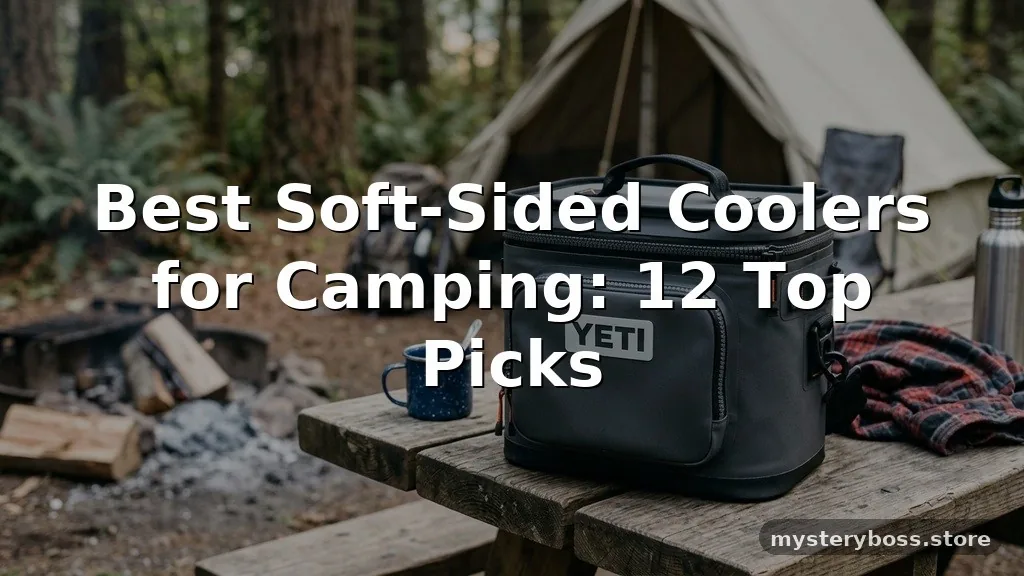
Finding the best soft-sided coolers for camping means balancing ice retention, carrying comfort, usable capacity, and packability. A cooler bag that works for a short hike may feel too small at a family campsite, while a large tote can become awkward once it’s full of food and ice. Construction matters, too: insulated walls, a dependable closure, leak-resistant lining, and practical pockets all affect how well a cooler fits real outdoor use.
This roundup compares 12 well-known soft coolers across backpack, tote, lunch, and traditional cooler designs. You’ll see which options suit car camping, day trips, boat use, travel, and short hikes, plus the trade-offs to consider before you shop.
How to Choose Among Soft-Sided Coolers for Camping
The right soft cooler depends less on its advertised size than on how you plan to carry and load it. A solo camper may value a compact cooler bag that fits inside a vehicle or tent vestibule, while a family may need a large model with a wide opening and enough space for separate meals.
- Capacity: Match the cooler to the number of people and the length of the trip. Bigger is not always better if you’ll carry it far.
- Ice retention: Thick insulation and a tight closure generally help maintain cold temperatures, but results also depend on pre-chilling, ambient heat, opening frequency, and ice type.
- Portability: Padded shoulder straps, backpack harnesses, grab handles, and wheels can make a heavy load easier to move.
- Leak resistance: A leakproof or leak-resistant liner is useful for drinks and melting ice, but the manufacturer’s care instructions still matter.
- Opening design: A wide lid is convenient at camp. A roll-top or zipper opening can help contain cold air and reduce spills.
- Storage: Exterior pockets are handy for utensils, napkins, sunscreen, and small everyday items.
- Cleaning: Look for an interior that can be wiped clean and dried thoroughly after use.
- Packability: A collapsible cooler is easier to store between trips, especially in a small apartment, camper, or crowded vehicle.
Food safety should also be part of the decision. A cooler that keeps food cold is only useful if it is packed correctly and not left open for long periods. For general handling guidance, review the USDA’s food refrigeration recommendations before planning meals for a longer trip.
💡 Tip
Measure the space where the cooler will travel before choosing capacity. A cooler that fits beneath a vehicle seat or inside a storage compartment can be more useful than one with a larger stated volume that has to stay outside.
Best Soft Coolers for Traditional Camping Loads
1. YETI Hopper Flip 12

The YETI Hopper Flip 12 is a compact soft cooler built around a box-shaped design, a shoulder strap, and a wide opening. Its insulated construction and waterproof-style exterior make it suitable for carrying drinks, lunch ingredients, and snacks to a campsite, picnic area, or fishing spot. The smaller footprint is easier to handle than a large cooler, though that also limits how much food it can carry for a group.
Its design is particularly appealing to campers who want a structured cooler bag rather than a soft tote that collapses around its contents. The zipper can be firm to operate, especially when the cooler is new or packed tightly, so it rewards careful loading rather than overstuffing.
Pros
- Compact shape is manageable for short carries.
- Wide opening makes food and drinks easier to reach.
- Structured insulation provides more support than a simple lunch tote.
Cons
- Capacity may be limited for families or multi-day group trips.
- Premium construction comes with a higher purchase commitment than basic soft bags.
- A full cooler can become uncomfortable to carry over longer distances.
🛠️ Practical Tip
Use a layer of ice or frozen bottles at the bottom, then place frequently needed drinks near the top. This reduces the time the zipper stays open during the day.
2. RTIC Soft Pack Cooler 20 Can
The RTIC Soft Pack Cooler 20 Can is aimed at buyers who want a conventional soft-sided cooler with a relatively generous drink-and-food load. Its rectangular format suits car camping, beach trips, tailgating, and day outings where a shoulder strap is more useful than a backpack harness.
The stated can capacity is a helpful reference, but real capacity changes once you add ice packs, containers, and oddly shaped food. This model makes more sense for people who need a flexible camp cooler that can carry a shared supply without moving into the bulk of a hard cooler.
Pros
- Useful middle-ground capacity for couples and small groups.
- Soft construction is easier to lift and store than a rigid cooler.
- Shoulder-carry format works well for short transfers from a vehicle to camp.
Cons
- A full load may be heavy without a wheeled base.
- It takes up more room than a small lunch cooler when packed.
- Ice and food organization require separate containers or dividers.
💡 Tip
If the cooler will stay at a campsite, pack meals in flat containers instead of loose bags. The rectangular interior will be easier to use and you’ll spend less time searching through the ice.
3. Engel HD30
The Engel HD30 is a heavy-duty soft cooler designed for buyers who place a high value on insulation and rugged construction. Its larger capacity makes it a better fit for vehicle-based camping, fishing, hunting, and group day trips than for backpacking. The boxy build also gives it a more stable shape when placed on a picnic table or cargo floor.
That additional structure can be useful, but it means the cooler is not the most compact option for storage. It is best considered when keeping food and drinks cold is a priority and carrying distance is modest.
Pros
- Large format suits shared food and drink supplies.
- Durable construction is appropriate for demanding outdoor settings.
- Structured sides help it hold its shape when loaded.
Cons
- Less convenient for long hikes or lightweight travel.
- Large soft coolers can become cumbersome when filled with ice.
- Storage space matters because the insulated body does not pack as flat as a simple tote.
✨ Style Tip
Treat a large soft cooler as part of the vehicle-camping kit rather than as a hiking pack. Keeping it close to the car preserves its capacity advantage without turning a short trip into a tiring carry.
4. AO Coolers 24 Pack Canvas Cooler
The AO Coolers 24 Pack Canvas Cooler has a straightforward tote-style layout with a canvas exterior and insulated interior. It is a practical choice for campers who prefer a soft, flexible bag that can carry a substantial amount of food and drinks without the more technical look of some premium soft coolers.
The simple design can be an advantage: there are fewer mechanisms to manage, and the wide opening is useful when loading meal containers. Buyers should still check the current care instructions and product details, since canvas finishes, lining construction, and included features can vary by version.
Pros
- High stated capacity is useful for family day trips.
- Flexible shape can fit into irregular vehicle storage spaces.
- Simple tote format is easy to load and carry short distances.
Cons
- Canvas-style exteriors may require more care after wet or muddy trips.
- Not the most suitable choice for extended backpack carries.
- Large food loads can make the shoulder straps feel strained.
🧽 Practical Tip
After a damp trip, empty the cooler completely and leave it open until the lining and seams are dry. This is especially important when the exterior fabric can hold moisture.
Best Backpack Coolers and Carry-Friendly Designs
5. YETI Hopper M12 Backpack
The YETI Hopper M12 Backpack converts the soft cooler into a hands-free carry system. Its backpack format is useful for hiking to a remote picnic spot, carrying lunch on a day trail, or transporting drinks while both hands are occupied with other gear. The upright shape can also be easier to manage than a wide cooler with a shoulder strap.
As with any backpack cooler, comfort depends on the load. Ice is heavy, and a completely full pack may feel bulky on a longer route. It is better suited to short or moderate-distance carries than to minimalist backpacking where every item must serve several purposes.
Pros
- Hands-free design leaves room for trekking poles or other equipment.
- Useful for day hikes, beach access, and dispersed picnic areas.
- Vertical format can fit more easily in some vehicle spaces.
Cons
- Weight becomes noticeable as ice and drinks are added.
- Backpack straps do not make a soft cooler suitable for ultralight travel.
- Less convenient to access while wearing it than a top-opening tote.
💡 Tip
Use frozen water bottles instead of loose ice when carrying the pack on a trail. They reduce shifting, provide drinking water later, and are easier to remove without emptying the whole interior.
6. Hydro Flask Carry Out Soft Cooler 20 L
The Hydro Flask Carry Out Soft Cooler 20 L offers a tote-like carry format with a capacity aimed at day trips and shared meals. It suits campers who want a cooler that can move from the vehicle to a picnic table, campground, or park without feeling like a rigid chest.
Its broad format makes loading practical, especially for containers and reusable food storage. That same width may be less comfortable for a long walk, so this is primarily a car-camping and everyday travel option rather than a backpacking cooler.
Pros
- 20-liter capacity provides useful room for day-trip food.
- Tote-style access is convenient when several people share the contents.
- Soft walls are easier to store than a hard-sided chest.
Cons
- Wide loads can become awkward to carry over distance.
- It may be more capacity than a solo camper needs.
- Meal containers can take up space quickly when packed with ice.
🛠️ Practical Tip
Place flat meal containers upright along the sides and use smaller items to fill the center. This makes the wide tote easier to organize than filling it with loose cans.
7. Hydro Flask Day Escape Soft Cooler 18 L
The Hydro Flask Day Escape Soft Cooler 18 L is a more portable option for people who want a soft-sided cooler with enough space for a full day of food and drinks. Its design is well suited to beach trips, campground lunches, road travel, and short walks from a vehicle.
An 18-liter cooler sits in a useful middle range: larger than a personal lunch bag but not as imposing as a large family cooler. Buyers should consider how much of the space will be occupied by ice packs, because insulated capacity is always lower than the empty-bag figure.
Pros
- Balanced capacity for couples, small families, and day outings.
- Soft format is easier to store than a rigid box.
- Suitable for both camping and everyday food transport.
Cons

- Not designed for long-distance backpacking loads.
- May feel too large for a single lunch or short solo outing.
- Internal organization may require separate food containers.
💡 Tip
For mixed meals, divide food into reusable containers before leaving home. You’ll get a more predictable fit and avoid crushing softer items beneath cans or ice packs.
8. Arctic Zone Titan Deep Freeze 30 Can Cooler
The Arctic Zone Titan Deep Freeze 30 Can Cooler is made for buyers who want a large soft cooler with a generous stated drink capacity. It can make sense for car camping, family picnics, sports events, and basecamp use where the cooler does not need to travel far from the vehicle.
Its larger size gives it more flexibility for shared supplies, but capacity can work against portability once fully loaded. This is a model to consider when space for food matters more than a compact packed footprint.
Pros
- Large capacity supports group meals and drinks.
- Suitable for camping trips that begin and end near a vehicle.
- Soft construction is easier to store than a comparable hard chest.
Cons
- A full 30-can load can be tiring to carry.
- Large interiors need deliberate organization to avoid digging.
- Less practical for hikers who need to carry every item over distance.
🧊 Quick Tip
Pre-chill drinks and food before loading a large cooler. Ice has less work to do when the contents start cold, particularly during warm-weather camping.
Useful Soft Cooler Totes, Lunch Bags, and Travel Options
9. Coleman Soft Cooler with Removable Liner
The Coleman Soft Cooler with Removable Liner is a practical choice for buyers who want a straightforward cooler bag for lunch, short day trips, or supplemental food storage at camp. A removable liner can make cleaning easier than dealing with a fixed interior, especially after spills.
This style is more suitable for modest loads than for carrying a full family’s food supply. It works well as a second cooler for snacks, breakfast items, or drinks that need to stay separate from the main camp provisions.
Pros
- Removable liner can simplify cleaning and drying.
- Useful for lunch, short outings, and secondary storage.
- Usually easier to carry than a large soft cooler.
Cons
- Capacity may be limited for multi-day camping.
- Basic designs may offer less insulation and structure than premium models.
- Not intended to replace a larger cooler for group use.
🧽 Practical Tip
Use this type of cooler for items that need frequent access, such as fruit, sandwiches, or condiments. Keeping those foods separate can help the main cooler stay closed longer.
10. Igloo MaxCold Soft Cooler 30 Can
The Igloo MaxCold Soft Cooler 30 Can is a roomy soft cooler designed for larger day-trip loads. Its capacity makes it suitable for car campers, families, and groups who want a flexible bag for drinks and packed food without bringing a hard-sided chest.
The wide, soft format should be easy to load, but it may not provide the same organization as a cooler with built-in compartments. If you use one for camping, reusable containers or smaller insulated bags can prevent the contents from becoming a single loose pile.
Pros
- Generous size is useful for shared food and beverages.
- Soft walls make storage easier between trips.
- Good match for campground and picnic-table use.
Cons
- Full loads may be difficult to carry far.
- Loose contents can be hard to find without internal organization.
- May be more cooler than a solo or couple camper needs.
💡 Tip
Pack food in groups—breakfast, lunch, drinks, and snacks—using separate bags or containers. The system works like a simple drawer arrangement inside a large cooler.
11. Pelican Dayventure Sling Cooler
The Pelican Dayventure Sling Cooler is aimed at lightweight day use rather than large camp provisioning. Its sling format gives it a casual, compact profile for carrying a drink and a few snacks on a short walk, at a campsite, or during travel.
This type of cooler makes sense when convenience and low bulk matter more than maximum ice capacity. It is also a sensible companion to a larger cooler: use it for the items that need to stay portable while leaving the main food supply at the vehicle.
Pros
- Compact sling design is convenient for short outings.
- Works well as a personal cooler rather than a group cooler.
- Small size can fit into crowded travel or camping storage.
Cons
- Limited capacity is not suitable for family meals.
- Small coolers generally have less room for large ice loads.
- A sling may feel unbalanced if packed with dense cans.
✨ Style Tip
Use a small sling cooler for the active part of the day and keep reserve drinks in the vehicle. That approach avoids carrying a large bag every time you leave camp.
12. RTIC Backpack Cooler
The RTIC Backpack Cooler provides a hands-free alternative to a tote or shoulder cooler. Its backpack format is useful for short hikes, beach access, travel days, and campsites where the route from the car includes uneven ground or stairs.
A backpack cooler can distribute weight more evenly than a single shoulder strap, but it still becomes substantial when filled with ice and drinks. Buyers should think about the packed weight, not just the empty bag, before choosing this format for trail use.
Pros
- Hands-free carry is practical for active day trips.
- Backpack format can feel more balanced than a one-sided shoulder bag.
- Useful for both camping and everyday travel.
Cons
- Access is less immediate while the cooler is being worn.
- Full loads can be heavy for extended walks.
- Interior capacity may be less convenient for bulky food containers than a tote.
🛠️ Practical Tip
For a trail carry, leave a little room at the top so the zipper can close without pressure. An overfilled backpack cooler is harder to balance and may place unnecessary strain on the closure.
Comparison Table: Soft Coolers for Camping
The table below separates the main use cases rather than declaring one universal winner. Capacity labels are manufacturer-style references and do not equal the amount of food you can carry after adding ice, containers, and packaging.
| Product | Best For | Format | Stated Size or Capacity | Main Drawback |
|---|---|---|---|---|
| YETI Hopper Flip 12 | Compact day trips | Shoulder cooler | 12-class design | Limited room for groups |
| RTIC Soft Pack Cooler 20 Can | Couples and small groups | Shoulder cooler | 20-can class | Heavy when full |
| Engel HD30 | Large camp loads | Heavy-duty soft cooler | 30-class design | Bulky for hiking |
| AO Coolers 24 Pack Canvas Cooler | Flexible family day trips | Canvas tote | 24-pack class | Needs care after wet use |
| YETI Hopper M12 Backpack | Hands-free carrying | Backpack cooler | Backpack format | Heavy when fully loaded |
| Hydro Flask Carry Out Soft Cooler 20 L | Car camping and shared meals | Soft tote | 20 liters | Wide to carry over distance |
| Hydro Flask Day Escape Soft Cooler 18 L | Day outings and travel | Carry cooler | 18 liters | Limited for large groups |
| Arctic Zone Titan Deep Freeze 30 Can | Family and basecamp use | Large soft cooler | 30-can class | Awkward when filled |
| Coleman Soft Cooler with Removable Liner | Lunch and supplemental storage | Soft cooler bag | Model-dependent | Not for large provisions |
| Igloo MaxCold Soft Cooler 30 Can | Large day-trip loads | Soft tote | 30-can class | Needs internal organization |
| Pelican Dayventure Sling Cooler | Personal snacks and drinks | Sling cooler | Small format | Limited capacity |
| RTIC Backpack Cooler | Short hikes and travel | Backpack cooler | Backpack format | Not ideal for long carries |
Which Soft Cooler Format Fits Your Camping Style?
For car campers and families
Large tote-style coolers and structured soft coolers are generally the most convenient when the vehicle is close to camp. Models in the 20- to 30-can range can hold shared food and drinks, although they become heavy once ice is added. Wide openings and a stable base are often more useful here than backpack straps.
For solo campers and couples
A compact shoulder cooler or medium carry cooler usually provides a better balance. Smaller models take less ice, fit more easily in a vehicle, and are less tempting to overpack. A 12-class cooler may handle personal meals, while an 18- or 20-liter design offers more flexibility for two people.
For hiking and short trail walks
Choose a backpack cooler or compact sling only if you genuinely need chilled food away from the vehicle. A backpack cooler keeps both hands free, but it does not make a heavy load light. For longer backpacking trips, a lightweight insulated bag may be more practical than a heavily structured cooler.
For lunch, travel, and everyday use
Small coolers with removable liners or simple tote designs can pull double duty. They are useful for work lunches, road trips, campground breakfasts, and day-use snacks. A collapsible model may be especially helpful if storage space is limited.
How to Pack a Soft-Sided Cooler More Effectively
- Pre-chill food and drinks before placing them in the cooler.
- Use frozen bottles or reusable ice packs to reduce loose water inside the bag.
- Put the coldest items near the bottom and surround the food with ice.
- Pack meals in sealed containers to prevent leaks and simplify cleanup.
- Keep frequently used drinks near the top.
- Open the cooler briefly and close it fully after each use.
- Drain or wipe moisture as needed, then dry the cooler completely after the trip.
🧊 Quick Tip
A cooler works best when it is reasonably full. If there is a lot of empty air, fill gaps with ice packs or tightly sealed frozen bottles rather than leaving warm air circulating inside.
Final Verdict
The best soft-sided coolers for camping vary by the way you travel. The YETI Hopper Flip 12 suits compact day use, while the RTIC Soft Pack 20 Can and medium Hydro Flask models offer a useful balance for couples and small groups.
Large options from Engel, Arctic Zone, Igloo, and AO Coolers make more sense for car camping and shared meals. Backpack designs such as the YETI Hopper M12 and RTIC Backpack Cooler are better when hands-free carrying matters, but they still become heavy with ice.
Before you buy, decide how far the cooler will travel, how many people it must serve, and whether easy cleaning or maximum insulation matters most. For short trips, a small cooler bag may be all you need; for a basecamp, a large soft tote can be more practical. Choosing around your actual load will usually matter more than choosing the biggest model.
Frequently Asked Questions
Which soft-sided cooler keeps ice the longest?
Ice retention depends on insulation, closure design, pre-chilling, ice quantity, weather, and how often the bag is opened. Larger, well-insulated coolers typically provide more room for ice, but no soft cooler can maintain the same conditions indefinitely in every environment.
Are soft coolers as good as hard coolers?
Soft coolers are easier to carry and store, while hard coolers usually provide more rigid protection and may hold ice longer in some conditions. A soft cooler is often the better fit for day trips, short carries, and limited storage space.
What is a good soft cooler for the money?
The best value depends on the capacity, insulation, and carry system you actually need. A basic cooler with a removable liner may be enough for lunch and short outings, while frequent campers may benefit from stronger construction and better closure hardware.
Are backpack coolers useful for camping?
Yes, especially for short hikes, beach access, and campsites away from the parking area. They distribute the load across both shoulders, but ice and drinks add significant weight, so they are not automatically suitable for long-distance backpacking.
Can a soft cooler be waterproof?
Some soft-sided coolers use water-resistant or leak-resistant materials and closures, but waterproof performance varies by product and does not always mean the cooler can be submerged. Follow the manufacturer’s cleaning and handling instructions.
How should a soft cooler be cleaned after camping?
Empty it, wipe the liner with mild soapy water, remove food residue, and let the cooler dry fully with the opening wide. Avoid storing it damp, since trapped moisture can create unpleasant odors and damage some fabrics over time.
Leave a Reply