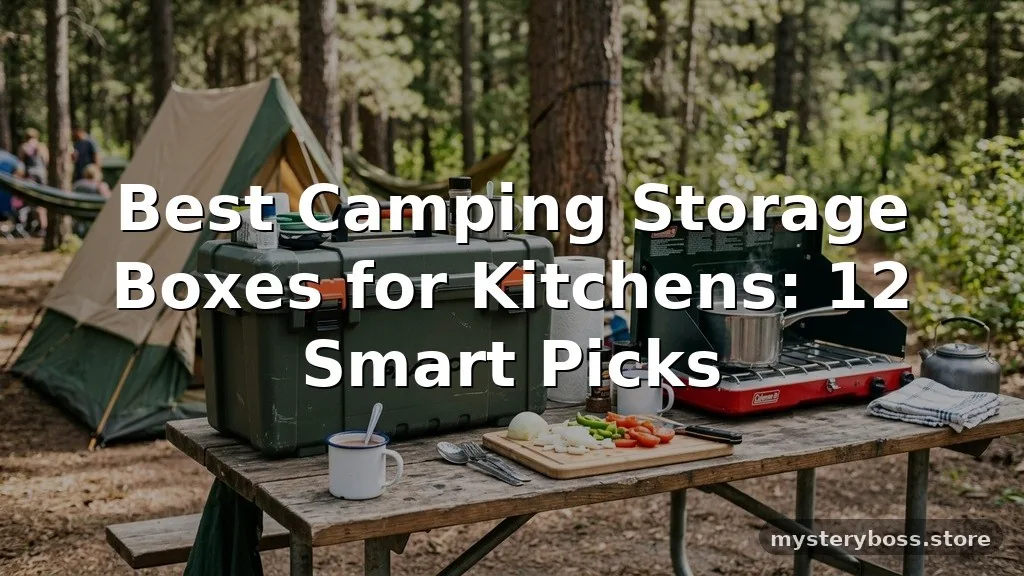
A messy camp kitchen slows down meal prep, wastes space in the vehicle, and makes small items surprisingly easy to lose. The best camping storage boxes for kitchens bring structure to cooking gear, dry goods, bottles, and cleanup supplies without turning packing into a puzzle. Some are better for a car-camping trunk, while others suit overland travel, folding camp kitchens, or compact weekend setups.
This roundup compares 12 practical options across heavy-duty trunks, modular gear cases, and lighter organizer-style boxes. You’ll see which designs handle rough transport, which offer quick grab access, and where waterproofing, weight, compartments, and portability create trade-offs.
How to Choose Camping Kitchen Storage
A useful camp kitchen box should do more than hold equipment. It should make packing predictable, protect contents during transport, and help you find a bottle opener or spice container without emptying the whole vehicle. Start by deciding whether the box will stay in a trunk, ride in a roof or cargo system, or travel by hand from the car to the cooking area.
- Capacity: Match the box to your stove, cookware, fuel accessories, plates, utensils, and pantry items rather than choosing the largest container available.
- Protection: Look for a rigid body, secure lid, and reliable seal when dust, rain, or muddy gear may be a concern.
- Organization: Removable trays, dividers, pockets, and smaller storage pods reduce rummaging.
- Portability: Handles, stackability, wheels, and manageable weight matter once the box is full.
- Cleaning: Smooth plastic surfaces are generally easier to wipe down after spills than fabric organizers.
- Vehicle fit: Measure the trunk, drawer, camper cabinet, or roof-mounted system before buying.
Think about the way you cook. A family may need one large box for cookware and another for dry food, while a solo camper may prefer a compact case with a few carefully chosen compartments. For food safety, keep raw ingredients, ready-to-eat food, and cleaning chemicals separated; the USDA’s food-safety basics are a useful reference when planning a camp kitchen.
🛠️ Practical Tip
Before ordering, place your most-used cookware on the floor and measure the footprint it occupies. Add room for handles and a little clearance so the lid closes without forcing the contents into place.
Best Camping Storage Boxes for Kitchens by Category
1. Plano Sportsman’s Trunk

The Plano Sportsman’s Trunk is a strong candidate for car campers who want one large, lidded container for cookware, stove accessories, plates, and camp kitchen hardware. Its molded plastic construction and substantial latching design make it more protective than a soft bag, while the broad trunk shape uses vehicle cargo space efficiently. The main limitation is organization: a large open interior may need smaller bins or pouches inside.
Pros
- Rigid construction protects kitchen gear during transport.
- Large trunk-style layout suits family or group equipment.
- Useful for stacking with other vehicle storage.
Cons
- Bulky when carried a long distance from the vehicle.
- Open space does not automatically separate small items.
💡 Tip
Use a small removable container for spices, fire starters, and utensils inside the trunk. That gives you a quick-grab kit without unpacking the main cookware load.
2. Rubbermaid ActionPacker
The Rubbermaid ActionPacker is a familiar hard-sided storage choice for camping, work sites, and vehicle organization. Its lockable-style lid design and solid body make it suitable for storing heavier kitchen equipment, including cookware that might crush a fabric organizer. It is less specialized than a camp kitchen organizer, so dividers and internal pouches are helpful for keeping smaller gear structured.
Pros
- Durable-feeling hard case for repeated transport.
- Useful capacity for bulky kitchen items.
- Works beyond camping as a general storage box.
Cons
- Can become disorganized if packed without smaller cases.
- Its weight and shape may be excessive for backpacking.
✨ Style Tip
Assign one ActionPacker to cooking hardware and a separate container to food. That simple split prevents greasy pans, dry ingredients, and cleaning products from sharing the same space.
3. Front Runner Wolf Pack Pro
The Front Runner Wolf Pack Pro is designed around modular vehicle storage, making it particularly relevant to overland trips and organized cargo systems. Its stackable format and compatible ecosystem can help create a tidy kitchen station in the back of an SUV, truck, or expedition vehicle. Buyers should check the exact box size and compatibility with their existing rack, drawer, or storage platform before committing.
Pros
- Modular shape suits structured vehicle packing.
- Stackable design can make better use of cargo height.
- Appropriate for frequent travel and overland-style organization.
Cons
- Modular systems can cost more than a basic plastic tote.
- The box alone may not provide enough small-item organization.
🛠️ Practical Tip
Place the most frequently used box nearest the tailgate. A modular system works best when access order is planned rather than treating every storage box as interchangeable.
4. RUX 70L
The RUX 70L takes a different approach from a conventional trunk. Its flexible body, rigid base, and lid system are intended to combine easier carrying with compact storage when not fully loaded.
That makes it interesting for campers who move between a vehicle and a campsite or need gear storage that can collapse somewhat between trips. It is not the obvious choice for delicate cookware that needs a rigid box around every side.
Pros
- Flexible format can be easier to carry than a rigid trunk.
- Useful for bulky soft goods and mixed camp equipment.
- Can suit changing loads from trip to trip.
Cons
- Less protective than a fully rigid case.
- Its larger format may be unnecessary for a minimalist kitchen.
💡 Tip
Use a separate padded sleeve for glass jars, enamelware, or sharp tools. The flexible format is most effective when the contents are already grouped and protected.
5. Stanley Adventure Easy Carry Outdoor Cooler
The Stanley Adventure Easy Carry Outdoor Cooler is primarily a cooler rather than a general-purpose kitchen storage box, but its insulated construction and carrying handle can make it useful for chilled food, drinks, and temperature-sensitive ingredients. It should be treated as one part of a camp kitchen system, not as a replacement for a dry-goods case. Its best role is a separate cold-storage box that keeps food away from dirty cookware.
Pros
- Separates chilled ingredients from dry kitchen gear.
- Handle-focused design supports short carries.
- Useful for drinks and perishable food on day trips.
Cons
- Insulated cooler space is not ideal for pans or utensils.
- Capacity and cooling performance depend on the specific model and packing method.
🧊 Quick Tip
Reserve the cooler for food and drinks, then place utensils and dry ingredients in a separate box. This keeps condensation away from paper goods and cookware.
6. YETI LoadOut GoBox
The YETI LoadOut GoBox is a hard-sided gear case aimed at protecting equipment in demanding transport conditions. For a camp kitchen, it can hold cookware, a stove, fuel accessories, or cleanup supplies, depending on the chosen size and internal layout. Its protective construction is appealing for frequent vehicle-based campers, although the case may be more than a casual weekend camper needs.
Pros
- Protective hard-shell design for valuable or delicate gear.
- Suitable for repeated vehicle transport.
- Can be assigned to a complete cooking setup.
Cons
- May be heavy or bulky when fully packed.
- A rigid case can waste space if your gear changes substantially between trips.
🛠️ Practical Tip
Pack the case by task rather than by object: cooking, serving, and cleanup. A box arranged this way lets one person prepare dinner while another finds plates or wash supplies.
7. Pelican Cargo Case
Pelican cargo cases are built for protective equipment transport and are available in formats that can suit camping storage. A case in the right size may protect a compact stove, coffee setup, or specialist cooking gear from knocks and dust. The trade-off is that protective cases typically prioritize security over lightweight portability and low-cost simplicity.
Pros

- Strong protection for sensitive cooking equipment.
- Useful for compact, high-value, or electronic kitchen gear.
- Professional-style case design supports organized transport.
Cons
- Not the most space-efficient choice for loose cookware.
- Case weight can matter during campsite carries.
💡 Tip
Choose a case size around the gear you actually own. Excess empty space allows equipment to shift, while an overfilled case can make the lid difficult to close and reduce protection.
8. Plano Guide Series 3600 StowAway
The Plano Guide Series 3600 StowAway is a small compartment organizer rather than a full kitchen trunk. Its divided interior is useful for spices, tea bags, repair items, fishing-style accessories, small utensils, and stove parts that otherwise disappear at the bottom of a larger box. It works best inside a broader camping storage system.
Pros
- Small compartments keep tiny kitchen items visible.
- Compact size fits larger boxes and camp drawers.
- Helpful for building a repeatable packing system.
Cons
- Not large enough for cookware or a complete kitchen kit.
- Many small compartments can slow packing if over-organized.
✨ Style Tip
Use a compartment organizer only for small pieces. Large utensils and cooking tools are easier to grab from a vertical pouch or open-top bin.
9. Stanley Classic Lunch Box
The Stanley Classic Lunch Box is compact, recognizable, and suited to a small food or coffee kit rather than a complete camp kitchen. Its metal construction gives it a structured feel, while the lunch-box shape makes it easy to place on a camp table. Solo campers, hikers using a vehicle as a base, and people carrying a simple breakfast setup may appreciate its straightforward format.
Pros
- Compact footprint for small cooking or snack kits.
- Rigid structure protects contents better than a thin bag.
- Easy to use as a dedicated coffee or breakfast case.
Cons
- Limited capacity for family-sized kitchen equipment.
- Metal construction may add weight compared with soft storage.
☕ Practical Tip
Create a dedicated morning box with coffee, tea, filters, a lighter, and a mug. It can come out first while the rest of the kitchen remains packed.
10. IKEA SAMLA Storage Box
IKEA SAMLA boxes are lightweight plastic storage containers available in several sizes, making them adaptable for dry goods, utensils, and general camp equipment. They are better suited to protected vehicle storage than exposed, wet environments unless paired with an appropriate lid and additional protection. Their plain shape is a benefit: you can use separate bins for food, cookware, and cleaning supplies without paying for a specialized camping system.
Pros
- Simple format works for dividing a camp kitchen into categories.
- Lightweight compared with many heavy-duty cargo cases.
- Useful for home-to-campsite packing and storage.
Cons
- Not every version is intended for rugged outdoor exposure.
- Small items need pouches or inner organizers.
💡 Tip
Label the short ends rather than only the lids. Labels remain visible when boxes are stacked in a dark vehicle trunk or under a camp table.
11. Really Useful Box
Really Useful Boxes are clear or translucent plastic organizers that can be practical for small camp kitchen supplies. Visibility is their main advantage: you can often identify packets, utensils, and accessories without opening every container. They are more appropriate for organized car camping, cabin trips, or home-to-camp transport than for rough overland use where maximum impact protection is the priority.
Pros
- Visible contents make quick item retrieval easier.
- Multiple sizes support a layered storage system.
- Useful for small ingredients and lightweight kitchen accessories.
Cons
- Clear plastic may show dirt and wear more readily.
- Not a substitute for a rugged cargo box in demanding conditions.
🔎 Quick Tip
Use transparent boxes for low-mess items such as napkins, tea, and utensils. Keep greasy or muddy tools in darker, washable containers where stains are less distracting.
12. DeWalt ToughSystem 2.0 Tool Box
The DeWalt ToughSystem 2.0 Tool Box comes from a modular tool-storage family, but its stackable format can translate well to camp kitchens built around vehicle travel. It is particularly useful for separating a stove, cookware, electrical accessories, and repair gear into labeled cases. The tool-box design favors modular packing and protection, though it may feel excessive for a light weekend setup.
Pros
- Modular stacking supports systematic vehicle organization.
- Useful for separating cooking, power, and repair equipment.
- Hard-sided protection suits frequent transport.
Cons
- Tool-storage features may be unnecessary for basic camping.
- Individual cases can take up more space than one open tote.
🛠️ Practical Tip
Keep one modular case permanently assigned to camp cooking. Repacking only the food and fuel between trips saves time and reduces the chance of leaving a key utensil at home.
Comparison of Camping Kitchen Storage Boxes
The table below shows how the options differ in their intended role. Exact dimensions, weights, internal layouts, and weather-sealing details can vary by model or revision, so check the current manufacturer listing before buying.
| Product | Best For | Format | Organization | Main Drawback |
|---|---|---|---|---|
| Plano Sportsman’s Trunk | Family car camping | Large rigid trunk | Open interior | Needs inner bins |
| Rubbermaid ActionPacker | General vehicle storage | Hard-sided tote | Open interior | Can be bulky |
| Front Runner Wolf Pack Pro | Overland systems | Stackable cargo box | Modular ecosystem | Check system compatibility |
| RUX 70L | Flexible vehicle-to-campsite use | Soft-sided hybrid | Flexible interior | Less rigid protection |
| Stanley Adventure Cooler | Cold food and drinks | Insulated cooler | Cooler interior | Not a cookware box |
| YETI LoadOut GoBox | Protected gear transport | Hard gear case | Model-dependent | May be heavy |
| Pelican Cargo Case | Specialist equipment | Protective case | Model-dependent | Less flexible for loose gear |
| Plano Guide Series 3600 | Small accessories | Compartment organizer | Divided trays | Limited capacity |
| Stanley Classic Lunch Box | Compact solo kits | Metal lunch box | Simple interior | Small capacity |
| IKEA SAMLA | Budget-style home-to-camp organization | Plastic bin | Open interior | Model-specific protection |
| Really Useful Box | Visible small-item storage | Plastic organizer | Clear interior | Not for harsh transport |
| DeWalt ToughSystem 2.0 | Modular vehicle setups | Stackable tool box | System-based | More structure than some campers need |
💡 Tip
Use the table to choose a format first, then compare brands within that format. A cooler, compartment case, and large trunk solve different storage problems and shouldn’t be judged by capacity alone.
Which Type Fits Your Camping Style?
Families and Group Campers
Families usually benefit from a large trunk or two stackable boxes. One can hold cookware and serving items, while another carries dry food, drinks, and cleanup supplies. A broad rigid box is convenient, but small inner bins stop the contents from becoming a mixed pile.
👨👩👧 Practical Tip
Pack serving equipment at the top: plates, cups, utensils, and napkins are needed before the stove or cookware is fully unpacked.
Solo Campers and Backpackers
Backpackers should be cautious about large storage boxes. A small pouch, lightweight case, or dry bag is generally easier to carry than a rigid cargo box. Compact organizers make more sense for solo car campers who want a tidy coffee, breakfast, or cooking kit without carrying a full family kitchen.
🎒 Quick Tip
For walking campsites, weigh the empty container before buying. A box that seems manageable at home can become awkward once filled with cookware and food.
Frequent Car Campers and Overland Travelers
Frequent travelers gain more from modular systems than from one oversized tote. Stackable boxes, labeled cases, and repeatable packing zones make it easier to load a vehicle quickly. A rugged cargo box can also protect gear from the movement and clutter that come with longer trips, though measurements and compatibility matter.
🧭 Practical Tip
Create a packing map for the vehicle: food near the kitchen, fuel separated as appropriate, and the first-use box closest to the hatch or tailgate.
How to Organize a Camp Kitchen Box
A storage box becomes far more useful when every item has a predictable place. Group gear by the order in which it is used, not simply by size. Keep knives and sharp tools protected, place wet or dirty equipment in washable bags, and separate food from chemicals and fuel.
- Empty the box and group cookware, utensils, ingredients, drinks, and cleanup gear.
- Remove duplicate items that rarely earn their space.
- Place heavy cookware low and fragile pieces inside protective sleeves.
- Use small organizers for spices, matches, tea, coffee, and repair items.
- Leave a little space so the lid closes without pressure.
- Label the box and record anything that needs replacing after a trip.
🧼 Practical Tip
Let wet cookware dry before closing a sealed container for storage. After a trip, open the box at home so trapped moisture doesn’t leave odors or encourage residue buildup.
Frequently Asked Questions
What is the best camp kitchen storage box?
There isn’t one universal choice. A large rigid trunk suits families, a modular cargo box suits vehicle travelers, and a small compartment case works better for utensils, spices, and other accessories.
Which storage box is best for a kitchen?
Choose a box with enough capacity for your actual cookware, a secure lid, manageable weight, and a layout that matches your packing style. Internal pouches can make an open trunk much more practical.
What is the best cooking box for camping?
A cooking box should hold the equipment used together, such as a stove, fuel accessories, pot, utensils, lighter, and cleaning cloth. For a larger setup, splitting cooking gear from food usually improves access and hygiene.
Are camping storage boxes waterproof?
Some offer weather-resistant construction or sealing, but protection varies by model and closure design. Treat “water-resistant” and “weather-resistant” differently from fully waterproof, and protect food in separate sealed bags when conditions are uncertain.
Are boxes with wheels useful for camping kitchens?
Wheels can help with heavy loads on smooth ground, especially at organized campgrounds. They are less useful on sand, gravel, mud, or uneven trails, where handles and a manageable total weight may matter more.
Final Verdict
The best camping storage boxes for kitchens depend on how you travel and what you cook. Large trunks are practical for families, modular cargo boxes suit organized vehicle and overland systems, and smaller cases help solo campers keep essential items easy to grab. A cooler should handle chilled food, while a compartment organizer is better for small accessories than pans and plates.
Before purchasing, measure your vehicle space, estimate the loaded weight, and decide whether protection or light portability matters more. Choose the simplest box that supports your packing routine, then add small organizers only where they solve a real problem. A well-planned system saves time packing and makes camp cooking calmer without adding unnecessary gear.
Leave a Reply