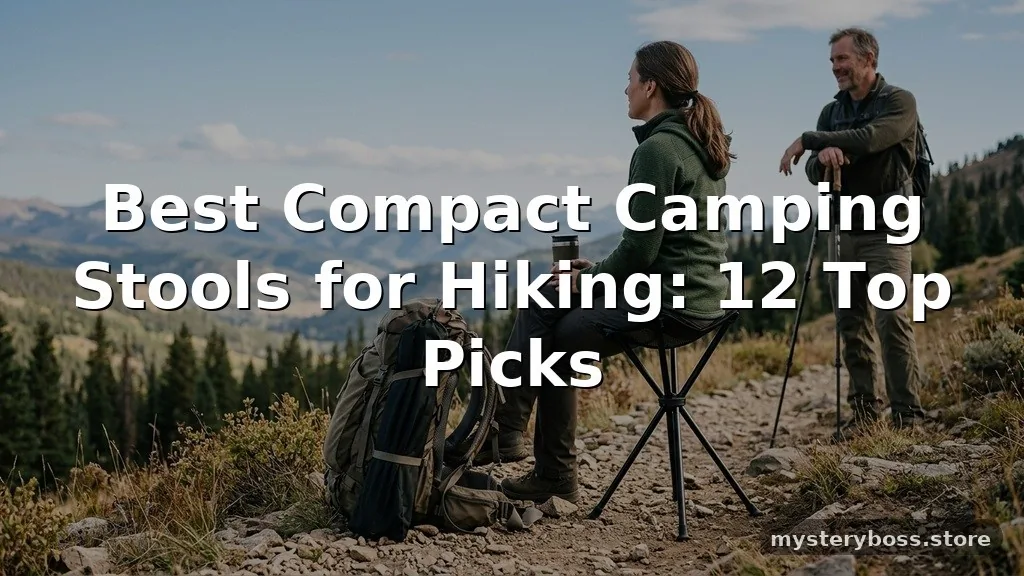
Finding the best compact camping stools for hiking means balancing sitting comfort against every ounce in your pack. A useful stool should pack small, open quickly, stay stable on uneven ground, and provide enough support for breaks, cooking, fishing, or waiting at a trailhead. Some models are little more than a lightweight seat, while others offer stronger frames and better comfort at the cost of extra weight.
This roundup compares 12 portable options across ultralight tripod designs, folding stools, and more supportive alternatives. You’ll see where each model fits, what to check before buying, and which style makes the most sense for backpacking, car camping, travel, or everyday outdoor use.
How to Choose Compact Camping Stools for Hiking
A camping stool has a simple job, but the design details matter once it is strapped to a backpack. Start with packed size and weight, then consider the frame material, seat height, stated load capacity, and how securely the feet sit on loose or uneven ground.
Tripod stools usually offer the smallest packed profile and quick setup. Folding stools with four legs can feel more planted, while chair-style seats provide better back support but take up more room. No single option wins every category.
- Packability: Look for a folded length and shape that work with your backpack or travel bag.
- Weight: Ultralight models suit long hikes, while heavier designs may offer better stability and comfort.
- Seat height: A low stool is easy to carry but may be harder to stand from, especially for taller adults.
- Frame construction: Aluminum is common for low weight; steel can provide a more substantial feel but generally adds mass.
- Foot stability: Wide or rubberized feet can help on hard surfaces, though every small stool needs careful placement on soft ground.
- Capacity: Check the manufacturer’s stated limit and leave a sensible margin rather than choosing a model at its maximum.
- Use case: A backpacking stool prioritizes ounces, while a folding camping stool for car trips can favor comfort and durability.
🛠️ Practical Tip
Measure the side pocket or exterior attachment points on your pack before buying. A stool can be technically compact yet awkward if its folded length sticks out beyond the pack or catches on branches.
Comparison Table: Portable Stools and Compact Seats
The table below groups the options by their general design rather than declaring one universal winner. Product versions can change, so confirm the current dimensions, weight, and capacity with the manufacturer before ordering.
| Product | Best For | Design | Portability | Main Trade-Off |
|---|---|---|---|---|
| Walkstool Comfort 45 | Comfort-focused hikers | Three-leg mesh seat | Folds into a slim bundle | More substantial than ultralight stools |
| Walkstool Basic 50 | Simple outdoor seating | Three-leg fabric seat | Compact tripod format | Less cushioned than comfort models |
| ALPS Mountaineering Tri-Leg Stool | Campers wanting a familiar folding stool | Tripod folding frame | Easy to carry | Limited back support |
| GCI Outdoor PackSeat | Day hikes and travel | Portable folding seat | Designed for quick transport | Minimal seating area |
| TravelChair Joey | Backpackers wanting a light stool | Compact folding seat | Pack-friendly profile | Not a back-supported chair |
| Vargo Titanium Triad | Weight-conscious backpackers | Minimal tripod-style seat | Very small packed form | Basic comfort |
| REI Co-op Trail Stool | Day trips and campsite use | Folding stool | Portable, though not the smallest category | Check current specifications |
| Stansport Folding Stool | Budget-minded car campers | Traditional folding frame | Good for vehicle transport | Usually less backpack-focused |
| Helinox Chair Zero | Hikers who want back support | Compact backpacking chair | Highly packable chair format | Costs more than a basic stool |
| Crazy Creek Hex 2.0 | Ground-level lounging | Soft folding camp seat | Flattens for packing | Not an elevated stool |
| NEMO Moonlite | Comfort-focused camp seating | Supportive folding chair | Portable but larger than a stool | Too bulky for some long hikes |
| GCI Outdoor Quik-E | Fast setup at campsites | Folding camp stool | Convenient for short transport | Less suited to minimalist packs |
💡 Tip
Treat the table as a starting point, not a substitute for checking the current product page. Weight, materials, and listed capacity may differ between revisions or regional versions.
Ultralight Tripod and Backpacking Stools
1. Walkstool Comfort 45

The Walkstool Comfort 45 is aimed at hikers who want more usable seating than a tiny three-legged perch can provide. Its tripod layout folds into a slim bundle, and the mesh-style seat is designed to spread pressure more comfortably than a narrow fabric strap. The taller format can also make standing easier during longer breaks.
Its appeal is comfort without moving all the way to a full backpacking chair. The trade-off is straightforward: a supportive, taller stool usually takes more space and weighs more than a minimalist folding seat.
Pros
- More comfortable for extended rests than many basic tripod stools.
- Taller seating position may suit adults who dislike sitting close to the ground.
- Compact folding design works for hiking, fishing, and campsite use.
Cons
- Not the lightest option for strict ultralight packing.
- No back support, despite its more comfortable seat.
✨ Style Tip
Choose the taller version only if its packed length fits your carry system. A larger stool is useful at camp, but it may feel awkward attached to a small daypack.
2. Walkstool Basic 50
The Walkstool Basic 50 keeps the recognizable three-leg format but uses a simpler seat design than the Comfort range. It suits users who want a portable folding stool for trail breaks, outdoor work, fishing, or travel without carrying a conventional chair.
The height is useful for people who prefer not to squat near the ground. Because it remains a stool, it offers no back support and is better for short or moderate rests than for reading beside camp all evening.
Pros
- Simple tripod construction is quick to open and close.
- Taller seating can be easier for many adults to rise from.
- Versatile enough for hiking, gardening, fishing, and spectator events.
Cons
- Basic seat construction may not satisfy comfort-focused buyers.
- Three legs require deliberate placement on slopes or soft soil.
💡 Tip
Before sitting, press down gently on the seat and check that all three feet have made firm contact. This quick habit is especially useful on gravel, roots, and uneven trail edges.
3. TravelChair Joey
The TravelChair Joey is a compact folding seat designed for people who want a small resting platform rather than a full camping chair. Its appeal lies in the straightforward format: carry it to a viewpoint, open it for a short break, and fold it away when the trail continues.
It can make sense for backpackers who consider a sit pad too minimal but do not want the bulk of a chair with a back. The small seating area and lack of upper-body support limit its use for long relaxation sessions.
Pros
- Useful middle ground between a ground pad and a full chair.
- Folding format is convenient for day hikes and travel.
- Simple design avoids the extra parts found on larger chairs.
Cons
- Limited comfort for lengthy sitting.
- Buyers should verify current capacity and packed dimensions.
🛠️ Practical Tip
Use a small foam pad beneath a lightweight stool on damp ground. It can reduce moisture transfer and help keep the seat cleaner when you stop beside a muddy trail.
4. Vargo Titanium Triad
The Vargo Titanium Triad is built around minimalist backpacking priorities. Titanium construction is associated with low weight and corrosion resistance, while the tripod shape keeps the folded package small. It is best viewed as a compact perch for short breaks, meal preparation, or waiting around camp.
This is not a plush seat. Buyers choosing it are usually trading cushion and broad support for portability. That makes it more appealing to fast-and-light hikers than to campers who want a relaxed, chair-like experience.
Pros
- Minimalist design suits weight-conscious backpackers.
- Titanium frame construction can resist rust better than untreated steel.
- Small packed footprint is easy to store in a pack.
Cons
- Thin, minimal seating may not suit long breaks.
- Small feet can be less forgiving on soft ground.
⚡ Quick Tip
Pack a small repair sleeve or tape only if it serves other gear too; a minimalist stool should not lead to a pile of single-purpose accessories that cancel out its weight advantage.
Portable Folding Stools for Day Hikes and Campsites
5. GCI Outdoor PackSeat

The GCI Outdoor PackSeat focuses on quick, portable seating for short rests and casual outdoor use. Its folding construction makes it more approachable than a very small ultralight perch, and the design is suited to day hikes, events, fishing spots, and campsites where a full chair feels unnecessary.
It is a sensible option for people who want straightforward operation rather than a highly specialized backpacking chair. Before buying, confirm the current seat height, folded dimensions, and weight because these details determine whether it belongs on a hiking pack or in a vehicle.
Pros
- Simple setup is convenient for brief stops.
- Works across hiking, travel, fishing, and general outdoor use.
- More familiar to beginners than highly minimalist designs.
Cons
- May be less attractive to ultralight hikers than a tiny tripod seat.
- Typically offers little or no back support.
💡 Tip
For a daypack, compare the stool’s folded length with the pack’s back panel. A stool that sits vertically inside the main compartment may be easier to carry than one strapped horizontally across the outside.
6. ALPS Mountaineering Tri-Leg Stool
The ALPS Mountaineering Tri-Leg Stool uses a familiar tripod format that folds for transport and opens quickly at camp. It is a practical choice for users who want an uncomplicated folding camping stool for meals, outdoor chores, or short trail breaks.
Compared with minimalist titanium designs, it may feel more like general camping equipment than specialist ultralight gear. That can be an advantage for families and car campers, though backpackers should compare the current weight against smaller alternatives.
Pros
- Recognizable design is easy for beginners to operate.
- Tripod layout keeps the construction relatively simple.
- Suitable for camping, fishing, and outdoor events.
Cons
- Limited back support and moderate sitting comfort.
- May be better suited to short hikes or vehicle-based trips than long-distance backpacking.
🛠️ Practical Tip
If children will use a tripod stool, place it on level ground and supervise setup. A lightweight frame can shift if a child sits down from the side rather than lowering onto the center of the seat.
7. REI Co-op Trail Stool
The REI Co-op Trail Stool is positioned as a compact seat for trail and camp use rather than a full-size chair. Its folding approach makes it useful for hikers who want an elevated place to sit without carrying a backrest, armrests, and a larger frame.
It may appeal to beginners who prefer buying from a known outdoor retailer and want a design intended for recreational trips. Current specifications should be checked carefully, particularly if you are comparing it with a backpacking stool where every ounce matters.
Pros
- Purpose-built for casual trail and campsite seating.
- More portable than a conventional camp chair.
- Good candidate for day hikes, festivals, and travel.
Cons
- Not designed to provide back support.
- Current model details should be confirmed before purchase.
✨ Style Tip
Match the stool to your typical trip. If it will spend most of its life in a car, a slightly roomier seat may be more useful than saving a small amount of pack space.
8. Stansport Folding Stool
The Stansport Folding Stool represents the traditional folding camping stool: a simple seat, a collapsible frame, and quick storage when the activity is over. It is more naturally suited to car camping, picnics, fishing, and campsite tasks than to minimalist backpacking.
Its value comes from familiarity and ease of use rather than advanced suspension or technical materials. Check the exact frame material, capacity, and folded size for the current version, since Stansport sells several types of outdoor seating.
Pros
- Easy to understand and quick to deploy.
- Useful for families, car campers, and casual outdoor activities.
- Traditional folding format is convenient for storage.
Cons
- May be too bulky or heavy for long backpacking trips.
- Basic models generally provide limited ergonomic support.
💡 Tip
For vehicle camping, keep a stool in an exterior gear bin rather than loose in the cabin. Folding hinges can collect grit, so wipe them clean before storage after sandy trips.
Compact Chair Alternatives for More Comfort
A stool is not always the right answer. If you want to lean back, read, eat, or spend several hours beside a fire, a backpacking chair may justify its larger packed size. These alternatives are included because many shoppers searching for the best compact camping stools for hiking are really comparing stools with low-weight chairs.
9. Helinox Chair Zero

The Helinox Chair Zero is a compact backpacking chair rather than a stool, but its low-weight, collapsible design makes it a notable alternative. It provides a backrest and a more conventional sitting position while still packing down far smaller than a standard camping chair.
The added support can make a major difference during long camp evenings. The trade-off is more assembly, more structure, and usually more cost than a basic folding stool. It is best for hikers who value comfort enough to carry the extra components.
Pros
- Back support is much better than on a standard stool.
- Compact packed form suits backpacking and travel.
- Useful for longer periods of sitting at camp.
Cons
- More parts to assemble and pack.
- Usually less minimal than a three-leg stool.
🛠️ Practical Tip
Practice assembling a compact chair at home before a trip. It is easier to identify a twisted shock cord or misplaced pole section beside a table than in fading light at camp.
10. Crazy Creek Hex 2.0
The Crazy Creek Hex 2.0 is a soft, ground-level camp seat rather than an elevated folding stool. It folds flat, provides cushioning and a shaped back, and can be useful on dry ground, rock slabs, beaches, and informal campsites where a raised seat is not essential.
This option suits travelers who prioritize comfort and packability without needing legs. It is less suitable for muddy conditions, wet grass, or anyone who finds getting up from the ground difficult.
Pros
- Provides back support without a metal frame.
- Folds flat for simple packing and storage.
- Useful for concerts, picnics, paddling trips, and camp breaks.
Cons
- Does not raise the user above wet or uneven ground.
- Less suitable for users who need a higher seat.
⚡ Quick Tip
Use a ground-level seat only where the surface is reasonably clean and dry. A waterproof groundsheet underneath can make breaks more comfortable without adding much bulk.
11. NEMO Moonlite
The NEMO Moonlite is a supportive camp chair for users who want adjustable comfort and a more relaxed posture. It is not a compact stool, but it belongs in the comparison because hikers often face the same decision: save space with a stool or carry a better seat for evenings at camp.
Its chair structure is more appropriate for comfort-focused campers, frequent weekend trips, and basecamp use than for fast hiking. Check the current packed weight and size to decide whether it fits your route and carrying style.
Pros
- More supportive and relaxing than a simple stool.
- Better suited to extended sitting around camp.
- Can appeal to users who find low stools uncomfortable.
Cons
- Bulkier than most compact stools.
- May be excessive for short trail breaks.
💡 Tip
Use a supportive chair for basecamp or car camping, then carry a simple stool for day hikes if you want both comfort and low trail weight. One seat does not need to handle every trip.
12. GCI Outdoor Quik-E
The GCI Outdoor Quik-E is a quick-opening camp stool aimed at convenience. Its design is more appropriate for campsite cooking, outdoor events, fishing, and short-distance transport than for users counting every ounce on a multi-day route.
The major benefit is straightforward operation. It gives users a raised place to sit without the assembly process associated with some backpacking chairs. As with other folding models, verify the current dimensions, capacity, and frame materials before making a final decision.
Pros
- Fast setup is helpful when moving around camp.
- Useful for fishing, cooking, spectators, and casual outdoor use.
- More substantial than a tiny minimalist perch.
Cons
- May not be the best match for long-distance backpacking.
- Limited back support compared with a chair.
🛠️ Practical Tip
Open a folding stool fully before sitting, and keep fingers clear of the hinge points. This is especially important when several people are setting up shared camp furniture quickly.
Which Type of Stool Fits Your Trip?
The right design depends more on how you travel than on a single headline specification. A solo backpacker may gladly accept a narrow seat, while a family car camper may prefer a heavier model that feels stable and comfortable.
- For ultralight backpacking: Choose a minimalist tripod or compact folding seat, and prioritize packed weight over cushioning.
- For day hiking: A simple PackSeat-style design offers a useful middle ground between a sit pad and a full chair.
- For car camping: A traditional folding stool or supportive chair is easier to justify because transport weight matters less.
- For fishing and outdoor work: Look for a stable seat with a practical height and a frame that tolerates repeated folding.
- For comfort-focused campers: Consider a chair with a back, even if it no longer qualifies as the smallest option.
- For ground-sensitive users: Avoid very low stools and check whether the seat height makes standing comfortable.
Before buying, check the manufacturer’s care instructions and inspect hinges, feet, fabric, and tension points periodically. On public land, keep your setup considerate of other visitors and follow local rules; the National Park Service’s Leave No Trace principles are a useful reference for minimizing campsite impact.
✨ Style Tip
If you hike with a black pack or dark outdoor clothing, a brightly colored stool can be easier to spot at camp. Visibility is a small convenience that helps prevent leaving gear behind at a rest stop.
Frequently Asked Questions
What is the best portable chair for hiking?
The best choice depends on whether you value minimum weight or back support. A compact tripod stool is usually simpler and smaller, while a backpacking chair such as the Helinox Chair Zero offers a more supportive seat at the cost of additional structure and packed bulk.
What is the most comfortable compact camping stool?
Taller stools with wider or mesh seats are generally more comfortable than very small minimalist perches. A chair with a back will usually provide better long-sitting comfort than any stool, but it may be less convenient for short trail breaks.
What is the most compact and portable stool available?
Minimalist tripod and titanium designs tend to pack smaller than traditional four-leg folding stools. Compare the folded length, packed diameter, and weight rather than relying only on the product name.
What is the lightest camping chair for hiking?
Lightweight backpacking chairs vary by model and version, so check current manufacturer specifications. A stool will usually be simpler and lighter than a chair, but it will not provide the same back support.
Are collapsible stools stable on uneven ground?
They can be stable when placed carefully, but small feet and short frames are less forgiving than larger camp furniture. Set the stool on firm, level ground, check that every foot is planted, and avoid leaning far to one side.
Final Verdict
The best compact camping stools for hiking are not all built for the same person. A minimalist tripod or titanium seat makes the most sense for backpackers who want a portable perch with minimal pack impact. A folding stool is more practical for day hikes, fishing, families, and car camping, while a compact chair is worth considering when back support matters more than absolute weight.
Before choosing, compare the current packed size, weight, seat height, capacity, frame material, and stability on the ground you expect to use. Decide how long you normally sit, then choose the smallest design that still feels usable. That trade-off will lead to a better purchase than chasing a single “best” model.
Leave a Reply