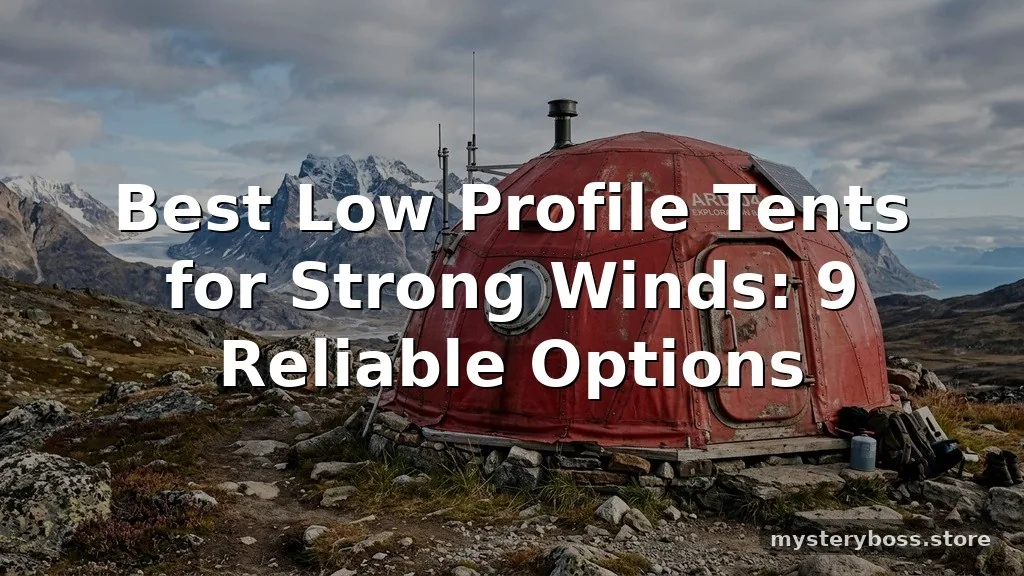
Strong gusts expose weak tent designs quickly, especially on exposed ridgelines, beaches, and high camps where there’s little natural shelter. The best low profile tents for strong winds keep their height modest, use dependable pole structures, and provide enough guy points to spread the load instead of letting fabric act like a sail.
This roundup compares proven four-season, mountaineering, and storm-ready shelters, including compact solo models and roomier two-person tents. You’ll also learn how pole geometry, ventilation, staking, packed weight, and pitch technique affect real-world wind performance before choosing a tent for your next trip.
What Makes a Tent Good in Strong Wind?
A wind-resistant tent is not defined by a single feature. A low silhouette helps, but the complete shelter must combine a stable frame, strong fabric, secure anchors, and a pitch that keeps the fly properly tensioned.
Four-season tents generally use more substantial poles, smaller mesh panels, and better snow or storm protection than typical three-season backpacking tents. That added security usually means more weight, less airflow, and a higher price. A lightweight or ultralight tent may still handle ordinary windy nights well, but it should not automatically be treated as a mountaineering shelter.
- Low height: Less exposed surface area can reduce wind pressure.
- Multiple pole crossings: Intersecting poles can provide better support than a simple two-pole arch.
- Strong guy points: Extra anchor points let you distribute force around the fly.
- Full-coverage fly: More fabric coverage protects the inner tent from wind-driven rain and spindrift.
- Reliable stakes: A strong tent can still fail if the anchors pull out of soft ground.
- Useful ventilation: Small vents help reduce condensation without exposing too much mesh.
🛠️ Practical Tip
Wind direction can change overnight. Pitch the narrowest end toward the prevailing gusts, then use every available guy point rather than relying on the tent’s basic stake corners alone.
The tents below are divided into expedition, four-season backpacking, and lightweight storm-capable designs. The categories reflect their intended use, not a promise that one shelter will outperform every other option in every storm.
1. Hilleberg Soulo

The Hilleberg Soulo is a compact solo four-season tent built around a freestanding design and a single main pole structure supported by additional framework at the front and rear. Its enclosed inner tent, low footprint, and integrated vestibule make it appealing for solo backpackers who expect exposed camps but still want a relatively straightforward setup.
Interior space is limited compared with larger two-person shelters, so it suits one person and essential gear rather than extended indoor living. The design makes it especially practical for alpine travel, winter trips, and camps where finding a perfectly sheltered site isn’t always possible.
💡 Tip
Use the vestibule for wet footwear and a pack, but keep the inner doorway clear so condensation and damp items don’t crowd the sleeping area.
Pros
- Freestanding design simplifies pitching on rocky or uneven ground.
- Compact shape is well suited to exposed solo camps.
- Four-season construction provides more protection than a typical mesh-heavy backpacking tent.
Cons
- Solo interior space is limited for taller users or bulky winter gear.
- Heavier and more expensive than many three-season solo tents.
2. Hilleberg Allak 2
The Hilleberg Allak 2 gives two campers a more comfortable freestanding shelter while retaining a compact, rounded profile. Two doors and two vestibules improve access and storage, which matters when weather keeps both occupants inside for long periods.
Its twin-pole architecture offers a useful balance between stability and livability. It is a strong candidate for backpackers who need a serious four-season tent but don’t want the more specialised shape of a tunnel-style expedition shelter.
✨ Style Tip
For strong crosswinds, tension both vestibules evenly. Uneven tension can pull the fly toward one side and reduce the benefit of the symmetrical pole layout.
Pros
- Two doors and vestibules make sharing the tent easier.
- Freestanding structure is convenient on hard ground.
- Compact profile and four-season fly support exposed trips.
Cons
- Its all-weather construction adds weight compared with lightweight two-person tents.
- The rounded interior prioritizes storm resistance over maximum headroom.
3. Hilleberg Staika
The Hilleberg Staika is a sturdy two-person dome tent designed for demanding conditions. Its crossing-pole structure creates a strong, self-supporting frame, while two entrances and vestibules make it more practical for camping with another person than many compact expedition shelters.
The Staika is a sensible option for winter camping, coastal trips, and remote travel where stability and durability matter more than shaving every gram. It is not the lightest choice, but the extra structure can be worthwhile when wind protection is the main priority.
🛠️ Practical Tip
In severe weather, organise cooking and wet gear in the vestibules before closing the doors. That reduces the number of times you need to open the main entrances while wind is pushing against the fly.
Pros
- Strong dome frame is suitable for exposed two-person camps.
- Two vestibules improve storage and entry options.
- Freestanding setup is helpful where staking points are limited.
Cons
- Its durable, storm-focused build creates a heavier packed load.
- It may be excessive for sheltered summer backpacking.
4. MSR Access 2
The MSR Access 2 is a two-person winter backpacking tent that aims to provide better protection than a standard three-season model without reaching the bulk of a large expedition tent. Its structure uses a central support arrangement and crossing poles to add stability, while the interior remains suitable for compact sleeping systems.
This tent makes sense for winter hikers, ski-tourers, and backpackers who want a relatively manageable shelter for cold conditions. Ventilation and usable space still require attention, especially when two people are sharing the tent during damp weather.
💡 Tip
Leave the designed vents open whenever conditions allow. A sealed winter tent can accumulate significant condensation from breathing, wet clothing, and melting snow.
Pros
- More storm-oriented than many lightweight three-season tents.
- Two-person capacity keeps the shelter useful for partners or extra gear.
- Designed with winter backpacking in mind rather than only base-camp use.
Cons
- It offers less room than a spacious expedition tent.
- Its winter features may be unnecessary for mild, sheltered trips.
5. NEMO Kunai 2
The NEMO Kunai 2 is a compact four-season tent intended for backpacking in conditions that may include wind, cold, and precipitation. Its tapered shape keeps the footprint efficient, while the hybrid inner design balances protection with some ventilation.
It is best viewed as a versatile shoulder-season and winter backpacking shelter rather than a giant storm bunker. The two-person interior works for campers who value a lighter, more packable option and are prepared to manage storage carefully.
✨ Style Tip
A compact tent feels more comfortable when each person has a defined side for sleeping gear. Keep the centre clear for entry and avoid stacking wet clothing against the inner wall.
Pros
- Compact profile supports backpacking in unsettled weather.
- Four-season orientation provides more coverage than an airy summer shelter.
- Useful middle ground between ultralight tents and heavy expedition models.
Cons
- Two people may find the interior tight during long storm-bound stays.
- Its compact design limits vestibule and storage flexibility.
6. Black Diamond Hilight 2
The Black Diamond Hilight 2 uses a single-wall design that keeps the shelter relatively simple and compact for alpine and winter use. Its low profile and durable fabric are attractive for climbers and ski-tourers who need a shelter that can fit into a demanding gear setup.
Single-wall tents can be quick to pitch and efficient in cold conditions, but condensation management becomes especially important. This model is more appropriate for users who understand how airflow, campsite selection, and drying routines affect comfort.
🛠️ Practical Tip
Avoid pitching a single-wall shelter in a shallow depression where cold air and moisture collect. A slightly elevated, naturally ventilated site can make a noticeable difference overnight.
Pros
- Single-wall construction can reduce setup complexity and packed components.
- Compact shape suits climbing approaches and winter travel.
- Low head profile is useful on exposed sites.
Cons

- Condensation can be more challenging than with a double-wall tent.
- Living space and storage are limited for two people with bulky gear.
7. Mountain Hardwear Trango 2
The Mountain Hardwear Trango 2 is a spacious two-person mountaineering tent designed for demanding alpine use. Its robust dome-style structure gives occupants more room than many low-profile backpacking shelters, while the multiple pole intersections support stability in harsh weather.
This is a better fit for climbers, winter campers, and base-camp users who need room for technical equipment and prolonged occupancy. Its strength and interior comfort come with a packed load that is generally more appropriate for shared carrying or shorter approaches than ultralight solo travel.
💡 Tip
Split the poles, inner tent, and fly between partners when possible. Sharing the components makes a full-featured mountaineering shelter more practical on the approach.
Pros
- Roomier interior supports longer stays and bulky winter equipment.
- Strong pole framework is designed for serious mountain conditions.
- Useful for climbers who need more than a minimal sleeping shelter.
Cons
- Its packed size and weight are less suitable for ultralight backpacking.
- May provide more shelter than a weekend camper needs.
8. SlingFin CrossBow 2
The SlingFin CrossBow 2 is a two-person tent known for a reinforced frame concept that uses crossing support members to improve structural stability. It is aimed at users who want a serious shelter for variable and exposed weather without moving all the way to a large expedition tent.
Its roomy design can be useful for frequent backpackers and climbers who spend time in unpredictable environments. Buyers should check the current package and included components carefully, since optional accessories and configuration details can affect total weight and setup.
✨ Style Tip
Before a windy trip, identify every attachment point and practise the pitch in calm weather. Familiarity matters when gloves, darkness, and gusts make setup slower.
Pros
- Reinforced frame design is appealing for exposed conditions.
- Two-person layout offers more usable space than many compact storm tents.
- Suitable for users who value structural support over minimum weight.
Cons
- Exact packed weight depends on the selected configuration and accessories.
- Its more involved structure may take practice for first-time users.
9. Zpacks Free Duo
The Zpacks Free Duo is a lightweight two-person shelter aimed at backpackers who want more interior room than a small solo or minimalist tarp-style tent. Its freestanding-oriented design can be attractive for users who want to reduce pack weight while retaining a conventional enclosed tent layout.
It belongs in a different category from heavy mountaineering shelters. The design makes it more appropriate for three-season backpacking and windy but manageable camps than for sustained severe storms, deep snow, or technical alpine exposure. Check the current fabric, pole, and accessory package before comparing its packed weight with other tents.
🛠️ Practical Tip
Choose a protected campsite and use the full guy system before relying on a lightweight tent in strong wind. Saving weight doesn’t remove the need for careful site selection and a precise pitch.
Pros
- Lightweight approach suits backpackers focused on pack efficiency.
- Two-person capacity gives more usable space than many ultralight solo shelters.
- Appeals to hikers who want a balance between a tarp and a fully enclosed tent.
Cons
- Not intended to replace a dedicated four-season mountaineering shelter.
- Wind performance depends heavily on correct guying, stakes, and campsite choice.
Quick Comparison
| Product | Best For | Capacity | Design Focus | Main Drawback |
|---|---|---|---|---|
| Hilleberg Soulo | Solo four-season trips | 1 person | Compact freestanding storm shelter | Limited interior space |
| Hilleberg Allak 2 | Two-person alpine backpacking | 2 people | Freestanding dome with two vestibules | Heavier than three-season options |
| Hilleberg Staika | Exposed winter camping | 2 people | Sturdy dome and twin vestibules | High packed burden |
| MSR Access 2 | Winter backpacking | 2 people | Compact winter-oriented frame | Less spacious than expedition tents |
| NEMO Kunai 2 | Shoulder-season and winter trips | 2 people | Compact hybrid four-season design | Tight storage for two |
| Black Diamond Hilight 2 | Alpine travel and ski touring | 2 people | Compact single-wall shelter | Condensation management |
| Mountain Hardwear Trango 2 | Mountaineering and base camps | 2 people | Roomy reinforced alpine dome | Heavy for long approaches |
| SlingFin CrossBow 2 | Frequent exposed-weather use | 2 people | Reinforced crossing-frame structure | Configuration affects weight |
| Zpacks Free Duo | Lightweight three-season backpacking | 2 people | Low-weight enclosed shelter | Not a severe-winter tent |
💡 Tip
Treat comparison-table categories as starting points, not laboratory rankings. A careful pitch on firm ground can outperform a stronger tent that is poorly staked or set up broadside to the wind.
How to Choose a Wind-Ready Tent
Match the Tent to the Weather
Start with the conditions you realistically expect. A three-season tent may be a good choice for windy spring or autumn trips when snow loads and prolonged storms are unlikely. For winter mountain travel, a four-season or mountaineering shelter offers more appropriate coverage, pole support, and fabric protection.
Do not use a general season rating as a precise wind-speed guarantee. Manufacturers do not all test or describe wind performance in the same way, and actual results depend on gust direction, anchoring, terrain, and setup.
⚠️ Practical Tip
For official safety advice during a forecast wind event, consult the National Weather Service wind safety guidance and be prepared to leave an exposed camp.
Consider Pole Geometry
Poles that cross or intersect at several points generally create a more supported frame than a simple hoop. Freestanding designs are convenient on rocky ground, while tunnel tents can be exceptionally stable when their ends are aligned with the wind and all anchors are secure.
More poles usually mean more weight and a longer setup. That trade-off is worthwhile for severe conditions, but it may be unnecessary if you mostly camp below tree cover.
🛠️ Practical Tip
Inspect pole joints, clips, and sleeves before a trip. A damaged connection can weaken the whole frame even when the fabric and guy lines appear intact.
Check the Anchoring System
High-wind performance depends heavily on stakes and soil. Narrow stakes may work in firm ground but pull easily from loose sand or wet soil. Wider or specialised anchors can be more appropriate for soft terrain, while rocks and natural features may help secure guy lines where staking is difficult.
Guy lines should be long enough to create useful angles without becoming trip hazards. Marking them with bright cord or reflective points can make a windy night safer around camp.
💡 Tip
Carry stakes suited to the ground you expect, not just the lightest stakes supplied. If the campsite may include sand, snow, or loose forest soil, plan the anchoring method before departure.
Balance Weight and Interior Space
A solo shelter can keep weight low, but a two-person tent may be the better choice when you need room for wet clothing, boots, technical gear, or a dog. More floor space and vestibule capacity improve comfort during storm-bound nights, yet they add fabric, poles, and packed bulk.
Backpackers should compare packed weight with the real carrying arrangement. A tent that is light for two people may be a practical shared load, while a roomier model can be excessive for one person travelling far each day.
✨ Style Tip
Write down the gear you actually bring on cold trips before choosing capacity. A nominal two-person tent can feel crowded if both campers carry winter sleeping bags and bulky insulated clothing.
Plan for Condensation
Low-profile shelters often trade headroom and open mesh for better weather coverage. That can increase condensation, especially when two people sleep inside. Vents, vestibule doors, breathable inner fabrics, and sensible campsite selection all help, but no tent can remove moisture created by occupants in cold, damp air.
Single-wall designs need especially careful ventilation. Drying a damp fly or inner wall during breaks may be part of the routine.
🛠️ Practical Tip
Keep wet rain gear in the vestibule rather than beside your sleeping bag. It reduces interior moisture and leaves more usable space inside the inner tent.
Which Tent Type Fits Your Trip?
For Solo Backpackers
The Hilleberg Soulo offers the strongest focus on compact solo four-season protection in this selection. A lightweight shelter such as the Zpacks Free Duo may be more attractive if you prefer extra room for one person and mostly travel in milder three-season weather.
💡 Tip
Solo hikers should compare the tent’s packed weight with the total weight of poles, footprint, stakes, and repair items rather than looking only at the advertised shelter body.
For Two-Person Winter Trips
The Hilleberg Allak 2, MSR Access 2, NEMO Kunai 2, and SlingFin CrossBow 2 all target two-person travel but differ in emphasis. The Allak 2 and CrossBow 2 favour structural security and usable space, while the Access 2 and Kunai 2 aim for a more backpacking-friendly balance.
🛠️ Practical Tip
Decide whether you value two doors, a larger vestibule, or the lowest practical weight before comparing models. Those features can matter more than a small difference in floor dimensions.
For Serious Mountaineering
The Mountain Hardwear Trango 2 and Black Diamond Hilight 2 are aimed at more specialised alpine use. The Trango 2 provides a roomier, more conventional mountaineering shelter, while the Hilight 2 keeps the design compact with a single-wall approach.
⚠️ Practical Tip
If you expect to spend long hours inside during storms, prioritise interior organisation and vestibule room. The lightest shelter is not always the most practical shelter for a base camp or technical objective.
How to Pitch a Low Profile Tent in Wind
- Choose a site with natural protection, but avoid dead trees, loose rocks, drainage channels, and avalanche terrain.
- Point the tent’s narrow end or lowest wind-facing side toward the prevailing gusts.
- Stake the primary corners before inserting or tensioning the poles.
- Attach the fly and tighten its main anchor points evenly.
- Add every available guy line when the forecast is unsettled.
- Recheck the pitch after the first strong gusts and adjust loose tensioners.
- Keep doors and vents positioned so wind cannot drive rain directly into the sleeping area.
🛠️ Practical Tip
Do a final guy-line check before sleeping. Fabric that looks taut at dusk can loosen as temperature changes, and small adjustments can prevent noisy flapping overnight.
Frequently Asked Questions
Which tent is strongest for wind?
Strong four-season and mountaineering tents with low profiles, intersecting poles, full-coverage flies, and multiple guy points are generally the most appropriate. The Hilleberg Staika, Mountain Hardwear Trango 2, and comparable expedition shelters are designed for more demanding conditions than ultralight three-season tents.
Can tents survive 50 mph winds?
Some specialist tents may withstand severe gusts when correctly pitched and anchored, but no general guarantee should be assumed. Wind speed, gust direction, terrain, stakes, pole condition, and setup quality all affect the result, so leaving an exposed site may be safer than relying on any tent rating.
Is a low-profile tent better in high wind?
Usually, a lower silhouette reduces the amount of fabric exposed to gusts. It is only one part of the equation, though. Pole geometry, guy-line placement, fly tension, anchoring, and campsite selection are equally important.
What tent stakes are best for strong wind?
The right stake depends on the ground. Strong narrow stakes can work in firm soil, while wider or specialised anchors are often better in sand, loose earth, or snow. Carry stakes that match the terrain rather than relying only on the lightest supplied set.
Are ultralight tents suitable for windy conditions?
Some are suitable for moderate wind when pitched carefully, but ultralight construction usually involves compromises in fabric, pole strength, coverage, or guy-line capacity. For severe weather, choose a shelter specifically designed for four-season or alpine use.
Final Verdict
The best low profile tents for strong winds depend on the conditions you expect and the weight you’re prepared to carry. Solo winter travellers may prefer the compact Hilleberg Soulo, while pairs can choose between the balanced MSR Access 2 or NEMO Kunai 2, roomier Hilleberg models, and more substantial mountaineering shelters such as the Trango 2. Lightweight options such as the Zpacks Free Duo suit a different job: reducing pack weight for less severe weather.
Before buying, compare pole structure, guy points, capacity, ventilation, packed weight, and the anchor system you’ll use on real trips. A careful pitch and sensible campsite remain as important as the tent itself.